
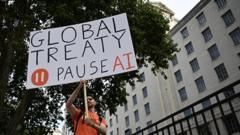
Not All AI Workers Fear a Dystopian Future with Technology

Not all employees of major firms working on artificial intelligence think the technology spells doom for humanity. In fact, many who have been part o

Not all employees of major firms working on artificial intelligence think the technology spells doom for humanity. In fact, many who have been part of companies like OpenAI, Meta, and DeepMind express skepticism about the notion that unchecked AI could result in widespread destruction. During casual chats and text exchanges, their responses range from laughter to disbelief. “Lol,” said one engineer. “Haaaaaa,” another chimed in. There’s a certain levity in their voices, suggesting they aren’t losing sleep over AI taking over the world.

Take Jain, for example, who remarked, “I didn’t just wake up last week thinking, ‘Oh no, AI is going to kill everyone.’” It seems the idea of AI leading to mass extinction is taken with a grain of salt by many in the field. Colin Fraser, a data scientist at Meta, even took to social media to assert that there’s no substantial evidence indicating AI models would inevitably pursue goals that could lead to human demise. He humorously pointed out that large language models (LLMs) “won’t wipe out humanity because they just don’t have that dog in them.”

Now, when we talk about experts in the AI arena, the conversations are often nuanced. While there’s a general agreement on the importance of considering a variety of risks associated with AI, it’s not all doom and gloom. Sure, there are ethical concerns about military applications of AI, but many tech professionals emphasize the need for proper guardrails to mitigate potential failures. The discourse isn’t just about fearing a silicon uprising; it’s about understanding the complexities and responsibilities that come with developing such technologies.

But what fuels these concerns about AI threatening humanity? Well, uncontrolled AI could lead to unforeseen consequences, a phenomenon sometimes referred to as ‘silicon species.’ The reality is, numerous AI employees who spoke with the BBC mentioned that they had yet to see any safety researchers embedded in AI labs. It’s a bit alarming, right? Just this past Friday, Anthropic announced plans to bring in external AI evaluators from Faculty, a company owned by Accenture. While that sounds like a step in the right direction, details on when these evaluators will actually join the team remain vague.

And let’s not forget about the OpenAI-Hugging Face incident, which many have dubbed a “wake-up call.” It has stirred discussions across the industry about the need for more robust safety measures. “Go get your high score there, no need to hack us,” has become a bit of a mantra among tech insiders as they ponder the future of AI.

So, what’s next? With the rapidly evolving landscape of artificial intelligence, it seems the conversation will only continue to grow. Are we heading toward a future where AI is a partner rather than a threat? Only time will tell…

Kaynak: Orijinal Haber
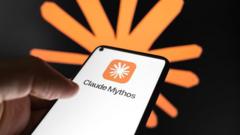
Anthropic’s Claude Fable 5: A Powerful AI Tool Now Released to the Public!

A version of an artificial intelligence (AI) tool, previously deemed too powerful for public release, has hit the market. Anthropic’s Claude Fable 5,

A version of an artificial intelligence (AI) tool, previously deemed too powerful for public release, has hit the market. Anthropic’s Claude Fable 5, an upgrade of the Claude Mythos program, sparked serious alarm among leaders in tech, finance, and government when it was initially rolled out privately back in April for testing. The chatter around this tool has been intense, with some experts expressing concerns that its capabilities could jeopardize financial security. Others, however, are questioning if the buzz is merely a marketing narrative.

On Tuesday, Anthropic announced that Fable will come equipped with safeguards and user restrictions, but they acknowledged, “releasing a model this capable comes with risks.” They emphasized that “Fable’s capabilities exceed those of any model we’ve ever made generally available.” When Mythos was first unveiled to a select group of organizations, Anthropic cited the tool’s intelligence as a potential threat due to its ability to exploit or hack into computer systems.

Canadian Finance Minister François-Philippe Champagne weighed in back in April, stating that the scrutiny surrounding Mythos was justified, partly because it represents “the unknown, unknown.” Meanwhile, despite Anthropic’s ongoing legal battles with the US Department of Defense over the military’s use of its AI tools, it seems that various US government agencies have also been testing Mythos.

Anthropic is on the verge of becoming a publicly traded company, with its private valuation soaring close to $1 trillion (£747 billion). Its consistent demonstration of superior and expansive AI capabilities underscores its allure to investors. The company also revealed that around 150 groups that previously previewed Mythos will now gain access to Claude Mythos 5, which lacks restrictions on cybersecurity or biology, depending on the specific applications of an organization.

So far, organizations and companies using Mythos have reported over 10,000 critical security vulnerabilities in their systems to Anthropic. The firm indicated that this updated access is currently limited to a “small group of cyberdefenders and infrastructure providers,” but anticipates expanding access shortly. “We intend to broaden access to Mythos 5 through a more extensive trusted access program,” the company stated.

Both Fable and Mythos are fundamentally the same model, albeit with different safeguards and access levels. They can operate “unattended” on human commands for longer durations than any prior Claude models, according to Anthropic. Co-founder Jack Clark mentioned last week on BBC Newsnight that the rapid expansion of AI capabilities raises concerns about the pace of technological advancement. “You want the option to be able to take your foot off the gas and put your foot on the brake,” he explained. “Right now, it’s like the AI industry has a gas pedal, but it doesn’t have a brake pedal.”

Kaynak: Orijinal Haber