
The little-known crypto giant Tether, based in El Salvador, is stirring up conversations that reach far beyond its digital currency operations. Tether runs USDT, the world’s leading stablecoin, and claims it holds as much U.S. government debt as some G20 nations, totalling around $135 billion. That’s more than South Korea, folks! With just 200 employees, Tether is almost like a private central bank, operating quietly but wielding immense power in the financial world.
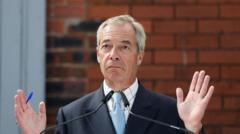
But here’s the kicker: Tether is now caught up in the swirling controversy surrounding Nigel Farage and his Reform party. The company’s ties to Farage’s political funding are raising eyebrows, especially considering that one of Tether’s major donors, Andrew Harborne, has made headlines with his contributions. Harborne’s donations to the Reform party are noted as the largest in British political history, and he recently gave an additional £3 million in October and another £3 million in January. All these donations were declared, but the implications are complex.
Before Farage stepped down as an MP, Harborne had already given him £5 million in direct personal donations—something that piqued the interest of parliamentary investigators. Both Harborne and Farage have insisted that there were no strings attached to these donations, whether personal or political. However, the scrutiny from the Bank of England has been intense, with officials emphasizing the need for clarity in such transactions.
Now, as Tether gears up to be valued at a staggering $500 billion, the crypto landscape is buzzing. It’s a big deal, and Farage’s team is keen to stay in the conversation. Back in May, while Reform was riding high in the polls, the only legislative piece they rolled out was related to crypto assets and digital finance. It briefly touched on stablecoins but overlooked crucial discussions with the Bank of England. The official consultation opened only last November, and Reform argues that there were no ties to Harborne’s donations, framing it all as a push for transparency.
The questions surrounding this unusual intersection of crypto and politics are likely to linger. Who is Count Binface, who is challenging Farage in an upcoming by-election? Chris Mason pointed out that Farage is entering this race from a position of weakness, and it could very well backfire on him. Why did Farage resign, and what lies ahead for him and his party? The answers are still unfolding, and the stakes couldn’t be higher.
Kaynak: Orijinal Haber