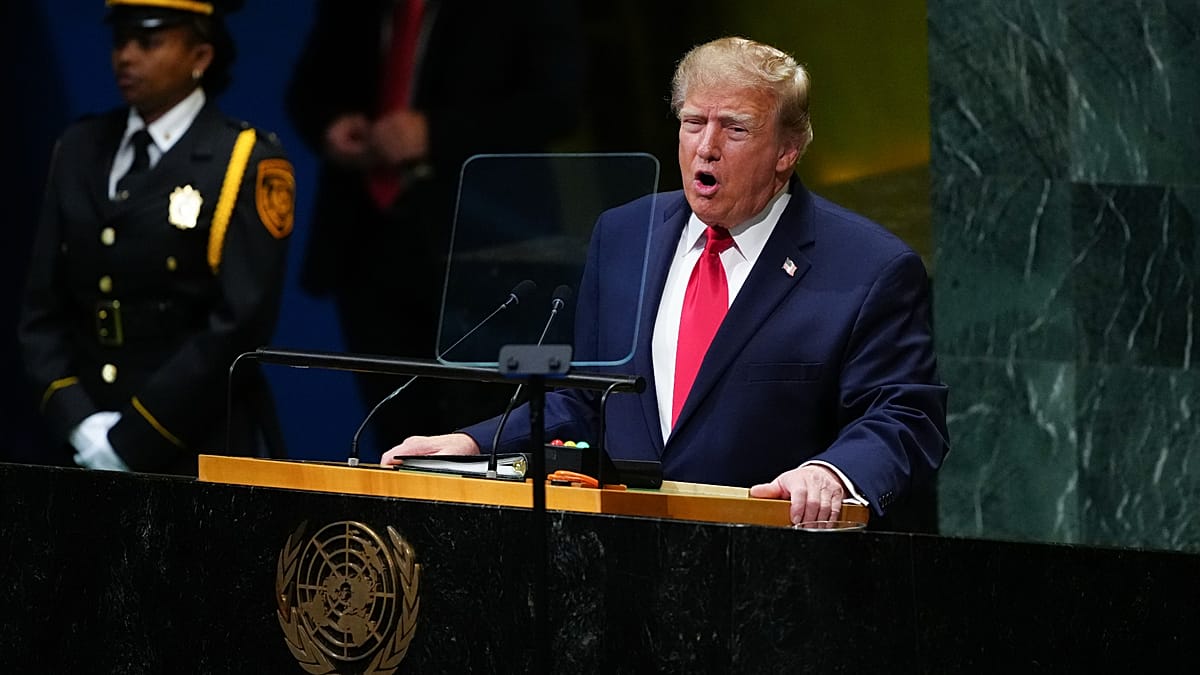
The State Department has officially shifted its terminology from “artificial intelligence” to “super intelligence” as per an email directive inspired by President Trump. This change was communicated through a memo titled “Change in Nomenclature AI to SI,” outlining that all documents and positions moving forward will adopt the new term “SI.” The memo, which was obtained by the Associated Press on Wednesday, did not clarify whether other departments within the State Department are expected to follow suit.
This rebranding isn’t just a one-off; it seems to be part of a broader trend since Trump began his second term. Back in January 2025, he signed an executive order to rename the Gulf of Mexico as the “Gulf of America.” It’s clear that the president believes that calling it “artificial” is doing the technology a disservice. “From this point forward,” the email stated, the term “super intelligence” would be used, which he argues is much more accurate and reflective of the technology’s capabilities.
But wait, there’s more! This new vocabulary comes at a time when the tech industry is issuing stark warnings about the potential dangers of AI. Concerns are growing about the lack of oversight and regulation in the sector, especially when it comes to maintaining the U.S.’s competitive edge over China. Trump has consistently rejected calls for tighter government oversight, arguing that it would undermine American leadership in this field. “I believe we are comfortably ahead of Beijing in this area,” he boasted on social media just days ago.
The timing of this shift is particularly noteworthy, as Chinese leader Xi Jinping arrived in Washington on Wednesday for a state visit, with AI being a significant topic on the agenda. So, what does this all mean for the future of technology and international relations? Only time will tell, but one thing is clear: the dialogue around AI is changing, and it’s doing so at a rapid pace.
Kaynak: Orijinal Haber