Loto France — 01 Temmuz 2026
Kazanan Sayılar: 8 · 9 · 10 · 25 · 31
Chance Number: 5
Jackpot: €2 Million
Ülke/Bölge: France
Kazanan Sayılar: 8 · 9 · 10 · 25 · 31
Chance Number: 5
Jackpot: €2 Million
Ülke/Bölge: France
Kazanan Sayılar: 10 · 20 · 35 · 38 · 46
Star Ball: 8
Jackpot: $31.19 Million
Ülke/Bölge: USA
Kazanan Sayılar: 13 · 33 · 35 · 40 · 43 · 54
Bonus Ball: 56
Jackpot: £2 Million
Ülke/Bölge: UK
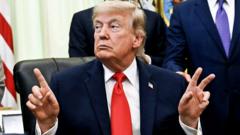
US President Donald Trump has reportedly made a staggering over $1 billion from cryptocurrency in just one year since returning to office. This info
US President Donald Trump has reportedly made a staggering over $1 billion from cryptocurrency in just one year since returning to office. This information comes from his mandatory financial disclosure for 2025, which spans an impressive 927 pages. Among the notable figures in this document, he declared $635 million in royalties from a Trump meme coin that has since seen a dramatic drop in value since its launch just days before he took office. In addition, Trump reported more than $500 million in earnings from World Liberty Financial, a crypto firm initiated by his sons along with the children of his special envoy, Steve Witkoff. This isn’t all—he raked in millions more from real estate ventures and Trump-branded merchandise.
Now, the White House has pushed back against any insinuations that he is profiting from his position as president. Anna Kelly, the deputy press secretary, emphasized that Trump has established a trust to manage his businesses, which is overseen by his sons. She made it clear that there’s no conflict of interest here, stating that Trump has proudly made the U.S. “the crypto capital of the world.” Interestingly, the president himself has pointed out that he is not bound by federal conflict of interest laws, which raises eyebrows.
Back in 2021, Trump was vocally critical of cryptocurrencies, labeling Bitcoin a “scam” and referring to it as a “disaster waiting to happen.” Yet, here he is now, apparently profiting immensely from the very market he once disparaged. It’s a striking contrast to how previous presidents have handled their finances. Trump’s latest financial disclosures dwarf his previous ones, particularly the 2024 reports where he declared over $600 million in income.
Moreover, the Billionaire’s Index lists Trump among the world’s wealthiest individuals, a position bolstered by his ventures into digital assets. With the latest financial report being so extensive—over 900 pages compared to just 11 for his last complete year in office—it’s clear that there’s a lot to unpack. The public is left to wonder: is this a conflict of interest or just a savvy businessman capitalizing on the crypto craze?
As the narrative unfolds, we’re left with more questions than answers. What does this mean for the future of U.S. politics and cryptocurrency regulation? Are we witnessing a new era where the lines between business and governance blur even further? Stay tuned, folks…
Kaynak: Orijinal Haber
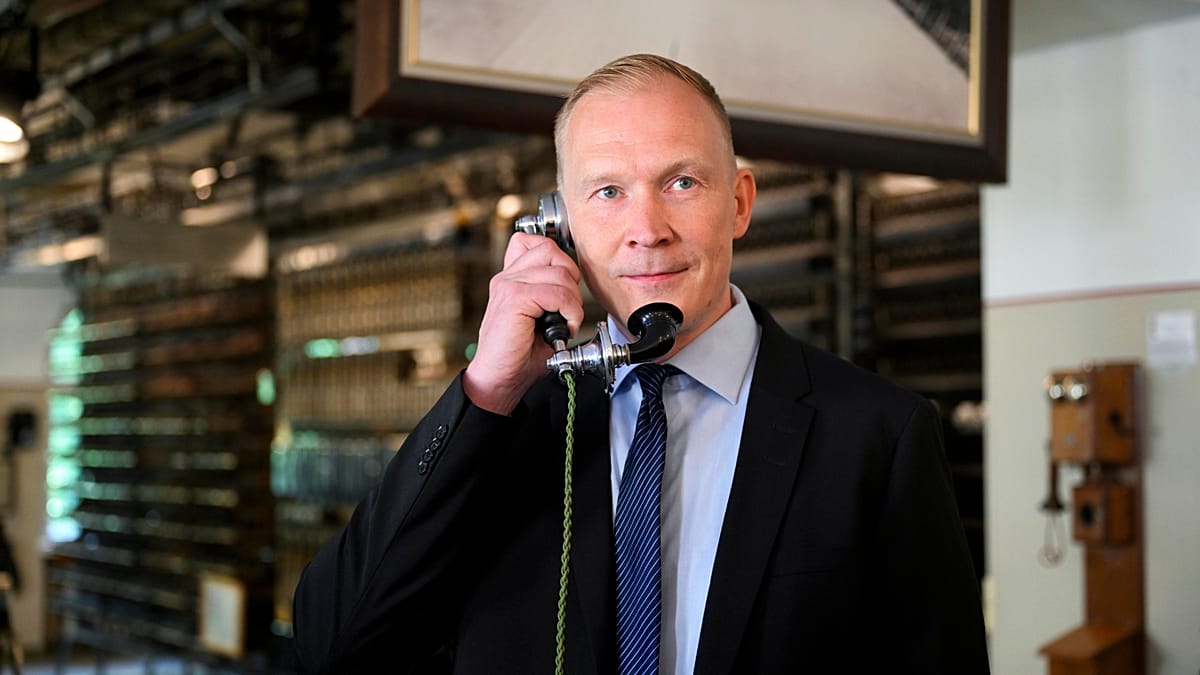
Finland on Tuesday pulled the plug on analogue landline phone calls after almost 150 years, making it the latest country to step into the digital age
Finland on Tuesday pulled the plug on analogue landline phone calls after almost 150 years, making it the latest country to step into the digital age. This shift comes as part of a global transition towards modern infrastructure, a trend that’s already been embraced by countries like Estonia, the Netherlands, Norway, and Spain. These nations have been rolling out fiber optic cables, which can handle both internet services and voice calls seamlessly.
The last major telecom operator in Finland, which had been maintaining a fixed-line copper wire network, officially marked the end of its service with a nostalgic call involving the firm’s communication and transport agency. During this bittersweet exchange, the two reminisced about their experiences with landline phones. Manner, one of the callers, shared fond memories of his teenage years in London during the 1980s, when he would call home once a week at a set time just to ensure his family was gathered around the phone. Can you imagine that kind of routine today?
They also delved into what the future holds for mobile technologies. The call concluded with a casual “kuulemiin,” which translates to “speak later,” encapsulating the essence of an era that has now faded into history. Interestingly, there were only a few thousand landline-only plans still active, and no new ones have been sold in years. From this point on, only local operators will continue to offer landline services in Finland, catering to a small group of customers who still rely on local calls, according to public broadcaster Yle.
So, what does this mean for the future? As the last echoes of the landline phones fade away, we’re left wondering how this will shape communication in Finland going forward. Is this really the end of an era, or just the beginning of a new one?
Kaynak: Orijinal Haber
France’s national football team showcased their strength with a commanding victory over Sweden, cruising to a 3-0 win in a thrilling match held in t
France’s national football team showcased their strength with a commanding victory over Sweden, cruising to a 3-0 win in a thrilling match held in the heart of Paris. The French squad, known for its blend of skill and speed, dominated possession and created multiple scoring opportunities, leaving the Swedish defense scrambling. Goals from Kylian Mbappé, Antoine Griezmann, and Olivier Giroud sealed the deal for the home team, confirming their status as one of the top contenders in the tournament. Fans erupted in cheers as their team displayed finesse and teamwork on the pitch, proving once again why they are a force to be reckoned with in international football.
Meanwhile, across the Atlantic, Mexico has secured their place in the next round after a nail-biting match against the United States, winning 2-1. The Mexican team, fueled by the fervent support of their fans, showed great resilience, battling back from an early goal to clinch the victory. Raúl Jiménez and Hirving Lozano led the charge, showcasing their talent and determination. The win has sent shockwaves through the tournament, as Mexico aims to make a deep run and challenge the favorites.
As the excitement builds, Belgium is gearing up for their crucial encounter against Senegal. The Red Devils, boasting a star-studded lineup, are expected to face a tough challenge from the African side. With a mix of experience and youthful energy, Belgium aims to assert their dominance and secure a spot in the knockout stages. The match is set to be a spectacle, with fans eagerly anticipating what promises to be an electrifying showdown. Will Belgium rise to the occasion, or will Senegal pull off a stunning upset? The world will be watching closely as these teams battle it out on the pitch.
Kaynak: Orijinal Haber
The European Bank for Reconstruction and Development (EBRD) is stepping in to support young entrepreneurs in Uzbekistan, announcing a significant lo
The European Bank for Reconstruction and Development (EBRD) is stepping in to support young entrepreneurs in Uzbekistan, announcing a significant loan of up to $50 million (€42.7 million) to O’zsanoatqurilishbank, commonly referred to as SQB. This funding aims to enhance lending for micro, small, and medium-sized enterprises (MSMEs) that are led or owned by individuals under 35 years of age. The initiative comes at a crucial time as smaller businesses in Uzbekistan continue to face hurdles in securing bank credit. You know, it’s no secret that financing can be a real challenge for new business owners, especially when they lack the necessary documentation or history that banks typically demand.
This loan is part of the EBRD’s Youth in Business programme tailored for Central Asia. To put it into perspective, Uzbekistan is home to about 9.63 million individuals aged between 14 and 30, which makes up approximately 25.7% of the population as of early 2025. That’s a whole lot of young minds looking to make their mark! The SQB loan is just one piece of a larger puzzle, as the EBRD is involved in two operations totaling up to $100 million (€85.4 million) in Uzbekistan’s financial sector. Alongside this initiative, a separate operation of up to $50 million (€42.7 million) with the Mortgage Refinancing Company of Uzbekistan is set to bolster the residential mortgage market and establish more standardized lending practices.
Now, let’s talk numbers. During the period of January to September 2025, small businesses accounted for a staggering 51.5% of Uzbekistan’s GDP. That’s right—1.2 million small business entities were operating as of October 1, 2025. But here’s the kicker: Francis Malige, Managing Director and Head of the Financial Institutions Business Group at EBRD, pointed out that the core issue isn’t just about having cash available. “Liquidity is certainly abundant,” he remarked, “but a lot of it goes to sovereign lending and state borrowing, rather than financing the real economy.” This is where the SQB credit line comes into play, targeting young firms that frequently struggle to meet traditional banking standards.
For many of these smaller firms, the initial barrier isn’t necessarily a lack of innovative ideas. It’s more about proving they can meet the documentation and planning requirements banks use to evaluate risk. Malige noted that many SMEs often find themselves mismatched with the expectations of the banking system. “They do not speak to banks in a way that banks expect them to,” he said. This disconnect often stems from smaller businesses having less formal financial planning and lower transparency compared to their larger counterparts.
But it doesn’t stop there. For women entrepreneurs, the financing gap can begin even before they submit a loan application. Access to credit can hinge on whether they have the right information, networks, and support services to make available programs practically useful. Ceren Güven Güres, Head of the UN Women Central Asia Liaison Office, highlighted some progress in Uzbekistan regarding gender equality reforms, including initiatives aimed at supporting women entrepreneurs. However, she stressed that legal and policy changes alone don’t guarantee equal access. “Are they aware of their rights? Are they aware of these services?” she asked, emphasizing the ongoing challenges.
Once a business does make it to the bank, they often face another significant hurdle: collateral. Many young entrepreneurs or first-time business owners simply don’t have the property or equipment needed to back up a loan application. “A lot of banks require collateral assets, fixed assets, and very often SMEs do not have these in a way that can actually support borrowing from banks,” Malige explained. The banking system itself also plays a role in this issue. “Many banks treat SME lending as a sort of downgraded version of corporate lending. That’s not how it should be,” he lamented.
The EBRD is actively addressing these challenges by working with both borrowers and lenders through technical assistance, training, and risk-sharing instruments. This includes first-loss cover, which can help banks support clients who lack traditional collateral. For women business owners, external conditions beyond the banking system also shape their access to finance. Güres pointed out that social expectations, gender stereotypes, and caregiving responsibilities can severely restrict women’s ability to develop businesses, engage in networks, and utilize available services. “We need to go back to the root causes, the harmful social norms and gender stereotypes, the care burden on women,” she said.
Support for women entrepreneurs should not stop once they launch or formalize a business; ongoing mentoring, tailored assistance, grants, and loans are essential for helping these firms grow beyond the initial stages. There’s a lot at stake, and the future of young entrepreneurship in Uzbekistan hangs in the balance. Will these initiatives truly bridge the gap, or will challenges continue to loom large?
Kaynak: Orijinal Haber
In the moments before the government unveiled its Defence Investment Plan, a significant conversation unfolded in the House of Commons. John Healey,
In the moments before the government unveiled its Defence Investment Plan, a significant conversation unfolded in the House of Commons. John Healey, the former defence secretary, had recently resigned, expressing his dissatisfaction with the financial allocations of the plan. Meanwhile, Dan Jarvis, his successor, was seen engaged in deep dialogue, highlighting the tension surrounding defence funding. The new plan, which Jarvis managed to secure, brought an overall increase of £15 billion for the armed forces. However, Healey made it clear that he believed more needed to be done, stating, “we need to do more” beyond today’s plan to help the UK meet NATO’s defence spending targets.
When Healey stepped down earlier this month, his supporters claimed the Treasury was playing tricks with the budget. They suggested that only £10.3 billion of the £15 billion was actually secured funding, leaving his successor with a hefty headache. It’s likely that this burden will fall on Andy Burnham, who is expected to become the next prime minister, along with whoever he chooses as chancellor. The investment plan also leans on £10.7 billion of “defence efficiencies”, which assumes that defence will be a top priority in the next spending review. This could lead to deeper cuts in other government departments, raising questions about Burnham’s priorities if he ascends to the role of prime minister next month.
It’s understood that Burnham sees this plan as “another spending pressure,” and it’s crystal clear that the disputes over defence spending, which the outgoing prime minister had to navigate, will persist as one of the trickiest issues awaiting his successor. With the financial landscape looking murky, the question remains: how will Burnham tackle these challenges while balancing the needs of other vital sectors? As the political scene heats up, all eyes will be on how the new leadership plans to manage this complicated situation.
Kaynak: Orijinal Haber
US President Donald Trump has raked in more than $1 billion from cryptocurrency during his first year back in office, according to a mandatory financ
US President Donald Trump has raked in more than $1 billion from cryptocurrency during his first year back in office, according to a mandatory financial disclosure report for 2025. This 927-page document reveals that he reported a staggering $635 million in royalties from a Trump meme coin, which has since seen its value plummet since its launch just days before he took office. On top of that, he disclosed over $500 million in income from World Liberty Financial, a cryptocurrency firm founded by his own sons and children of his special envoy, Steve Witkoff. Not to mention, he pocketed millions more from real estate ventures and Trump-branded merchandise. But wait, the White House is quick to deny any claims that he’s profiting from the presidency.
The earnings from this latest disclosure far exceed his previous financial reports. In 2024, Trump had reported over $600 million in income, but this latest figure has definitely raised eyebrows. The White House insists that Trump has placed his business interests in a trust managed by his sons, aiming to downplay any potential conflicts of interest. White House deputy press secretary Anna Kelly proudly stated that the president has made the US “the crypto capital of the world,” echoing the administration’s optimistic rhetoric on digital assets.
Interestingly enough, Trump had once been a vocal critic of cryptocurrency, famously labeling Bitcoin as a “scam” and a “disaster waiting to happen.” Yet, his financial success in this arena paints a different picture. Meanwhile, the Billionaire’s Index lists him among the world’s wealthiest individuals, reinforcing his status as a major player in the digital asset realm. And while this report is extensive, stretching over 900 pages, Trump’s last full year in office report was just 11 pages long.
So, what does this mean for the future of cryptocurrency and for Trump himself? Will he continue to ride the wave of digital assets, or will the tide turn against him? It’s a developing story, and one that we’ll be keeping a close eye on…
Kaynak: Orijinal Haber
Retailers including Amazon, Argos, and Currys are facing scrutiny after an investigation revealed they are advertising e-scooters for use on public
Retailers including Amazon, Argos, and Currys are facing scrutiny after an investigation revealed they are advertising e-scooters for use on public roads and paths, despite it being illegal in the UK. The Press Association PA’s investigation found that both major brands and independent sellers were promoting these vehicles as suitable for road use. However, the law is clear: only rented e-scooters are allowed to be ridden legally on roads, cycle paths, and parks in the UK. Privately-owned e-scooters are strictly limited to private property, and only with the landowner’s permission…
Yani, e-scooter kullanıcıları, yasal olarak nerelerde hareket edebileceklerini bilmeli. Zaten, geçtiğimiz günlerde bir e-scooter ilanı, Advertising Standards Authority ASA tarafından yasaklandığı için dikkat çekti. ASA, bu yasak kararında, e-scooter’ların nerelerde kullanılabileceğine dair yetersiz bilgi verdiği için bu reklamın kaldırılması gerektiğine hükmetti. Yani, reklamda yasal uyarı bulunsa bile, bu durum yeterli olmuyor eğer e-scooter’ların her alanda kullanılabileceği izlenimi veriliyorsa…
Birçok küçük perakendeci hala internet sitelerinde “commuter” e-scooter’lar için ilanlar yayınlamaya devam ediyor. “Şehirde dolaşmak için harika bir yol, trafiğin arasında 15 mph hızla gidin” gibi ifadelerle, bu ürünleri tanıtıyorlar. Diğer bir satıcı ise, “günlük seyahat ihtiyaçları için akıllı bir seçim” olarak tanımlıyor. Yahu, bu durum milletin kafasını iyice karıştırıyor, değil mi? Bakın, bu e-scooter’ların yalnızca kiralamaya açık olduğunu bilmek her kullanıcının hakkı…
Ama işin aslı şu ki, bu tür ilanlar, kullanıcılar arasında yanlış anlama yaratıyor. Çünkü, insanlar bu e-scooter’ları satın alıp, yasal olmayan yerlerde kullanmayı deniyorlar. İşte burada, sürekli olarak uyarılması gereken bir durum var. Yani, yasaların bir gereği olarak, bu ürünlerin yasal kullanım alanlarını belirtmek gerekiyor. Amazon ve benzeri büyük siteler, bu konuda daha dikkatli olmalılar…
Sonuç olarak, e-scooter reklamlarının yasadışı bir şekilde yapılması, hem kullanıcıların hem de yasal otoritelerin dikkatini çekiyor. Bakalım, bu konuda daha ne tür önlemler alınacak?
Kaynak: Orijinal Haber