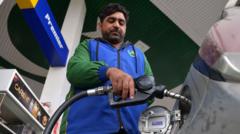
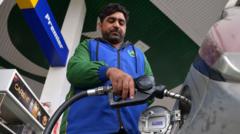
Oil prices took a nosedive in Asia on Monday after Pakistan announced a significant deal aimed at bringing an end to the US-Iran conflict. This announcement, made by Pakistan’s Prime Minister Shehbaz Sharif, indicated that the critical Strait of Hormuz shipping route would be reopened, which had been effectively closed since the US and Israel launched airstrikes on Iran back in February. Brent crude, the global oil benchmark, saw a substantial drop of 4.8%, landing at $83.18 per barrel, while US-traded oil was down by 5.6%, priced at $80.13. So, what does this all mean for the average Joe filling up his tank?
The official signing ceremony for the deal is set to take place on Friday, June 19, in Switzerland. Iran’s Deputy Foreign Minister Kazem Gharibabadi confirmed that the deal with the US has been finalized, and President Donald Trump even took to social media to declare, “let the oil flow!” But hold on… not everyone is convinced that this is all good news. Vandana Hari, an expert from the energy analysis firm Vanda Insights, cautioned that the lack of details surrounding the agreement could stir up unease and uncertainty in the market. Yani, işler pek net değil gibi…
To put things into perspective, the Strait of Hormuz is a vital waterway through which around 20% of the world’s oil and liquefied natural gas (LNG) usually flows. With Tehran having previously threatened to attack vessels using this crucial route, the market has been on edge. The global energy scene has been a rollercoaster lately, with prices swinging wildly in response to developments in the US-Israel war with Iran. Can you believe that Brent crude was trading around $70 a barrel before the conflict escalated, only to peak at about $120 during the war?
But wait, there’s more! Experts are warning that it might take time for oil movements through the strait to return to pre-war levels. Andrew Lipow from Lipow Oil Associates pointed out that mines must first be cleared from the waterway, which could take anywhere from a few weeks to as long as six months. Plus, there’s a backlog of tankers just itching to traverse the strait, and restarting oil production to get everything back to normal could take weeks. It’s like a traffic jam, but for oil tankers!
On a brighter note, Asian stock markets reacted positively to the news, with Japan’s Nikkei 225 share index jumping 5.4% in the morning trade, and South Korea’s Kospi climbing more than 5.5%. The region has been particularly hard hit by soaring energy prices, given its heavy reliance on the Middle East for oil and LNG supplies. So, this Iran deal feels like a bit of good news for investors.
But, and here’s the kicker, while the announcement was a welcome birthday gift for President Trump, the success or failure of this deal may hinge on the nitty-gritty details. Pakistan claims that the deal also involves Lebanon, but recent ceasefires there have fizzled out. Israel has been targeting the Iran-backed armed group Hezbollah, and Tehran has warned that this could jeopardize the US-Iran agreement aimed at quelling the fighting.
As it stands, US officials say the deal will lead to the destruction of Iran’s enriched uranium, but no exact date has been set for when that will happen. What a tangled web we weave, huh?
Kaynak: Orijinal Haber