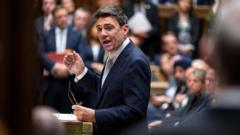
Andy Burnham made a significant splash during his first Prime Minister’s Questions (PMQs) as the new PM, addressing the pressing issue of soaring borrowing costs that have reached an 18-year high in the UK. This alarming situation has left many citizens and investors anxious, and Burnham is taking the reins from Sir Keir Starmer, who stepped down in July amidst a backdrop of financial scrutiny. It was clear from the outset that Burnham’s government will be “grounded in fiscal responsibility,” as he emphasized the need for a practical approach to managing the nation’s increasing debt.
During the session, Burnham made a point to put the blame squarely on the previous Conservative government, whose policies, he claimed, contributed significantly to the current debt crisis. He made it clear that his administration is not shying away from tough decisions and is already implementing measures to address the financial challenges at hand. “This is the approach that we will take,” he asserted, while also promising to keep Parliament informed of the steps being taken to control the rising costs of debt.
As part of his strategy, Burnham utilized the summer recess to travel across the UK, unveiling an array of eye-catching policies aimed at alleviating the cost of living for everyday folks. But the PMQs debut wasn’t without its challenges. Conservative MP Kemi Badenoch questioned Burnham’s spending plans, pointing out that while there were plenty of initiatives on the table, there were no clear details on how these would be funded. “Is he preparing to raise taxes again, yes or no?” she pressed, echoing the concerns of many citizens who are already feeling the pinch.
Burnham, however, sidestepped the direct question regarding tax increases, stating, “I’m not going to do what any prime minister has done and write the budget here.” This response, though, did little to quell the skepticism from opposition benches. Lord O’Neill, a respected economist, had previously commended Burnham for his initial weeks in office, particularly in managing the state’s commitments, which now include a fully funded defense investment plan. The Prime Minister reiterated that there are no issues with their commitment to defense, promising a comprehensive plan to meet NATO obligations by 2035.
As the debate continued, tensions rose. “Lord O’Neill is a serious economist. He knows what he’s talking about,” Badenoch remarked, questioning how Burnham plans to tackle the rising costs of government debt. Burnham countered, indicating that he and O’Neill might not always see eye-to-eye, but he was adamant that the focus should remain on addressing the needs of the people rather than engaging in political point-scoring.
With Andrew Griffith stepping in as shadow chancellor in the recent Tory reshuffle, the political landscape is shifting. Observers note that Burnham’s failure to commit to a specific tax increase percentage has been viewed as a potential stumbling block in his leadership journey, reminiscent of the challenges faced by his predecessor.
Citizens across the UK are watching closely, hoping for clarity and direction amidst the financial uncertainty. As Burnham’s first PMQs draw to a close, the lingering question remains: how will the new Prime Minister navigate these turbulent waters without burdening the average taxpayer?
Kaynak: Orijinal Haber