Chinese Firm Demands Compensation After British Steel Nationalisation

The former owner of British Steel has announced plans to seek compensation from the British government following the nationalisation of the loss-mak

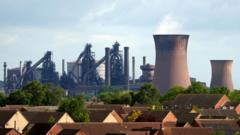
The former owner of British Steel has announced plans to seek compensation from the British government following the nationalisation of the loss-making firm. The UK government took control of the Scunthorpe steelworks about a year ago, which has since raised eyebrows and sparked tension in the relationship between London and Beijing. The decision to nationalise British Steel comes at a particularly sensitive time, with Andy Burnham set to step into Downing Street as the new Prime Minister on Monday. This move has left many wondering: what will be the future of British Steel?

China has been vocally critical of the UK government’s actions, stating that the nationalisation is a serious infringement on the rights and interests of Jingye, the Chinese company that previously owned the steelworks. The Chinese commerce ministry expressed that they would support their firms in protecting their rights, although the specifics of this support remain unclear. The UK government, on the other hand, has defended its decision, citing failed commercial negotiations with the Chinese steelmaker that did not yield a fair deal for taxpayers.

The Scunthorpe plant employs around 2,700 workers and is crucial for various industries in North Lincolnshire. However, it has faced a lot of uncertainty in recent years. A report from the National Audit Office released in March highlighted that keeping the plant operational was costing the government approximately £1.3 million a day. Business Secretary Peter Kyle stated that shutting down the operation was not an option, and assured that the government would continue to cover its running costs “for the immediate future.”

It’s worth noting that British Steel was last in state ownership back in 1988, when Margaret Thatcher’s government privatised it. The current nationalisation of British Steel aims to preserve a vital national capability, with officials stressing that this move is intended to protect future generations. But will it be enough to mend the rift with China? As the situation unfolds, many are left pondering the implications of this nationalisation on international relations and the future of steel production in the UK.

Kaynak: Orijinal Haber
China Condemns UK’s Nationalisation of British Steel: What’s Next?

China has strongly criticized the UK’s recent nationalization of British Steel, calling the decision a serious infringement on the rights of Jingye

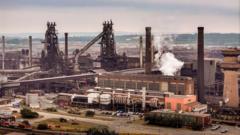
China has strongly criticized the UK’s recent nationalization of British Steel, calling the decision a serious infringement on the rights of Jingye Group, which owned the steel company. This move by the UK government has raised eyebrows, especially since it limits Jingye’s ability to shape its future in the British market. The Chinese Ministry of Commerce stated that the UK should “faithfully fulfill” its commitments to Jingye, suggesting that the nationalization undermines a vital national capability.

The legislation that allowed this nationalization was passed by Parliament on Wednesday. It gives the government the power to take control of the steel industry if it passes a public interest test. The implications of this are huge, as Jingye has been reporting losses of £700,000 a day, and they are now seeking compensation for these losses. Can you believe that? That’s a staggering amount!

In its statement, China emphasized that it would closely monitor the developments and support its firms to protect their rights. However, the specifics of how Beijing plans to safeguard its companies were not disclosed. The tension between China and the UK over this situation is palpable, and it’s clear that both sides are gearing up for a potential showdown.

Meanwhile, the BBC has attempted to reach out to Jingye for comments but has not received a response yet. People are left wondering how this situation will unfold and what it means for the future of steel production in the UK. Will Jingye get the compensation it seeks? Will the government’s move backfire?

The nationalization also raises concerns about the future supply of steel in the UK, which is already under strain. As the second-largest economy in the world, China is not likely to back down easily. The unfolding story highlights the complexities of international business and government intervention. It’s a fascinating situation that we’ll be keeping a close eye on.

Bakalım bundan sonra ne olacak? Gelişmeleri takip ediyoruz…

Kaynak: Orijinal Haber

British Steel Goes Public: A Lifeline for Jobs and National Production

British Steel has officially been taken into public ownership, a move that the government believes will protect jobs and secure a “vital national cap

British Steel has officially been taken into public ownership, a move that the government believes will protect jobs and secure a “vital national capability.” This decision comes after years of operations in Scunthorpe, where the plant was still under the ownership of China’s Jingye Group, a fact that limited the government’s earlier announcements. Business Secretary Peter Kyle emphasized to the BBC that the government will need to cover the running costs “for the immediate future.” He also made it clear that the alternative—which would be letting the business go bust—is not an option.

Unite’s general secretary, Sharon Graham, welcomed the news of nationalization, stating that it was a necessary step. You see, blast furnaces are not just your ordinary machines; they’re designed to run continuously. If they cool down, it can lead to serious damage, and restarting them can require extensive work. The cost of even a planned refurbishment can reach tens of millions. The remaining furnaces at Scunthorpe are quite old; one, named Queen Anne, opened in 1954, while Queen Bess has been producing steel since 1938. Both are nearing the end of their operational lives, and restarting them after cooling would have been financially prohibitive for a company already drowning in red ink.

The government’s decision to keep Scunthorpe open is crucial because it’s the UK’s last remaining source of “virgin” steel. While the long-term strategy aims for all domestically produced steel to come from Electric Arc Furnaces (EAFs)—which are cheaper and more environmentally friendly—the government does not want to lose production at Scunthorpe just yet. The plant produces steel that is not manufactured anywhere else in the UK, which is essential for Network Rail and the construction industry. There was a palpable fear that losing this output would disrupt operations and make the country overly dependent on imports. So, the decision was made: keep Scunthorpe open until alternatives are available.

And let’s not forget the jobs at stake. Not only do people work directly for British Steel at Scunthorpe, but the plant also supports thousands more jobs in the supply chain. It serves as an economic anchor in North Lincolnshire, so shutting down the furnaces suddenly could have jeopardized many livelihoods. Simon Boyd, managing director of Reid Steel, a structural steel manufacturer based in Dorset, stated that the nationalization “had to be done.” He pointed out that Jingye had been “sabotaging the infrastructure” at the company, and the government “had to step in.” Now, British Steel belongs to the British people, not private companies.

This shift signals a new chapter for British Steel, as the UK government may block payouts to the owner and address the failures tied to Greybull, the previous owner. How will this play out in the coming months? Only time will tell…

Kaynak: Orijinal Haber

British Steel Goes Public: Government’s Bold Move to Secure UK Steel Supply

British Steel has officially been taken into public ownership, marking a significant step by the UK government to ensure the future of steelmaking in

British Steel has officially been taken into public ownership, marking a significant step by the UK government to ensure the future of steelmaking in the country. Prime Minister Sir Keir Starmer announced this decision, emphasizing the importance of a robust domestic steel industry. The government had initially taken control of British Steel’s operations in Scunthorpe last year, but the company remained under the ownership of the Chinese firm Jingye Group. Now, with the nationalization, the UK aims to protect its vital steel supply chain.

Jingye has indicated that it will seek compensation for the nationalization, claiming that the business has been losing a staggering £700,000 a day. However, the UK government has responded by stating that it could limit or outright refuse any compensation claims. The situation is a bit tense, as the BBC hasn’t been able to get any response from Jingye regarding the latest announcement.

Starmer pointed out that a strong steel industry is crucial for the country’s industrial strength. Previously, the government had tried to attract private investors for British Steel but stopped short of full nationalization. Business Secretary Peter Kyle added that Parliament passed legislation allowing the government to take the steel industry into public ownership if it meets a public interest test.

In a statement from the Department for Business and Trade, it was highlighted that the Steel Act provides the necessary powers to nationalize steel companies when warranted. The urgency of this move became more apparent in March when the National Audit Office reported that the Scunthorpe steelworks was costing the government around £1.3 million a day. The government took control of the Scunthorpe plant in April 2025 after Jingye warned of potentially shutting down the last two remaining blast furnaces. If those furnaces had run dry, the UK would have lost its ability to produce “virgin steel,” which is essential for the country’s economic security.

Jingye acquired British Steel back in 2020, just a year after the company was put into compulsory liquidation by its previous owner, the private equity group Greybull Capital. The government’s announcement about the public ownership of British Steel comes amid plans to reindustrialize Britain, with a strong domestic steel industry deemed “critical” to that vision. The future of British Steel is uncertain, and many are left wondering how this nationalization will unfold. Can the government successfully turn things around, or will more challenges emerge?

Kaynak: Orijinal Haber