
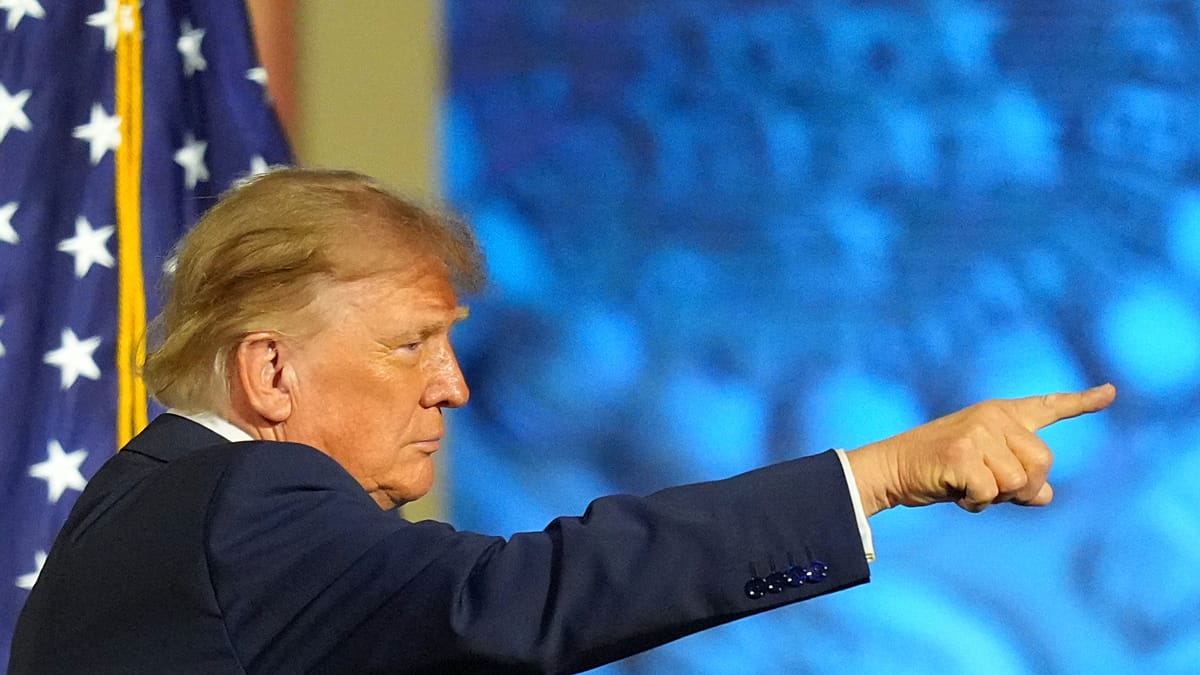
The US president has promised to give every adult citizen a $5,000 payment if Republicans retain control of both the House of Representatives and the Senate. This proposal, dubbed the “Trump dividend”, could cost a staggering $1.2 trillion, surpassing the Pentagon’s entire 2026 budget request. “If the Republicans win, you win with us and you get $5,000,” Trump declared at the Republican midterm convention in Dallas, as his party grapples with unfavorable polling against the Democrats. He likened the payments to dividends paid to shareholders, emphasizing “our tremendous strength and success economically.”
However, not long after Trump’s announcement, Vice President JD Vance tried to dial down the excitement by suggesting that wealthy Americans would not be eligible for these payments. According to the latest data from the US Census Bureau, there are about 240 million adult citizens in the country, with 174 million registered voters. This means that giving every adult citizen $5,000 could potentially cost around $1.2 trillion. That’s about $220 billion more than the Pentagon’s proposed budget of $961 billion for 2026.
If the payments were limited to registered voters, the cost would drop to around $870 billion. Just think about it: a $5,000 check would give each adult more than what they received through the two rounds of direct federal payments during Trump’s first term. The average US household spending was reported to be $78,535 in 2024, or about $6,545 a month. So, if two adults living together both received $5,000, their total of $10,000 would cover nearly 11 months of average food spending or even about 18 months of grocery bills.
Housing is a significant burden for many, making up 33.4% of the average household budget. In 2024, households spent $26,266 on housing, which would be about $27,960 by July 2026 prices. So, those two $5,000 payments would only cover just over four months of the average housing costs. And it doesn’t stop there; combining these payments could also cover around eight-and-a-half months of average transport expenses or even 18 months of healthcare costs. It’s a staggering amount that could theoretically cover nearly six years of education costs, though this is based on an average across all households, including those with minimal education expenses.
Trump’s proposal comes at a time when the national debt has just crossed the $40 trillion mark for the first time, and the country is facing an annual budget deficit nearing $1.8 trillion, with inflation still a pressing issue. Marc Goldwein, senior policy director at the Committee for a Responsible Federal Budget, stated, “The idea that we’ve had fiscal success is backwards and bordering on laughable. We don’t have surpluses to give away.”
The rising government borrowing costs are adding fuel to the fire. The yield on the 10-year Treasury note recently shot above 4.85%, the highest in nearly three years. This uptick can make mortgages and business loans pricier, slow economic growth, and weigh heavily on stock prices. With the government already deep in a deficit, how these proposed payments would be financed remains a mystery. Vance hinted that US tariff revenue could be a potential source of funding, but even then, customs duties expected to total about $406 billion in the fiscal year 2026 would only cover a fraction of the payments – around a third of the estimated $1.18 trillion cost.
Even if the payments were limited to the 174 million registered voters, it would still cost around $870 billion, which exceeds the projected annual customs revenue by more than double. Earlier this year, Trump had proposed a $2,000 dividend and claimed he didn’t need congressional approval to implement it. Last year, he issued a $1,776 check to military members, calling it a “warrior dividend.”
Republican Senator Bernie Moreno of Ohio tweeted on X, “I will get a bill ready so that we can get the Trump Dividend passed immediately after the November 3rd election. Because Republicans and America will win!” But let’s be real, Congress would need to give a thumbs up to these proposed payments. According to New Mexico-based lawyer John Day, Trump’s proposal would be legal because it would be available to everyone, irrespective of how they voted—or even if they voted at all. “This is a campaign promise,” Day explained. “It’s not a payment to individuals to try to get them to vote in a particular way.”
As it stands, Republicans are on the defensive, trying to safeguard their slim majority in the House against significant political headwinds. Trump’s popularity is waning, and recent polls indicate that a majority of Americans disapprove of the war in Iran. Even the Senate, which once seemed secure for Republicans, is now up for grabs.
Bakalım, bu durum nasıl bir sonuç doğuracak? Gelişmeleri takip ediyoruz…
Kaynak: Orijinal Haber