Oil Prices Surge to $100 Amid Middle East Tensions

Oil prices have surged to $100 a barrel for the first time since May, driven by intensifying conflicts in the Middle East that have reignited fears o

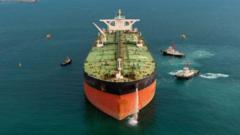
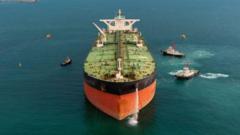
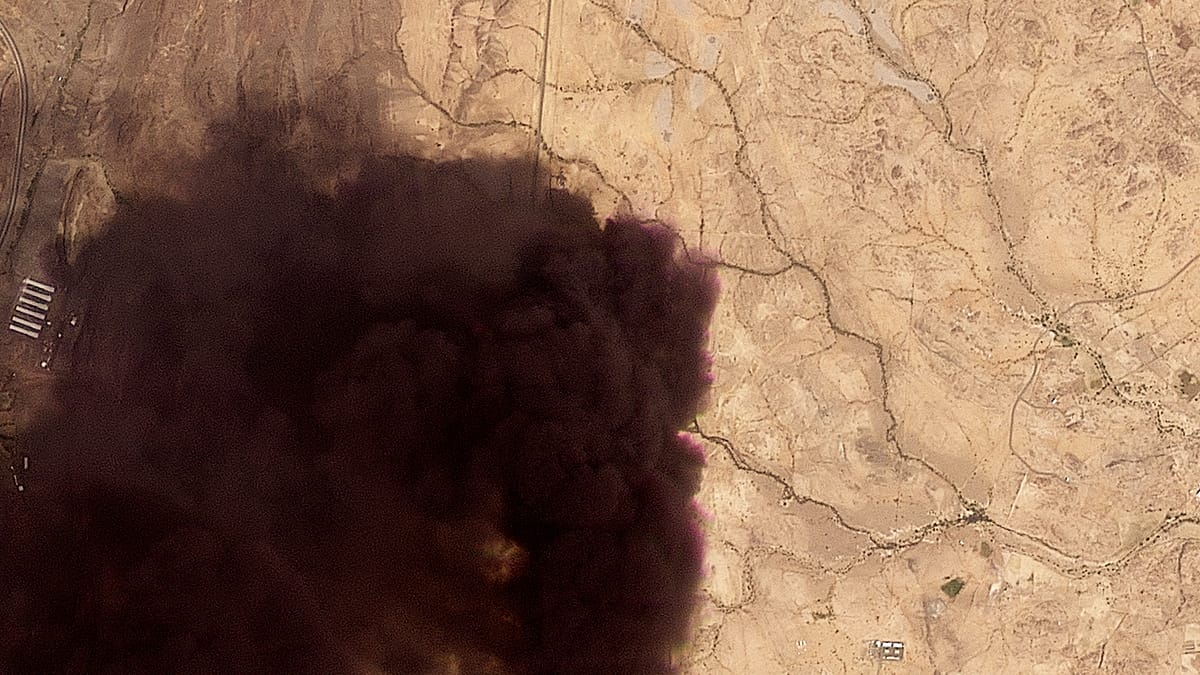
Oil prices have surged to $100 a barrel for the first time since May, driven by intensifying conflicts in the Middle East that have reignited fears over global energy supplies. Brent crude, which is the global benchmark for oil prices, saw a significant increase of more than 6% on Thursday, following several days of rising prices as the US ramped up military strikes against Iran. This sudden spike was further fueled by an attack from the Houthi militia in Yemen on oil tankers in the Red Sea, putting a critical export route at risk—one that Saudi Arabia has relied on to navigate around the Strait of Hormuz.

To put this in perspective, gas prices have also been climbing steadily over the past month, with the benchmark UK gas price now hovering around 150 per therm, a noticeable jump from about 98p at the end of June. Just a few weeks back, oil prices had experienced a decline following a temporary ceasefire agreement between the US and Iran, which had brought them down to levels not seen since before military actions began against Iran on February 28.

Unfortunately, that ceasefire has fallen apart. This week, US Secretary of State Marco Rubio made it clear that the current leaders in Iran were “not ready to make a deal.” The implications of soaring fuel and energy prices are significant, as they can create a ripple effect throughout the broader economy, driving up costs for businesses and, ultimately, impacting the prices of food and other goods that everyday folks rely on.

This situation poses another challenge for central banks, which are already grappling with inflation. The Bank of England, which sets interest rates in the UK, has maintained them at 3.75% during its last four meetings. Paul Dales, the chief UK economist at Capital Economics, pointed out that the Bank will “almost certainly have no tolerance for persistently elevated inflation.” Meanwhile, US President Donald Trump had his first meeting with Warsh last month, emphasizing his commitment to “restoring price stability” amid the ongoing turmoil in the Middle East affecting prices.

So, what does all this mean for the average person on the street? Well, more expensive fuel and energy could lead to higher living costs, affecting everything from your morning coffee to your monthly grocery bill. It’s a tough time, and folks are definitely feeling the pinch at the pump and in their wallets.

What’s next? Will these prices stabilize, or are we in for more surprises in the coming weeks? Only time will tell, but one thing’s for sure—everyone’s watching closely…

Kaynak: Orijinal Haber

Oil Prices Surge to $100 Amid Middle East Tensions!

Oil prices have soared to $100 a barrel for the first time since May, igniting a wave of concern over global energy supplies as the conflict in the M

Oil prices have soared to $100 a barrel for the first time since May, igniting a wave of concern over global energy supplies as the conflict in the Middle East escalates. Brent crude, the global benchmark for oil prices, jumped by more than 6% on Thursday after several days of steady increases, driven largely by the U.S. intensifying its military actions against Iran. The situation took a sharp turn when Houthi militia forces in Yemen launched attacks on oil tankers in the Red Sea, directly threatening a crucial export route that Saudi Arabia has been utilizing to circumvent the Strait of Hormuz.

Now, let’s break it down. Gas prices have also been on an upward trajectory, creeping up over the past month. The benchmark UK gas price is hovering around 150 per therm, which is a significant rise from approximately 98p at the end of June. Notably, oil prices had been on a downward trend following a temporary ceasefire between the U.S. and Iran, dipping back to levels last seen before the U.S. and Israel ramped up military actions against Iran on February 28. But, the ceasefire? Well, it’s officially over now!

U.S. Secretary of State Marco Rubio recently pointed out that the Iranian leadership is “not ready to make a deal,” showing zero tolerance for the persistently high inflation that’s been plaguing the global economy. President Trump, during a meeting last month, reaffirmed his commitment to “restoring price stability” amid the chaos stemming from the Middle East conflict affecting prices worldwide. So, you see, the stakes are high, and the pressure is mounting on global energy markets.

What does this mean for the everyday consumer? Well, we might just see a ripple effect on our wallets. With rising oil prices, the cost of transportation and goods will likely increase, which can further strain household budgets already feeling the pinch. So, the big question is: how long will this volatility last? Are we headed for more price hikes, or will some resolution come about to stabilize the situation? Only time will tell…

Kaynak: Orijinal Haber

US-Saudi Nuclear Deal: A Game Changer in Middle Eastern Politics?

The US and Saudi Arabia have made a significant move by signing a landmark nuclear deal that could reshape the energy landscape in the Gulf region. T

The US and Saudi Arabia have made a significant move by signing a landmark nuclear deal that could reshape the energy landscape in the Gulf region. This agreement, touted as a “peaceful nuclear co-operation agreement,” aims to facilitate the development of a civilian nuclear program in Saudi Arabia, as confirmed by the US Department of Energy. However, there’s a catch—reportedly, this deal could pave the way for Saudi Arabia to enrich uranium in the future. Now, that’s where things get tricky. Experts warn that while uranium can be used for powering plants, it can also be a stepping stone toward nuclear weapons. This kind of development would be unprecedented for the US, and it raises serious concerns about nuclear proliferation in an already tense region.

The specifics of the deal remain under wraps; the text hasn’t been made public yet. But US media outlets are buzzing with reports that the agreement could ultimately lead to a nuclear arms race in the Middle East. This is especially alarming considering the fragile political climate, with ongoing tensions between the US and Iran. Let’s not forget that Saudi Arabia is a long-time ally of the US and hosts several American military bases that have recently been targeted by Iranian attacks.

In a statement, the US Secretary of Energy, Chris Wright, reassured the public that the agreements contain robust nuclear safety and nonproliferation measures. However, even within US political circles, there’s a divide over this deal. Some lawmakers from both parties are gearing up to oppose the agreement, concerned that it could lead to Saudi Arabia developing its own nuclear weapons capability. Senator Marco Rubio, while discussing the deal during a trip to the Philippines, mentioned that this agreement could change the dynamics in the region profoundly.

On the flip side, the Saudi government has expressed its enthusiasm about the deal, attributing it to the recent visit of their leader to Washington last November. Interestingly, the deal does not require Saudi Crown Prince Mohammed bin Salman to acknowledge Israel diplomatically, which has been a point of contention in US-Saudi relations for years. It’s as if the US is walking on a tightrope, balancing regional alliances while trying to maintain stability.

You have to wonder what this would mean for Iran, especially given that just two days ago, Iranian-backed Houthi forces in Yemen announced a maritime blockade, escalating tensions further. It feels like a game of chess with high stakes, where every move counts.

The deal will now head to Congress for review, where it will undoubtedly face scrutiny. Some Democrats have pointed out the hypocrisy in Rubio’s stance, given his past support for legislation that aims to prevent nuclear arms proliferation in Saudi Arabia. It’s a complex web, folks, and it’s going to be interesting to watch how this unfolds.

What’s next? Will this lead to a nuclear arms race in the Middle East, or will it pave the way for a new era of nuclear cooperation? Only time will tell…

Kaynak: Orijinal Haber

Iran and Israel Clash: A New Wave of Violence in the Middle East

The Middle East “is in turmoil” following attacks between Iran and Israel, as reported by BBC’s international editor, Jeremy Bowen. This marks a sign

The Middle East “is in turmoil” following attacks between Iran and Israel, as reported by BBC’s international editor, Jeremy Bowen. This marks a significant escalation, with both countries launching strikes into each other’s territories for the first time since the ceasefire in April. Just imagine the tension in the air as US President Donald Trump calls for an immediate halt to the “shooting.” Can you believe it?

Israel has retaliated with airstrikes targeting western and central Iran, all this after Iran fired missiles into northern Israel. It’s a dangerous game, and both sides seem to be escalating their military postures. Meanwhile, the streets of Bethlehem saw thousands of participants in the Palestine Marathon, returning after a two-year hiatus due to the Gaza War. The resilience of the people shines through, doesn’t it?

In another twist, President Trump has suspended operations aimed at guiding ships through the Strait of Hormuz, which is crucial for oil transport. BBC Verify has been tracking the timeline of these developments closely. Speaking of oil, the United Arab Emirates (UAE) is making waves by quitting the oil cartel OPEC after nearly 60 years. What’s going on in the oil market?

As the ceasefire between Israel and Hezbollah in southern Lebanon enters its second day, BBC Arabic’s correspondent Carine Torbey reports from the border town of Khiam, where the local population is on edge. Eyewitnesses have shared terrifying moments, like when a burning fuel tanker raced through Hasakah, Syria, leaving a fiery trail behind it. Can you imagine the chaos that must have caused?

Lyse Doucet has noted that many Iranians are yearning for a resolution to the long-standing animosity with the US, yet their leaders seem unwilling to negotiate on Washington’s terms. This highlights the complexity of the situation; it’s not just military strikes, it’s about the political chess game being played behind the scenes.

Notably, while military targets are being struck in Iran, civilian areas are also caught in the crossfire, painting a stark picture of the brutal reality of war. Upon arriving in Tehran, Lyse described the atmosphere as “life on pause.” It’s a haunting image of a city gripped by fear and uncertainty.

In the Israeli town of Metula, surrounded by Lebanon on three sides, BBC foreign correspondent Nick Beake observed a community living in constant shadow. And in Nabatieh, once a vibrant city, paramedics are on high alert, responding to the aftermath of recent attacks. Hugo Bachega, the BBC Middle East correspondent, has spoken to many families affected by the violence, which is displacing over one million people in Lebanon.

Amid these developments, pro-government protesters flooded the streets of Tehran after the announcement of a two-week conditional ceasefire between the US and Iran. The BBC’s Nick Marsh sheds light on the potential impacts on fuel prices following this ceasefire. With tensions high, the question remains: will the situation stabilize or spiral further out of control?

And let’s not forget the human cost of this conflict. The funerals of three journalists killed in a targeted attack in southern Lebanon serve as a stark reminder of the dangers faced by those covering these events. As families in Beirut mourn for their loved ones, the community grapples with the reality of being displaced and uprooted from their homes.

Paul Adams provides insight into the dangers of navigating the Strait of Hormuz, one of the busiest oil shipping channels in the world, which has become a focal point in this ongoing crisis. The violence flared up after a teenage settler was reportedly killed by a vehicle driven by a Palestinian, leading Israeli forces to take drastic measures, including destroying crossings over the Litani River used by Hezbollah.

As we piece together these troubling events, it’s clear that the Middle East remains a volatile region. So what’s next? How will this cycle of violence impact the lives of ordinary people caught in the crossfire? We’ll keep an eye on these developments as they unfold.

Kaynak: Orijinal Haber