
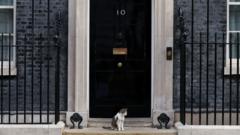
Consumer Group Unveils Booking.com’s Flaws with Fake 10 Downing Street Listing

A consumer group, Which?, has raised serious concerns about Booking.com after successfully creating a fake listing for the iconic 10 Downing Street.

A consumer group, Which?, has raised serious concerns about Booking.com after successfully creating a fake listing for the iconic 10 Downing Street. The UK watchdog revealed that their team managed to book a phony accommodation at the official residence of the Prime Minister, highlighting significant gaps in the travel giant’s security measures. This incident is not just a quirky prank; it underscores the potential for scammers to exploit the platform, raising alarm bells for consumers everywhere.

In a limited test, Which? researchers crafted a listing that described a one-bedroom apartment located right on 10 Downing Street, just a short walk from the heart of London. The description claimed it was “situated on 10 Downing Street” and was only “400 meters away from the main attractions.” This listing, which bore all the hallmarks of a joke, did not initially trigger any of Booking.com’s fraud detection systems, showcasing a troubling lack of oversight. A spokesperson from Which? pointed out that the platform’s so-called sophisticated AI systems seem inadequate, allowing scammers to operate with ease.

Despite Booking.com’s assurances regarding automatic fraud controls, the fake listing remained live for an alarming duration before being removed on August 27. The researchers even received a message from the company stating that the review would be checked by moderators, yet it was added to the listing shortly after. This begs the question: how many unsuspecting customers have fallen victim to similar scams?

Which? has previously highlighted consumer complaints about Booking.com, with many accusing the platform of failing to protect them from cybercriminals. A spokesperson from Ofcom echoed these concerns, urging a crackdown on irresponsible online platforms that leave users vulnerable to fraud. Booking.com customers have reported issues like reservation hijackings, leaving many to wonder about the integrity of their booking experience.

So, here we are, folks. Booking.com, a site trusted by millions, is under scrutiny for its lax security measures. If a fake listing for one of the UK’s most famous addresses can slip through the cracks, what does this mean for the average traveler? The safety of online bookings is now a pressing concern, and consumers are left questioning the reliability of such platforms.

As we continue to monitor this situation, one can’t help but wonder: what steps will Booking.com take next to address these glaring issues? Will they enhance their security protocols, or will we see more cases of fraud slip through? Stay tuned…

Kaynak: Orijinal Haber

Teen Hackers Behind TfL Cyber-Attack Sentenced to Over Five Years in Prison

Two young men, Owen Flowers, 18, from Walsall, and Thalha Jubair, 20, from east London, have been sentenced to five years and six months in prison f

Two young men, Owen Flowers, 18, from Walsall, and Thalha Jubair, 20, from east London, have been sentenced to five years and six months in prison for a cyber-attack that brought Transport For London (TfL) to its knees when they were just teenagers. These two were part of a group known as Scattered Spider, a collective of computer-obsessed loners, who pleaded guilty back in June for their roles in this audacious act from 2024. The attack severely disrupted TfL’s cyber security, and the implications of their actions were staggering.

Back in 2024, Flowers was just 17 and Jubair was 18 when they managed to hack into the database of individuals holding Oyster cards, the travel cards widely used across London. They didn’t just stop at accessing the database; they searched for personal details of London’s celebrities and even tried to get their hands on banking information. Can you imagine? They were joking about their exploits, clearly showing that they took this whole thing lightly. The group they were part of has been linked to numerous other attacks, including those on big-name retailers like Marks and Spencer and Co-op.

In a two-year spree, many young men and boys have faced arrest for similar Scattered Spider hacks across various countries, including the UK, US, Spain, and Finland. The TfL hack was particularly egregious, with millions of customer details stolen in a well-planned attack that began on a Saturday night, a strategic choice to avoid detection by staff. The BBC revealed that the compromised database is still being traded among criminal groups, with personal details of up to 10 million TfL customers floating around in the dark web. Talk about a massive breach!

As for how they pulled this off, it was a classic case of social engineering. Jubair and Flowers tricked a help desk worker into resetting the password of an employee they were impersonating. TfL was alerted to the breach by the National Crime Agency (NCA) and scrambled to kick the hackers out, but not before they had already accessed the data of countless individuals. The transport authority stated that, had it not been for their IT team’s swift action in logging out all staff and disconnecting their systems from the internet, the hack could’ve led to widespread chaos.

The repercussions were significant. A total of 148 technology systems became inoperable, significantly disrupting services, including Dial-a-Ride, which is crucial for disabled and vulnerable Londoners. TfL estimated the official impact of the hack to be around £29 million, with an additional £10 million in lost income. It’s not just numbers; it’s lives affected, services disrupted, and trust eroded.

In court, it was revealed that both men were loners, spending most of their days online, often unsupervised. Judge Mr. Justice Turner took their youth and autism diagnoses into consideration during sentencing, reflecting on the broader societal issues at play. Flowers reportedly rarely left his house, spending hours in his bedroom glued to his computer screen. His journey into the world of cyber crime began with a cease-and-desist order for minor offenses back in 2023, shortly after he turned 16. Just a few months later, he moved on to more serious cyber offenses, leading to his arrest in September 2024.

Footage of his arrest shows him laughing as authorities took him into custody, a stark contrast to the serious nature of his crimes. During the raid, investigators caught him in the act of hacking two US healthcare providers, with messages revealing his flippant attitude towards the potential consequences of his actions. It’s chilling to think about the impact his actions could have had on vulnerable individuals.

Experts are now calling for policymakers to view this issue as a violent youth gang problem, highlighting a culture that idolizes the destruction of society and the maximization of victim harm. It’s a sobering thought as we consider the influence of the online world on young people today.

Will we see more cases like this in the future? It’s a question that lingers as we try to navigate the complexities of youth and technology in a rapidly changing world.

Kaynak: Orijinal Haber