US-Russian Space Crew Touches Down After Epic Eight-Month ISS Mission

A US-Russian space crew has just made a triumphant return to Earth after an astonishing eight-month stint aboard the International Space Station (IS

A US-Russian space crew has just made a triumphant return to Earth after an astonishing eight-month stint aboard the International Space Station (ISS). The crew, featuring NASA astronaut Chris Williams and Russian cosmonauts Sergey Kud-Sverchkov and Sergei Mikaev, landed safely in their Soyuz MS-28 spacecraft in Kazakhstan at around 3:27 PM local time. This landing took place southeast of the city of Dzhezkazgan, and boy, what a journey it has been!

According to NASA, these brave astronauts spent a whopping 241 days in the vastness of space. During this time, they orbited our planet a staggering 3,856 times, racking up more than 102 million miles. Their mission wasn’t just a joyride; they engaged in critical scientific investigations aimed at improving life here on Earth. The agency pointed out that the work involved in this mission was vital, and it certainly wasn’t just about floating around in zero gravity!

Now, while our heroes have returned, there’s still a bustling crew aboard the ISS. Russian astronauts Jessica Meir and Jack Hathaway, along with European Space Agency’s Sophie Adenot and cosmonaut Andrey Fedyaev, are gearing up for Expedition 75, which kicks off today and is set to continue until spring 2027. This next phase promises to be just as exciting, with plans to explore and even “bioprint human tissue,” as mentioned by NASA. How wild is that?

As we reflect on the incredible achievements of the returning crew, it becomes clear that their time in space was about much more than just adventure. They gathered valuable data, conducted experiments, and contributed to our understanding of living and working in space. Their journey showcases the power of international collaboration in space exploration, reminding us that when nations unite, the sky isn’t the limit; it’s just the beginning.

So, what’s next for these space pioneers? Will they adapt back to life on Earth after such an extended absence? And how will Expedition 75 unfold over the next few years? Only time will tell, but one thing is for sure: the world will be watching!

Kaynak: Orijinal Haber
Space Debris Washes Ashore in Queensland: Authorities Warn Not to Touch!

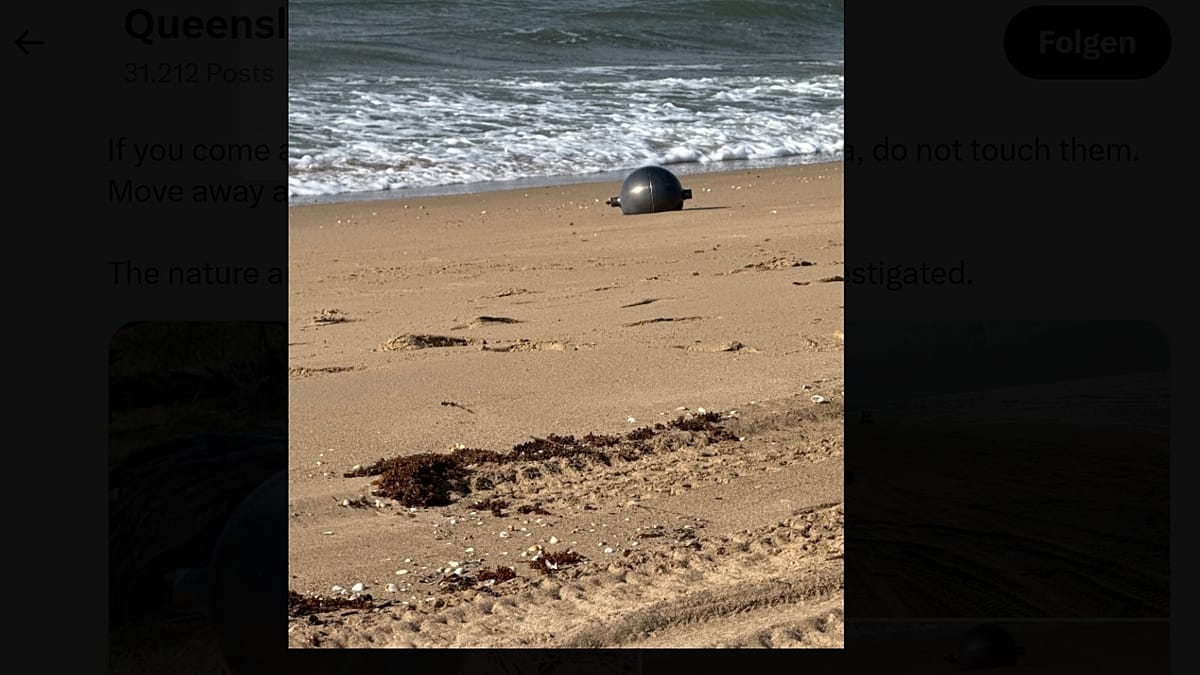
The fire service in Queensland, Australia, is raising alarms over some bizarre and potentially hazardous objects that have washed up on the beaches.

The fire service in Queensland, Australia, is raising alarms over some bizarre and potentially hazardous objects that have washed up on the beaches. Dubbed “space balls,” these strange items are causing quite a stir among locals. If you happen to stumble upon anything suspicious in the area, the advice is clear – don’t touch them! Instead, you’re urged to move away and call the Triple Zero emergency number immediately.

Photos released by the fire service show these mysterious space balls, which have sparked curiosity and concern alike. After preliminary inspections, the Australian Space Agency (ASA) has come to an alarming conclusion: these pressure vessels could contain toxic substances. Yani, durum ciddi! They are currently trying to identify which rocket these parts belong to, with the ASA working closely with international partners to figure it out.

Just recently, a study from the European Southern Observatory (ESO) highlighted the ever-growing problem of space debris. It’s predicted that over 1.7 million satellites are set to be launched into Earth’s atmosphere, and many of them don’t completely burn up upon re-entry. This means more debris could be falling into our atmosphere and landing on our shores.

Among the notable examples of space debris listed by Australia’s space agency are fragments from the Skylab space station that crashed in Western Australia back in 1979, and part of a SpaceX Dragon rocket found in New South Wales in 2022. And now, here we are in 2023, dealing with yet another piece of history that’s washed up on our beautiful Australian beaches.

The locals are understandably on edge. People are wondering, what if these space balls are more dangerous than they look? Yahu, düşünsenize, bir uzay aracı parçası plajımıza gelmiş! This situation has turned into a mix of excitement and caution. The community is being urged to remain vigilant and report any findings to the authorities.

So, what’s next for these space balls? Will they be safely removed, or will they become yet another piece of history for our beaches? Only time will tell, but one thing’s for sure: the world of space exploration has some unexpected consequences reaching all the way down to our shores.

Kaynak: Orijinal Haber

NASA’s Lifesaving Robot Launches to Save Swift Observatory from Earth Crash!

A rescue spacecraft has blasted into orbit on a mission to save a NASA telescope from crashing back to Earth. The three-armed robot, named Link, lau

A rescue spacecraft has blasted into orbit on a mission to save a NASA telescope from crashing back to Earth. The three-armed robot, named Link, launched from the Marshall Islands on Friday and is set to take about a month to reach its target: the Neil Gehrels Swift Observatory. This telescope has been circling our planet since 2004, but it’s now facing a serious situation; it’s been losing altitude faster than anyone anticipated. Recent solar activity has really cranked up the heat, causing Earth’s most explosive events, like gamma-ray bursts and those mind-blowing exploding stars, to stretch and expand.

Now, Link made it to orbit after a Northrop Grumman Pegasus XL rocket—on its very last flight—dropped from a modified aircraft and ignited high above the Pacific Ocean. If everything goes according to plan, Swift could be back in action by September. But right now? Observations are on hold to slow its descent. The Swift telescope is currently circling at 360 kilometers above Earth, but it needs to be lifted up by 240 kilometers to reach a safe orbit. And here’s a twist: Link’s buddy, the Hubble Space Telescope, might face a similar fate in the coming years, also losing altitude as the sun heats up.

“This is a high-risk, high-reward mission,” said Ghonhee Lee, the chief executive of Katalyst. “The biggest danger was always we don’t know how the telescope will react…” Can you believe that? They’re taking some serious chances to save this piece of scientific marvel. The stakes are high, folks!

So, for now, everyone’s holding their breath, waiting to see if Link can pull off this daring rescue. Just imagine the scientists back at NASA; they must be glued to their screens, praying for success. Will they manage to save Swift, or will it join the ranks of lost satellites? We’re all eyes and ears on this one. The countdown has begun, and the clock is ticking…

Kaynak: Orijinal Haber

Greece Prepares to Launch Its First Astronaut: Adrianos Golemis Set for Space

Greece is gearing up to send its first astronaut into space. Yes, you heard that right! In a stunning turn of events, especially considering the econ

Greece is gearing up to send its first astronaut into space. Yes, you heard that right! In a stunning turn of events, especially considering the economic turmoil the country faced just a few years back, Greek Prime Minister Kyriakos Mitsotakis announced that Adrianos Golemis, the only Greek to have passed all astronaut tests since 2022, will launch into space within the next two years. This announcement came after a meeting at the Maximos Mansion and was made public on Friday morning. The mission is part of Greece’s new National Space Strategy, which looks ahead to 2035.

So, what’s the deal? Adrianos will embark on a three-week mission, and this isn’t just a joyride; it’s a significant investment for Greece with both symbolic and practical implications. Mitsotakis emphasized that he wants Adrianos to inspire young students and explain to them why space exploration is vital. “This is an investment our country is making, in cooperation with the European Space Agency, but, to say it in English, ‘money well spent’, I believe,” he stated.

Now, let’s break it down a bit more. Over the next couple of years, Adrianos will be diving into a world of experiments and technological demonstrations proposed by various Greek research teams, universities, and organizations. This is a golden opportunity for Greek companies to showcase their innovative solutions under the conditions of space. Not just that! Valuable data will be collected, aiding in further research and applications. As if that wasn’t enough, there’s also the potential for developing important partnerships with international players.

But wait, there’s more! The government plans to roll out programs aimed at encouraging young folks to engage with science and its practical applications. Ideas like organizing a school competition to build a satellite, STEM competitions, and sending student questions to astronauts aboard the International Space Station (ISS) are already on the table. It seems like the Greek government is pulling out all the stops to get the youth excited about science!

Adrianos Golemis isn’t just any astronaut; he’s been working with astronauts since 2018 as a doctor in collaboration with the French Institute for Space Medicine and Physiology. He knows the ins and outs of space missions like the back of his hand. Back in March 2024, he laid out his vision for Greece’s mission to space, and now, just over two years later, the project is finally on track. The European Space Agency’s Director General Josef Aschbacher even congratulated Greece on developing its European program and mentioned that they would support exploring commercial space flights for Greek citizens.

So, can you believe it? Greece, a country that was once teetering on the edge of economic collapse, is now gearing up for a space adventure! It’s not just about sending an astronaut into space; it’s about inspiring the next generation, investing in research, and proving that Greece can still aim for the stars. What’s next for Adrianos and his journey into space? This is just the beginning, folks…

Kaynak: Orijinal Haber

SpaceX’in Gizli Uzay Görevi: Kimse Bilmediği Bir Uzay Aracı Fırlatıldı!

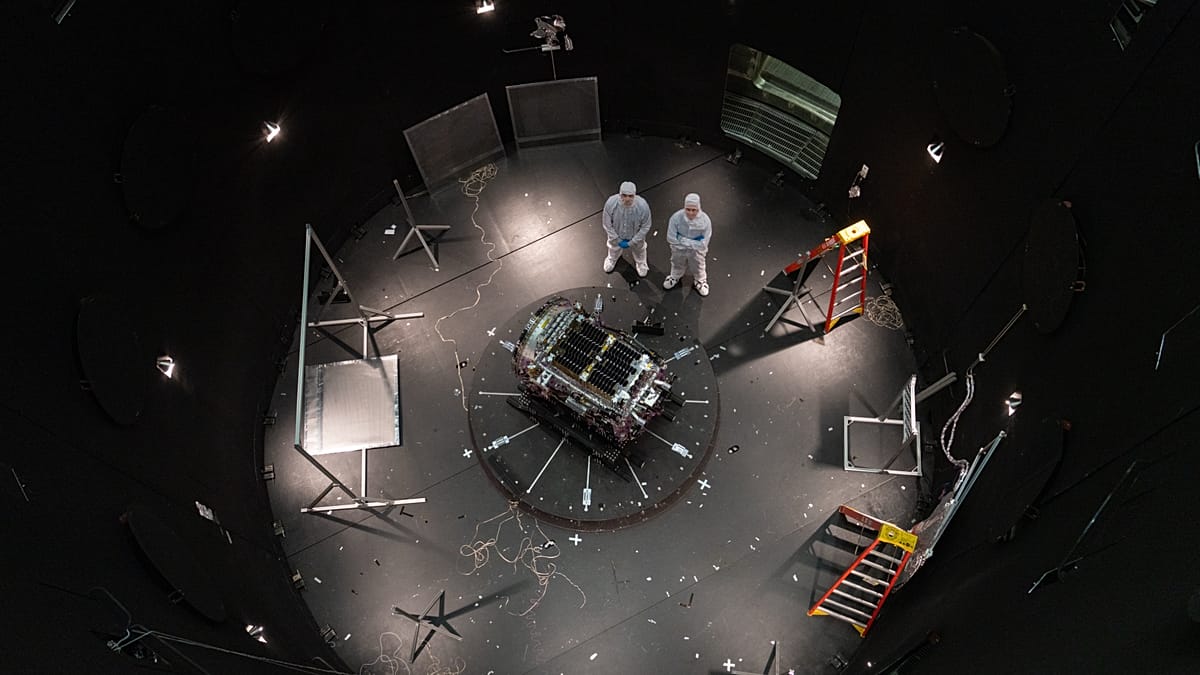
In a surprising move that flew under the radar, SpaceX has launched a spacecraft that many didn’t even know existed. The launch, which took place re

In a surprising move that flew under the radar, SpaceX has launched a spacecraft that many didn’t even know existed. The launch, which took place recently, has sparked curiosity and excitement among space enthusiasts and casual observers alike. It’s not every day that a company known for its high-profile missions and ambitious goals slips in a secret launch without much fanfare.

The spacecraft, shrouded in mystery, was sent into orbit as part of an undisclosed mission. Details about the purpose of this launch are still under wraps, and the lack of information only adds to the intrigue. It’s like SpaceX decided to play a game of hide-and-seek with the world, and they seem to be winning. Yahu, it’s almost as if they wanted to keep this one a secret from the very start!

The mission was reportedly conducted with the same precision and efficiency that SpaceX is known for. They have a knack for launching rockets and spacecraft at breakneck speed, and this one was no exception. The launch took place at dawn, a time when the sky was painted in hues of orange and pink, making it quite a sight for those lucky enough to witness it. Can you imagine? A rocket blasting off against a beautiful sunrise backdrop!

While specifics about the spacecraft itself remain scarce, insiders hint that it could be related to experimental technologies or even preparation for future missions. Bakın, işin aslı şu; SpaceX is always on the lookout for ways to push the boundaries of what’s possible in space travel. But what exactly are they up to this time? That’s the big question lingering in the air…

As the details trickle in, one can only wonder about the implications of this stealthy launch. Could it be a precursor to something groundbreaking? Or perhaps a test for a larger mission down the line? The excitement in the air is palpable, and it has everyone buzzing with theories and speculations. İşin aslı, bu durum herkesin kafasında farklı sorular oluşturuyor; “Acaba bu uzay aracı neyi test ediyor?” gibi…

So, as we await more information from SpaceX, let’s keep our eyes peeled for any updates. After all, the world of space exploration is filled with unexpected twists and turns, and who knows what surprises are lurking around the corner? Gelişmeleri takip ediyoruz, çünkü uzay her zaman daha fazlasını vaat ediyor!

Kaynak: Orijinal Haber

Helium-3: The Lunar Gold Rush for Clean Energy

Helium-3, a rare isotope of helium, could hold the key to a clean energy future, and it might just be hiding on the moon. Scientists and entrepreneur

Helium-3, a rare isotope of helium, could hold the key to a clean energy future, and it might just be hiding on the moon. Scientists and entrepreneurs are buzzing with excitement over the potential of extracting helium-3 from lunar regolith, the powdery surface material that covers the moon. But what exactly is this helium-3, and how are we planning to get it from our celestial neighbor?

First off, let’s break down what helium-3 is. Unlike its more common sibling, helium-4, which you might find filling party balloons, helium-3 is a hot commodity. Currently, a single liter of this gas can set you back around $2,000, and that price is variable. This high cost is largely due to its limited supply, which mainly comes from the decay of tritium in nuclear weapons—a rather controlled and not-so-sustainable source. With the demand for helium-3 expected to skyrocket, it’s clear that new sources are necessary.

Now, here’s where the moon comes into play. Samples of moon dust collected during the Apollo missions suggest that helium-3 could be present in higher concentrations than what we typically find on Earth. This has sparked a new interest in lunar exploration, with companies like Interlune aiming to tap into this extraterrestrial resource. Rob Meyerson, the co-founder and CEO of Interlune, shares that their team has been hard at work for the past four years developing technologies to extract helium-3. They’re gearing up to launch their equipment on a lunar lander by as early as autumn 2027.

But hold on a second—it’s not all smooth sailing. The reality is that no one really knows how much helium-3 is on the moon. Paul Burke from Johns Hopkins Applied Physics Laboratory warns that the Apollo samples might have lost some helium-3 during their journey back to Earth, which makes estimating its availability quite tricky. Moreover, there could be fewer helium-3 hotspots than anticipated, or they might be buried too deep to access easily. To put it bluntly, extracting helium-3 could mean excavating hundreds of thousands of tons of regolith just to get a single kilogram of the stuff. That’s a monumental task and raises questions about the project’s economic viability.

On the flip side, there are other companies eyeing the lunar helium-3 market. Astrotech Corporation is also planning a trip to the moon via a SpaceX Starship rocket, aiming to extract helium-3 by heating the regolith. Tom Pickens, their CEO, acknowledges the challenges but remains optimistic about their prototype for lunar extraction.

Interestingly enough, some scientists are also exploring helium-3 extraction from Earth itself. Pulsar Helium is investigating a site in Minnesota where helium-3 concentrations are around 12 parts per billion. Peter Barry, a geochemist involved with the project, points out that getting helium-3 from Minnesota is a lot easier than traveling to the moon.

So what does all this mean for the future? It’s clear that the race for helium-3 is heating up, and interest is growing. Quantum computers, which may one day require vast amounts of helium-3, are already driving investments. In fact, a Helsinki-based quantum computing company has struck a $300 million deal with Interlune for an annual supply of helium-3 starting in 2028.

But hey, let’s not forget—there are alternatives. Some scientists are working on cooling methods that don’t rely heavily on helium-3, so it’ll be interesting to see how this all plays out. With the Artemis missions aiming for lunar landings in the coming years, we might just find out if the moon truly is the next frontier for this precious isotope. Will the lunar gold rush become a reality? Only time will tell…

Kaynak: Orijinal Haber