Baroness Mone and Husband Sued Over PPE Medpro Millions

Baroness Michelle Mone and her businessman husband Douglas Barrowman are facing a lawsuit aimed at recovering millions owed to the government by thei

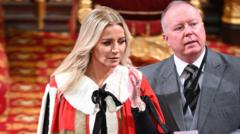
Baroness Michelle Mone and her businessman husband Douglas Barrowman are facing a lawsuit aimed at recovering millions owed to the government by their now-collapsed company, PPE Medpro. According to the BBC, this legal action comes after the government was awarded £122 million plus interest from PPE Medpro last year. A court found that the firm had violated its contract to deliver sterile surgical gowns during the height of the COVID-19 pandemic.

Joint liquidators from Interpath Advisory have initiated proceedings against six individuals and five companies linked to PPE Medpro, which has now entered liquidation. Mone and Barrowman were contacted for comments, but it remains to be seen how they will respond. This company, formed in 2020 at a time when the government was scrambling to secure protective equipment for health workers, initially landed a government contract to supply masks through a controversial “VIP lane” system.

However, the court ruled that PPE Medpro failed to demonstrate whether its surgical gowns for NHS workers had undergone a proper sterilization process. The government was adamant that it won the case, highlighting the risk posed to NHS staff and patients by substandard gear. The government pledged to pursue the company vigorously to reclaim the funds—an effort that may be complicated given the web of connections involved.

Interestingly, Mone and Barrowman were not directors of PPE Medpro, and they had long denied any affiliation with the firm. But in a revealing BBC interview in 2023, Barrowman admitted to being the ultimate beneficial owner, while Mone acknowledged that she benefited from a trust that received profits from the company. The lawsuit also targets four former directors of PPE Medpro, including Arthur Lancaster, an accountant with ties to Andrew Mountbatten-Windsor.

The case came to light thanks to tax expert Dan Neidle, shedding further scrutiny on the situation. Last year, HMRC filed a £39 million tax claim against PPE Medpro, alleging the company owed substantial tax. Meanwhile, the Department for Health and Social Care stated that the recovery of funds was the responsibility of the appointed liquidators, emphasizing that it would be inappropriate for ministers to intervene. Nevertheless, the government expects decisive action to be taken.

Adding to the complexity, the National Crime Agency is also conducting a separate criminal investigation into PPE Medpro. The developments surrounding this case are still unfolding, leaving many questions about accountability and the future of those involved.

Kaynak: Orijinal Haber

Train Driver Passed Red Signal Moments Before Fatal Crash: Investigation Reveals

A train driver, Shaun Burton, aged 60, tragically lost his life in a catastrophic collision in Bedfordshire on Friday, which also left around 162 peo

A train driver, Shaun Burton, aged 60, tragically lost his life in a catastrophic collision in Bedfordshire on Friday, which also left around 162 people injured. Investigators have reported that Burton passed a red signal just moments before the crash that involved a London-bound service colliding with the rear of another train. The Rail Accident Investigation Branch (RAIB) is currently looking into the details, but they have stated it is too early to determine the exact indications the driver may have received prior to the crash. This incident has raised serious concerns about the safety systems in place, with officials emphasizing that such systems should have been capable of preventing this kind of disaster.

As the dust settles on this horrifying event, the aftermath is proving to be just as shocking. The collision resulted in a significant number of injuries—162 people to be exact—leading to chaos akin to a bomb explosion, as described by witnesses. Members of the House of Commons have expressed their condolences, while also calling for respect for Burton’s family as they navigate this unbearable loss. The situation for those affected is dire, with many passengers losing property in the fray. A significant amount of personal belongings has already been collected and sent to an East Midlands Railway storage facility, and those who lost items are urged to get in touch for their return.

Network Rail has announced that the Midland Main Line will remain closed for East Midlands Railway and Thameslink services until the end of the week. Commuters are advised to seek alternative travel arrangements as investigations continue. The scene of the crash remains a focal point for emergency services and investigators alike as they sift through evidence and testimonies to piece together the events leading to this tragic accident.

As we reflect on this devastating incident, questions linger in the air: What measures can be put in place to prevent such accidents in the future? Will the lessons learned from this tragedy lead to improved safety protocols? The community and the families affected by this disaster deserve answers and assurance that such a calamity will not happen again.

Kaynak: Orijinal Haber

Venezuela’s Historic Debt Restructuring: The Stakes Are High!

Venezuela is gearing up for an unprecedented debt restructuring, with estimates revealing a staggering debt of nearly 240 billion dollars. This figu

Venezuela is gearing up for an unprecedented debt restructuring, with estimates revealing a staggering debt of nearly 240 billion dollars. This figure significantly exceeds the previous market expectations of 150 to 200 billion dollars. The report, uncovered by the Financial Times, positions Caracas on the verge of the largest debt restructuring in history, even surpassing Greece’s historic default back in 2012. This move comes on the heels of a political shakeup in the nation, following the capture of Nicolás Maduro last January. Interim president Delcy Rodríguez has taken charge with a clear mission in mind: to negotiate a deal with creditors before the year wraps up and to re-enter international markets, which Venezuela has been excluded from for almost a decade now.

According to the British daily, US bank Centerview Partners, which has been appointed as an adviser, is currently finalizing a viability plan expected to be published in early July. But before that, Caracas is set to unveil a dismal macroeconomic framework later this month, revealing an economy that has shrunk to about 100 billion dollars. This is a stark contrast to the impressive 370 billion dollars recorded during Hugo Chávez’s final year in office in 2012. One detail, however, is raising eyebrows: unlike previous major restructurings, the sustainability analysis of this situation does not include the International Monetary Fund’s (IMF) endorsement. This lack of support is already causing concern among the Venezuelan opposition, who fear the nation may find itself in an even more precarious position with its creditors.

The IMF has maintained a distance, clarifying that while it’s not actively participating in the restructuring process, it has resumed technical contact with Caracas since last April after a seven-year hiatus. The bulk of this debt consists of sovereign bonds and obligations from the state oil company PDVSA, which account for around 60 billion dollars. Additionally, there’s a whopping 40 billion dollars owed in interest arrears since the default, plus debts to oil companies and suppliers, claims related to expropriations from the Chávez era, and outstanding loans from China and Russia.

For investors watching closely, the pressing question isn’t just the headline figure but the future of oil revenues. The central bank reported that first-quarter oil revenues hit 5.5 billion dollars, showing a slight improvement compared to the last stretch of the Maduro administration, but still a far cry from pre-sanction levels. This ongoing situation has led to widespread skepticism; many doubt that an agreement will be reached in 2026, with most eyes already set on 2027.

Bakalım bundan sonra ne olacak? Gelişmeleri takip ediyoruz…

Kaynak: Orijinal Haber

Economic Turmoil: What Awaits the Next Prime Minister?

The next prime minister is stepping into a storm of economic challenges that could define their tenure. For years, the economy has been the backbone

The next prime minister is stepping into a storm of economic challenges that could define their tenure. For years, the economy has been the backbone of political instability, with citizens feeling the squeeze of dwindling job opportunities, stagnant living standards, and strained public services. The public’s patience is wearing thin, and they are yearning for change. So, what are the key issues that the incoming leader must address?

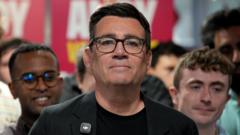
Andy Burnham, a leading figure, has promised to revive the economy while adhering to the current government’s plan to reduce national debt. Before the US-Israel conflict with Iran escalated, Chancellor Rachel Reeves believed she could meet fiscal rules with a cushion of £24 billion. However, much of that could be lost due to the ongoing turmoil. Burnham’s commitment to follow the current government’s fiscal guidelines comes at a time when interest repayments on the national debt consume one out of every ten pounds the government spends. Even the ambitious plans Burnham has hinted at might surpass the available financial wiggle room. His vision could face harsh realities, and some proposals may not withstand the pressure of real-world implications.

He might adjust those fiscal rules. For instance, if bond markets are convinced that increased borrowing for investment will lead to higher growth, they might be more sympathetic. Alternatively, he could seek funding from other sources, including increasing taxes or reallocating funds from different sectors. Growth and ensuring more cash in people’s pockets will have to be a priority. The long years of austerity and the aftermath of Brexit have severely impacted public and private investment, leading to a decline in productivity and, ultimately, our prosperity. This decline was further exacerbated by the disruption caused by COVID-19 and soaring energy prices. Meanwhile, food prices have skyrocketed by 40% in just a few years, hitting everyday citizens hard.

It’s crucial to note that while government policies, including increased national minimum wages and taxes, have played a part, the most affected sectors, like retail and hospitality, are particularly sensitive to rising labor costs. These industries are often the primary source of entry-level jobs for many. A recent report by former Labour minister Alan Milburn stresses that the long-term erosion of these positions has contributed to the alarming rise in youth unemployment, adding to the growing number of young people who are not in employment, education, or training (NEETs). Milburn warns that the NEET rate could soar to one in six young people, potentially impacting lives for decades. The second part of this report, which will include policy recommendations, is set to be published later this year.

Furthermore, Burnham has indicated support for increasing defense spending to 3.5% of GDP by 2035, but this ambitious goal requires more than just good intentions. It could demand tens of billions of pounds. John Healey resigned as defense secretary, citing the Treasury’s unwillingness to fund such initiatives. Finding the necessary funds may require reallocating money from other areas of government spending, especially as many departments are already grappling with tight budgets.

Now, turning to welfare spending, projections indicate a rise of over a quarter between 2025 and 2030, primarily due to increases in sickness-related payouts for working-age adults and pension benefits. Navigating welfare reform has proven challenging for Prime Minister Sir Keir Starmer. Will a new prime minister have the determination and flexibility to tackle this issue more effectively? Economists, including Lord Jim O’Neill, advocate for a new approach, particularly as many prospective buyers are struggling with high rental costs, making it increasingly difficult to save for a deposit.

The pressing need is to build more homes, but the government’s targets seem far from achievable. Burnham aims to boost social housing, which could help alleviate some of the housing crisis. However, as past governments have discovered, the mantra often appears to be that you must spend more to earn more. But the question remains, whose money will be used to fund these initiatives?

As the political landscape shifts, the next chancellor’s identity remains uncertain. Burnham is trying to reassure markets by committing to fiscal rules, but the road ahead is fraught with complexities.

Kaynak: Orijinal Haber

Economic Turmoil Ahead: The Next Prime Minister’s Tough Choices

Political instability in recent years has largely been a product of economic woes. The public is fed up, tired of stagnant job opportunities and decl

Political instability in recent years has largely been a product of economic woes. The public is fed up, tired of stagnant job opportunities and declining living standards. They want change, and their patience is running thin. So, what’s on the plate for the next prime minister? Well, it seems like a hefty to-do list is waiting for them.

Andy Burnham, a prominent political figure, has promised to revive the economy, but he’s also committed to adhering to the current government’s fiscal rules, aiming to reduce debt as a proportion of the overall economy. Before the US-Israel conflict with Iran escalated, Chancellor Rachel Reeves believed she could meet her financial targets with a comfortable £24 billion to spare. But, with the war now in play, much of that potential cushion may have vanished.

Burnham’s commitment to sticking with the current government’s lenders comes at a time when interest repayments on the national debt consume one in every £10 spent by the government. Even the plans he’s hinted at could easily exceed the limited wiggle room available. The reality might just thwart his ambitions, and some of his ideas may not survive the harsh light of fiscal scrutiny.

Could he tweak the rules? Perhaps. For instance, bond markets might be more lenient toward borrowing for investments if they are convinced it would lead to economic growth. Or he might have to look for alternative funding sources, including raising taxes or cutting spending in other areas. Growth is essential – putting more money in people’s pockets has to be a priority. But the lack of public and private investment during years of austerity and the aftermath of Brexit has seriously affected productivity and, in turn, our prosperity.

And let’s not forget the impact of Covid-19 and skyrocketing energy prices. Food prices have shot up by a staggering 40% over the past few years, hitting people’s pockets hard. Sure, some of this can be traced back to government policies, such as higher minimum wages and increased taxes, but these factors have particularly hurt sectors like retail and hospitality. These industries are the most vulnerable to rising labor costs and they often provide the entry-level jobs that many rely on.

A recent report from former Labour minister Alan Milburn pointed out that this long-term erosion of entry-level positions has contributed to a troubling rise in youth joblessness. He warned that NEETs (those Not in Employment, Education, or Training) could soar to one in six young people, potentially affecting lives for decades to come. The second part of this critical report, which will contain policy recommendations, is set to be released later this year.

Now, about defense spending – that’s another kettle of fish. Burnham has expressed support for increasing defense expenditures to 3.5% of GDP by 2035. Sounds good in theory, but it’s going to require more than just good intentions. We’re talking about tens of billions of pounds. John Healey, who previously served as defense secretary, stepped down due to what he called the Treasury’s unwillingness to provide necessary funding. Finding that cash might mean diverting funds from other government budgets, and let’s not forget that many departments are already feeling the pinch.

Welfare spending is on track to rise by over 25% between 2025 and 2030, primarily due to increased sickness-related payouts for working-age adults and pensioner benefits. Reforming welfare has proven to be a tough nut to crack for Prime Minister Sir Keir Starmer. Will the new prime minister have more freedom to tackle this issue? Economists, including Lord Jim O’Neill, support a government approach that recognizes the need for affordable housing.

Yet, the average age of first-time buyers continues to rise, making it harder for young folks to save up for a deposit. The most sustainable fix? Building more homes. Andy Burnham aims to boost social housing construction, which could help ease the burden. But, as previous governments have discovered, the age-old adage rings true: you have to spend money to make money. But whose money?

So, who could be the UK’s next chancellor? Faisal Islam reports that Burnham is trying to reassure markets by committing to fiscal rules. But will that be enough to navigate the stormy economic seas ahead?

Kaynak: Orijinal Haber

Airbus A380 Uçakları Hava Güvenliği İçin Acil Kontrole Alındı!

The European Union Aviation Safety Agency (EASA) has just ordered emergency inspections on 16 Airbus A380 aircraft after cracks were found in a cruci

The European Union Aviation Safety Agency (EASA) has just ordered emergency inspections on 16 Airbus A380 aircraft after cracks were found in a crucial structural component inside the wings of one of these massive planes. Can you believe it? These superjumbos, known for carrying passengers across the world’s busiest long-haul routes, are under the microscope once again. Five Emirates aircraft, to be specific, have been flagged for inspection before they take to the skies again.

The spotlight is on the wing mid-spar—this is a key structural element that plays a vital role in managing the stresses that occur during flight. Now, the good news is that EASA hasn’t grounded the entire fleet of A380s, and as of now, there’s no immediate safety risk identified for all aircraft. However, it’s worth noting that emergency directives from EASA are quite unusual and typically reserved for issues that could jeopardize the airworthiness of an aircraft if not addressed promptly.

You know, the A380 had its production halted back in 2021, yet it still remains a favorite among airlines and passengers alike. But Airbus is facing its own issues; they’re struggling to ramp up production due to ongoing supply chain challenges. There’s a notable shortage of engines from Pratt & Whitney that has left completed aircraft just sitting at Airbus facilities in Toulouse and Hamburg, waiting for those engines before they can finally be delivered to eager airlines.

On top of all that, EASA is also tightening maintenance requirements for certain A330 aircraft and overseeing updates to the A320 family following concerns about flight control computers that cropped up after an incident linked to intense solar radiation. Talk about a busy time for Airbus!

Airbus CEO Guillaume Faury has voiced his frustrations earlier this month, pointing out that stringent regulations, soaring energy prices, and rising administrative costs are slowly chipping away at Europe’s competitiveness in the aviation sector. It’s a tough time for the aviation industry, and it seems like the road ahead is filled with more hurdles.

So, what’s next for Airbus and the A380? Will these inspections lead to long-term changes in how these giant planes are maintained? We’ll just have to wait and see…

Kaynak: Orijinal Haber

Who Will Step into the Chancellor’s Shoes?

With Sir Keir Starmer stepping down, the political landscape in the UK is on the brink of change. Andy Burnham, the newly-elected Makerfield MP, is n

With Sir Keir Starmer stepping down, the political landscape in the UK is on the brink of change. Andy Burnham, the newly-elected Makerfield MP, is nearly a lock to become the next prime minister. But here’s the kicker: who will fill the crucial role of Chancellor, currently held by Rachel Reeves? It’s a hot topic on the streets, and folks are buzzing about it. The next chancellor will inherit a pile of challenges – think high debt, sluggish growth, welfare reform, and the fallout from the ongoing US-Israel conflict with Iran.

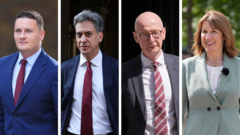
Names are swirling around, and the bookies are taking bets on who might take the reins. One name that pops up is Ed Miliband, a former Treasury adviser, who some believe has the brains and experience to lead effectively. But opinions are split. Some say he could rally the markets, while others, like Nick Macpherson, ex-permanent secretary at the Treasury, claim he’s one of the few who can handle the pressure. The stakes are high, with energy prices soaring compared to other countries, which could influence how the bond markets react to whoever takes over.

There’s chatter about Rachel Reeves staying on, especially since Burnham seemed to appreciate her during a recent Westminster photo op after being sworn in. But let’s be real – if I were Andy Burnham, I wouldn’t want to tie myself to Reeves too quickly, given the mess she might inherit… or not. Lord O’Neill has advised Burnham to tread carefully, suggesting that if he chooses to make a change, Reeves might just stick around for a bit longer.

The clock is ticking, and the political game is heating up. With Burnham potentially stepping into Starmer’s shoes, the question remains: will he make bold moves with his cabinet, or will he play it safe? The public is watching closely, and the answer could reshape the UK’s financial landscape.

Bakalım, bu süreçte neler olacak?

Kaynak: Orijinal Haber

Who Will Step Up as the UK’s Next Chancellor?

With Sir Keir Starmer stepping down, all eyes are on Andy Burnham, the newly-elected Makerfield MP, who is now almost a shoo-in for the role of the n

With Sir Keir Starmer stepping down, all eyes are on Andy Burnham, the newly-elected Makerfield MP, who is now almost a shoo-in for the role of the next UK prime minister. And let me tell you, it’s not just a formality; many believe Burnham will be looking for a fresh face to take over the reins from Rachel Reeves, the current chancellor at Number 11 Downing Street. Now, whoever takes on that role is going to have their hands full with a daunting list of challenges: high debt, low economic growth, welfare reform, increased defence spending, and let’s not forget the economic ripple effects from the ongoing US-Israel conflict with Iran.

So, who’s in the running? Well, a few names have popped up, and they could have significant implications for the UK’s economic landscape. Interestingly, bookies are already weighing in on the potential candidates. There’s been some buzz around Ed Miliband, a former Treasury adviser, who is considered to have the necessary intellect and experience to potentially rally the markets. However, it’s a mixed bag; some analysts are skeptical, suggesting that Miliband’s past reputation could sway how bond markets react during his time as chancellor.

And let’s not forget about the role of the Unite union, which is gearing up for a significant challenge: welfare reform. With all these pieces moving, the stakes are incredibly high. Panmure Liberum has labeled some of the options as “the safest pair of hands,” whereas others are seen as “a bit more of an unknown.” It’s a bit of a gamble, and with Rachel Reeves being so closely tied to Starmer, some are even placing bets that she might just hang on to her position for a while longer.

Lord O’Neill, who’s been advising Burnham, cautioned against rushing into any decisions. “If he does go with someone like Reeves, it may buy him some time,” he remarked. It’s a tightrope walk for Burnham, who has already hinted at wanting to stick with Reeves, at least for the time being. Just the other day, she was conspicuously absent from a Westminster photoshoot after Burnham was sworn in as an MP.

Now, here’s the thing: if I were in Burnham’s shoes, I wouldn’t want to tie myself too quickly to any particular figure, especially with the current political climate being what it is. Starmer’s resignation has opened the door for a new contest, and it’s anybody’s guess how that will unfold.

What’s next for Burnham and his potential chancellor? One thing’s for sure – the pressure is on, and the financial landscape is nothing short of a minefield. Will the new chancellor be able to navigate these turbulent waters? We’re all waiting to see how this plays out.

Kaynak: Orijinal Haber

SpaceX Faces Massive $600 Billion Loss as Bond Market Beckons

SpaceX shares closed at $154.63 on Monday, marking a significant drop of around 16% in just one day. This decline has brought the share price dangero

SpaceX shares closed at $154.63 on Monday, marking a significant drop of around 16% in just one day. This decline has brought the share price dangerously close to the $150 mark, which was the initial trading price when the company went public. It’s interesting to note that the shares were still trading above the $135 price established during the IPO itself. In just three trading days, this slide has wiped out more than $600 billion in market value, dragging the company down from a peak that saw it surpass giants like Amazon and momentarily, Microsoft, in market capitalization. Now, its valuation rests just above $2 trillion, trailing behind Taiwan Semiconductor Manufacturing Company, making it the seventh most valuable company globally.

The retreat marks a dramatic shift from a remarkable opening run for SpaceX. When trading opened around $150 on June 12, shares skyrocketed to nearly $226 by June 16, representing a staggering gain of about two-thirds before the company had even published its first results as a public firm. But now, just weeks later, SpaceX’s stock is trading over 30% lower than that intraday high of around $226 and only about 3% above the initial price when the shares first hit the market. This rally was always resting on a fragile base of freely traded shares and sky-high expectations for its AI ambitions, making the company vulnerable to a sudden sentiment reversal.

The latest drop coincided with the launch of SpaceX’s AI venture, xAI, earlier this year, with part of the proceeds going to general corporate purposes. Interestingly, this debut bond sale follows investment-grade credit ratings awarded last Friday by major agencies: Moody’s rated it at Baa1, Fitch at BBB+, and S&P Global at BBB. These ratings open doors to cheaper borrowing and a wider pool of institutional lenders.

In documents related to the offering, SpaceX disclosed a cash position of roughly $100.8 billion as of June 19, a significant chunk of which was raised during the IPO. Additionally, the company has $29.1 billion in long-term debt. This combination of substantial cash reserves and fresh borrowing shortly after a record flotation has left some investors feeling uneasy. They view this rapid fundraising as a potential sign of heavy spending ahead, especially as SpaceX ramps up its AI and data center plans.

Opting for debt instead of new share issues does have its benefits, as it spares existing shareholders from further dilution, allowing them to maintain their economic stake while the company funds its expansion plans. But the question remains: What does the future hold for SpaceX? With such volatility in its share price and ambitious plans on the horizon, eyes will be glued on this space giant to see how it navigates through these turbulent times.

Kaynak: Orijinal Haber

StubHub Customers Get £10 Refunds After Hidden Fees Crackdown!

StubHub UK has been ordered to refund over 50,000 customers and cough up a hefty £900,000 fine for not clearly displaying the total ticket price upf

StubHub UK has been ordered to refund over 50,000 customers and cough up a hefty £900,000 fine for not clearly displaying the total ticket price upfront. This decision comes after the Competition and Markets Authority (CMA) launched an investigation into the ticket resale giant. Each affected customer is expected to pocket around £10 on average per transaction, which, let’s be honest, isn’t much considering the hassle.

Emma Cochrane, the CMA’s executive director of consumer protection, stated, “Hitting customers with hidden fees is illegal. It’s not fair to draw people in with what looks like a good deal, only for them to find the real price is higher when they get to the checkout due to extra charges that can’t be avoided.” Can you imagine? You think you scored a great deal on that concert ticket, but surprise, surprise—there are mandatory delivery and service fees slapped on at the final step.

The CMA’s findings revealed that between April 6 and December 7 of last year, customers purchasing tickets for gigs and sports events through StubHub UK faced unavoidable extra costs only revealed right before checkout. Talk about a sneaky move! StubHub admitted to breaking the law, which earned them a 40% reduction in their financial penalty. They’ve promised to take steps to “end the conduct” which led to this mess in the first place.

The regulator also mentioned that StubHub UK will be reaching out to fans regarding their refunds. Cochrane added, “Going to a live gig or sports game is an event many people save for – and our action today means thousands of fans will get back money taken unfairly through hidden fees.” It seems like the CMA is sending a clear message to businesses: be transparent about costs, or you might just find yourself facing the CMA’s wrath.

The crackdown on hidden fees doesn’t stop here. Last year, the CMA also turned its attention to other companies like Viagogo, AA Driving School, BSM Driving School, Gold’s Gym, Wayfair, Appliances Direct, and Marks Electrical. They’re investigating practices like pressure selling and drip pricing, which was banned not too long ago. Under the Digital Markets, Competition and Consumers Act introduced last year, the CMA has boosted powers to tackle anti-competitive behavior. They can now decide if consumer laws have been broken without lengthy court processes and can order businesses to pay compensation to affected customers, along with slapping fines of up to 10% of their global turnover.

And speaking of ongoing investigations, the CMA is still looking into Viagogo regarding how it presents fees, with an update expected later this summer. Meanwhile, in March, the CMA ordered the owners of the AA and BSM driving schools to refund more than 80,000 learners who weren’t told the total price for lessons upfront. Consumer group Which? echoed the sentiment that the CMA’s actions serve as a clear warning: hidden fees are a no-go. Rocio Concha, the policy director, remarked, “The law is clear: hitting customers with hidden, extra fees that aren’t clearly disclosed from the start is completely unacceptable.”

So, what’s next? Will StubHub finally straighten up and fly right? Or will we see more companies falling into the same trap? Stay tuned, folks, because this story is far from over!

Kaynak: Orijinal Haber