Venezuela’s Historic Oil Deal: US Gains Control Over 20% of Production

Venezuela is set to hand over control of a staggering fifth of its oil production to the United States in a groundbreaking agreement that has signifi

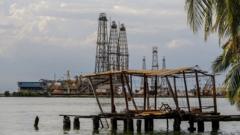
Venezuela is set to hand over control of a staggering fifth of its oil production to the United States in a groundbreaking agreement that has significant implications for both countries. This deal comes at a time when Washington is solidifying its influence over the Venezuelan government, which has been under a heavy grip. Just last night, US Energy Secretary Chris Wright made a landing in Venezuela, gearing up for the signing of this pivotal agreement scheduled for today. Meanwhile, oil behemoth Chevron is anticipated to announce a major expansion in the Venezuelan oil sector on the same day, further amplifying the stakes in this high-stakes negotiation.

Trump’s administration has been scrambling to manage surging petrol prices, exacerbated by ongoing conflicts in Iran, and sees this deal as a potential lifeline. The president met with leading oil executives at the White House earlier, emphasizing the need to “unleash American energy” and stabilize the Venezuelan economy. Senator Marco Rubio weighed in, noting that most of the 17 oil fields involved in the agreement have been in the hands of Chinese and Russian interests. “We need to know what’s in the fine print,” Rubio urged, as concerns loom over who truly benefits from the oil that remains untapped underground.

The agreement, which grants the US preferential access to these 17 oil fields, will effectively see the takeover of facilities previously managed by Russian and Chinese companies. Among the more controversial elements is the involvement of Alejandro Betancourt, a Venezuelan businessman with a checkered past under Hugo Chávez’s regime. Betancourt’s second-largest private oil company is now partially owned by the US government, which is taking a 35% stake in this deal. Allegations of his involvement in corruption schemes only add another layer of complexity to the situation, with officials calling the characters involved “imperfect.”

Under the terms of this arrangement, the NABEP will allow Washington to purchase 20% of the oil extracted at production costs. It’s worth noting that a majority of the firm must be composed of US citizens, a clause that hints at a strategic move to secure American interests. The official statement also mentioned how Maduro’s government has historically utilized this oil revenue as a “personal piggy bank,” raising eyebrows about accountability and transparency in the deal.

As the midterm elections approach in the US, cheaper oil has become a priority for Trump, with the Republican Party facing the risk of losing control of Congress. The implications of this deal extend far beyond energy prices; it signals a seismic shift in geopolitical relations and the future of Venezuela’s oil industry.

Bakalım bundan sonra ne olacak? Gelişmeleri takip ediyoruz…

Kaynak: Orijinal Haber
Trump Announces Groundbreaking Deal for U.S. Control of Venezuela’s Oil Reserves

The US has struck a historic deal with Venezuela, allowing American companies to control over 65 billion barrels of the country’s proven oil reserves

The US has struck a historic deal with Venezuela, allowing American companies to control over 65 billion barrels of the country’s proven oil reserves. This announcement came directly from President Donald Trump via social media, where he touted the agreement as a monumental step towards Venezuela’s economic revival. “This is a huge win for both the American and Venezuelan people,” Trump declared, although he provided few specifics regarding the deal’s implementation.

Venezuela, known for having the largest proven oil reserves in the world—estimated at around 303 billion barrels—has seen its oil production plummet since the late 1990s. Trump emphasized the urgency of tapping into these resources, calling for US oil firms to invest at least $100 billion into restoring production. The interim president of Venezuela stated that this partnership with private business would not impose costs on American taxpayers, focusing instead on revitalizing the country’s faltering economy.

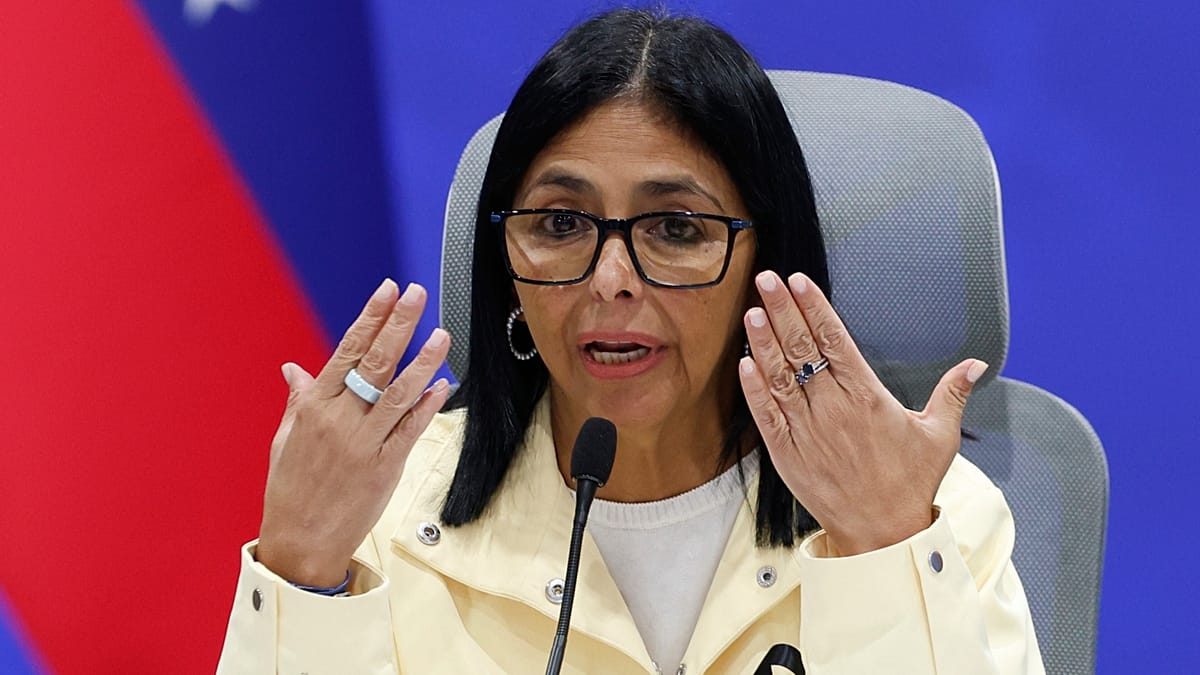
Rodriguez, the interim president, highlighted the potential impact of the agreement, claiming it could generate over $209 billion in taxes for the state and lead to significant economic growth. “This deal is about energy security for our hemisphere and enhancing our position in international markets,” he said, underlining the wider implications of this partnership. A US official also mentioned that the scope of this deal appears broader than the US-led Coalition Provisional Authority’s control over Iraq, hinting at a more sustainable and judicious approach to managing Venezuela’s oil resources.

However, the details remain somewhat murky. What will this mean for the Venezuelan people? Will the investment truly make a difference in their daily lives? The oil-rich nation, which has been grappling with economic hardships and political instability, is at a crossroads.

As the world watches, the question lingers: Can this agreement bring about the change Venezuela desperately needs? Or will it simply become another chapter in the long saga of foreign intervention in the nation’s affairs?

Kaynak: Orijinal Haber

Trump Announces Major Oil Deal with Venezuela: Over 65 Billion Barrels Controlled!

The US has reportedly struck a monumental deal with Venezuela to control more than 65 billion barrels of its proven oil reserves, as announced by Pr

The US has reportedly struck a monumental deal with Venezuela to control more than 65 billion barrels of its proven oil reserves, as announced by President Donald Trump. Trump took to social media to share this development, which comes on the heels of the US arresting Venezuela’s largest oil company executives. As gas prices continue to rise in the American market, the pressure on Trump to alleviate these costs has intensified.

Now, let’s break this down a bit. Secretary of State Marco Rubio has labeled this deal as a significant step forward, although the specifics are still under wraps. Meanwhile, Delcy Rodriguez, the interim president of Venezuela, mentioned that this partnership would involve private businesses and would not incur any costs for American taxpayers. Sounds like a win-win, right? But hold on, the details remain hazy.

Trump has claimed that Venezuela will be “turning over” its oil industry to the US, which raises questions about the nature of this arrangement. He has also pointed out that Venezuela has unilaterally seized and sold American oil and assets, costing the US billions of dollars. It’s a tangled web of international relations and energy politics that leaves many wondering about the future.

As this deal unfolds, its implications for both countries are yet to be seen. Will this partnership actually lead to lower gas prices for American consumers? Or will it complicate an already strained relationship between the two nations? Only time will tell. We’ll have to keep an eye on this one, folks…

Kaynak: Orijinal Haber

How AI is Transforming Post-Earthquake Rescue Efforts in Venezuela

In a significant move to enhance rescue operations following devastating earthquakes in Venezuela, organizations like NASA, Microsoft, and the Europe

In a significant move to enhance rescue operations following devastating earthquakes in Venezuela, organizations like NASA, Microsoft, and the European Union are leveraging artificial intelligence (AI) in groundbreaking ways. These entities are employing AI technologies to streamline and expedite rescue efforts, ensuring that aid reaches those in dire need as swiftly as possible.

After a major quake, the chaos and destruction left in its wake often complicate rescue missions. However, with the integration of AI, these organizations are not only improving response times but also increasing the efficiency of their operations. For instance, NASA has been utilizing AI algorithms to analyze satellite imagery, allowing them to identify the most affected areas and prioritize where resources are needed the most. Imagine this: a satellite in orbit captures real-time images of the destruction, and within moments, AI processes this data to highlight critical zones…

Meanwhile, Microsoft is contributing by enhancing communication systems through AI-driven tools. These tools help coordinate between various rescue teams, ensuring that information is shared seamlessly. This is vital, especially when traditional communication methods fail due to infrastructure damage. The ability to communicate effectively can mean the difference between life and death in these situations. The tech giant has also developed AI applications that can assist in locating survivors using data from social media and other digital footprints. You wouldn’t believe how advanced this tech is!

On the other side of the Atlantic, the EU is providing funding and support for AI initiatives that focus on disaster response. Their goal is clear: to foster innovations that can be rapidly deployed during emergencies. This includes AI-powered drones that can survey disaster sites, delivering critical data back to rescue teams on the ground. These drones are not just flying around aimlessly; they are equipped with sensors and cameras that can detect heat signatures, potentially locating trapped individuals beneath rubble. Can you imagine the hope that brings?

But let’s not forget the human element here. As these organizations implement these advanced technologies, they are also training local teams in Venezuela to effectively use AI tools. The idea is to empower communities, giving them the skills needed to respond to emergencies more efficiently. This is a game-changer. Local volunteers and rescue workers are becoming the first line of defense, armed with knowledge and technology that can save lives.

In conclusion, the combination of AI technology and human effort is creating a powerful alliance in the fight against the aftermath of earthquakes. The focus on quick, informed responses can dramatically alter the landscape of disaster management in Venezuela. As these efforts continue to evolve, one has to wonder: what other innovations lie ahead that could further revolutionize disaster response?

Kaynak: Orijinal Haber

Powerful Earthquakes Shake Caracas, Residents Flee to Streets for Safety!

Two powerful earthquakes have struck the Venezuelan capital of Caracas just seconds apart, leaving the city rattled and in chaos. The second quake,

Two powerful earthquakes have struck the Venezuelan capital of Caracas just seconds apart, leaving the city rattled and in chaos. The second quake, a staggering magnitude of 7.5, is being hailed as one of the strongest tremors to hit this South American country in a century. The ground shook violently, causing buildings across the city to collapse, and residents were seen rushing into the streets, desperate for safety. Panic gripped the streets as people scrambled to escape the danger, with BBC reporters on the ground capturing the harrowing moments on video.

The first tremor hit the city with a force that made people feel the earth move beneath them. Just moments later, the second quake struck, and it was as if the ground itself was unleashing its fury. Eyewitnesses described the chaos — walls crumbling, windows shattering, and the air filled with screams of fear. People were yelling, “Get outside! Now!” as they fled their homes, trying to find a safe spot. Can you imagine the terror? It was like a scene from a disaster movie, but it was all too real.

As the dust settled, the damage became evident. Buildings that once stood tall were reduced to rubble, and the streets were filled with debris. Rescue operations were quickly mobilized, but the extent of the destruction is still being assessed. It’s heartbreaking to think about the lives disrupted in an instant. The city that was once bustling with life now feels eerily quiet, punctuated only by the sounds of sirens and the distant cries of those affected.

In the immediate aftermath, many residents are left wondering how long it will take to recover from this disaster. Questions linger in the air: What will happen next? How will the community come together to rebuild? It’s a moment of uncertainty, yet there’s a palpable resilience among the people. They’ve faced adversity before and will likely band together once again.

The tremors have not only shaken the ground but also the spirit of the Venezuelan people. As they process the events, the focus now shifts to recovery and support for those who have lost their homes. It’s a tough road ahead, but one thing is for sure — the strength of the community will shine through in the wake of this calamity. What lies ahead for Caracas? Only time will tell…

Kaynak: Orijinal Haber

Venezuela’s Historic Debt Restructuring: The Stakes Are High!

Venezuela is gearing up for an unprecedented debt restructuring, with estimates revealing a staggering debt of nearly 240 billion dollars. This figu

Venezuela is gearing up for an unprecedented debt restructuring, with estimates revealing a staggering debt of nearly 240 billion dollars. This figure significantly exceeds the previous market expectations of 150 to 200 billion dollars. The report, uncovered by the Financial Times, positions Caracas on the verge of the largest debt restructuring in history, even surpassing Greece’s historic default back in 2012. This move comes on the heels of a political shakeup in the nation, following the capture of Nicolás Maduro last January. Interim president Delcy Rodríguez has taken charge with a clear mission in mind: to negotiate a deal with creditors before the year wraps up and to re-enter international markets, which Venezuela has been excluded from for almost a decade now.

According to the British daily, US bank Centerview Partners, which has been appointed as an adviser, is currently finalizing a viability plan expected to be published in early July. But before that, Caracas is set to unveil a dismal macroeconomic framework later this month, revealing an economy that has shrunk to about 100 billion dollars. This is a stark contrast to the impressive 370 billion dollars recorded during Hugo Chávez’s final year in office in 2012. One detail, however, is raising eyebrows: unlike previous major restructurings, the sustainability analysis of this situation does not include the International Monetary Fund’s (IMF) endorsement. This lack of support is already causing concern among the Venezuelan opposition, who fear the nation may find itself in an even more precarious position with its creditors.

The IMF has maintained a distance, clarifying that while it’s not actively participating in the restructuring process, it has resumed technical contact with Caracas since last April after a seven-year hiatus. The bulk of this debt consists of sovereign bonds and obligations from the state oil company PDVSA, which account for around 60 billion dollars. Additionally, there’s a whopping 40 billion dollars owed in interest arrears since the default, plus debts to oil companies and suppliers, claims related to expropriations from the Chávez era, and outstanding loans from China and Russia.

For investors watching closely, the pressing question isn’t just the headline figure but the future of oil revenues. The central bank reported that first-quarter oil revenues hit 5.5 billion dollars, showing a slight improvement compared to the last stretch of the Maduro administration, but still a far cry from pre-sanction levels. This ongoing situation has led to widespread skepticism; many doubt that an agreement will be reached in 2026, with most eyes already set on 2027.

Bakalım bundan sonra ne olacak? Gelişmeleri takip ediyoruz…

Kaynak: Orijinal Haber