Newcastle United: French Second Tier’s ‘Giant’ Joins the Magpies!

Ewen Jaouen has just completed a medical examination before making his exciting move from Stade de Reims to Newcastle United. That’s right, the Magp

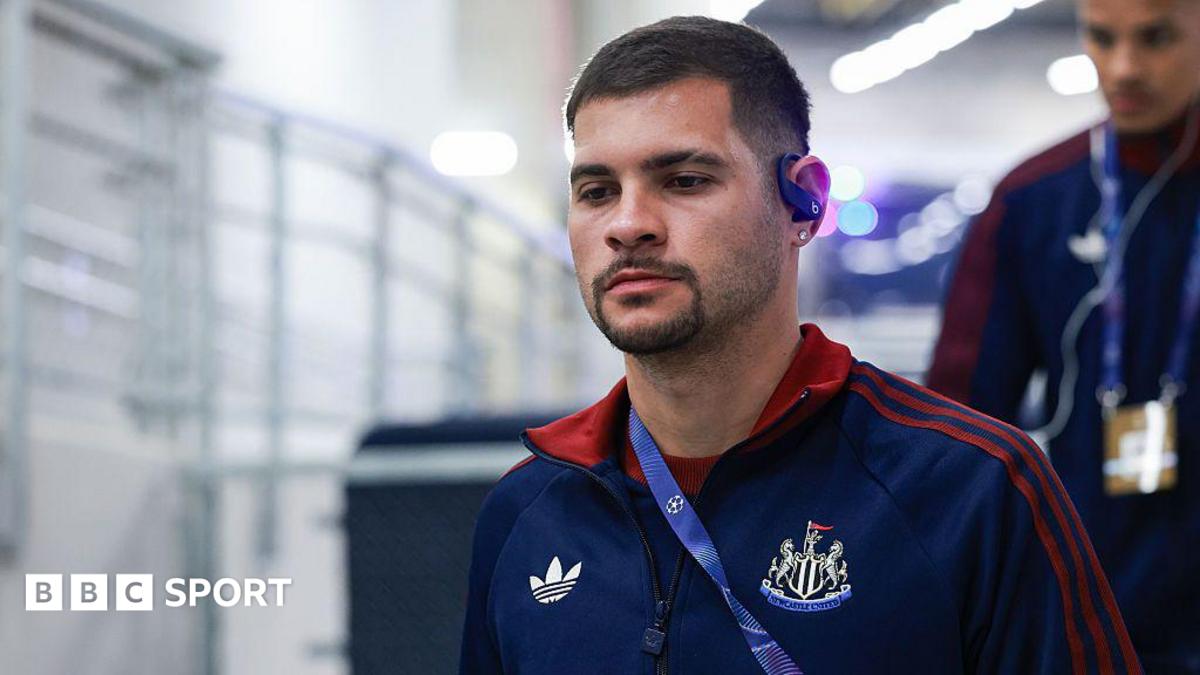
Ewen Jaouen has just completed a medical examination before making his exciting move from Stade de Reims to Newcastle United. That’s right, the Magpies have secured the signing of this towering talent from the French second tier! Fans are buzzing, and it’s easy to see why. Jaouen, known for his impressive stature and skill on the pitch, is set to bring a new dynamic to Newcastle’s squad.

Picture this: a player who stands tall among his peers, Jaouen is not just any signing; he’s a ‘giant’ in every sense of the word. He’s made waves in the lower leagues, and now he’s ready to take on the Premier League. This move has been in the works, and after passing the medical, the anticipation is palpable. Newcastle United supporters can hardly contain their excitement as they await his debut.

What does this mean for Newcastle? Well, with Jaouen’s physical presence and technical ability, he could be a game-changer for the team. The coaching staff is surely thrilled to add such a player to their roster. Fans are already buzzing with the potential impact he could have on the pitch. Imagine him controlling the midfield, winning headers, and creating opportunities for his teammates. It’s a thrilling prospect that might just elevate Newcastle to new heights.

And let’s not forget the journey Jaouen has had to this point. Coming from the French second tier, he’s worked hard to prove his worth. His passion and determination have not gone unnoticed. As he transitions into the Premier League, all eyes will be on him. Can he rise to the occasion? Will he adapt quickly to the fast-paced nature of English football? Only time will tell, but the excitement is certainly building.

As the news spreads, Newcastle fans are left wondering what’s next for their team. Will Jaouen be the key to unlocking stronger performances? Will he thrive in the intense atmosphere of St. James’ Park? One thing’s for sure: the Magpies have made a bold move, and it’s one that could pay off big time. Stay tuned for updates as this story unfolds!

Kaynak: Orijinal Haber

Rising Bill Debt: Are You Aware of Available Support?

Billions of pounds are owed to water, broadband, and energy companies by customers, with the majority completely unaware that support is available to

Billions of pounds are owed to water, broadband, and energy companies by customers, with the majority completely unaware that support is available to them. As of March last year, the UK’s spending watchdog reported that more than £7bn in bills and charges were outstanding, and estimates suggest that this staggering total has only grown since then… Yani, durum içler acısı.

Take Linda, a 70-year-old pensioner, for example. She shared her struggles with the BBC, explaining that the credit on her energy meter often runs out three or four days before her pension arrives. But, here’s the silver lining: her energy supplier was actually helpful once she informed them of her situation. This is the kind of support that many people simply don’t know exists. According to the National Audit Office (NAO), most folks are completely in the dark about repayment plans and cheaper social tariffs available for those in debt. Can you believe it? Only one-third of eligible broadband customers and just 39% of water customers aware of these social tariffs are struggling to pay their bills!

These social tariffs are typically discounted packages on essential bills like water, energy, and broadband, aimed primarily at those receiving benefits or who are having a tough time financially. They can differ significantly between suppliers. The NAO even noted that energy customers on repayment plans tend to owe £1,000 less on average than those in debt without any plan in place. Imagine that!

Gareth Davies, head of the NAO, highlighted that while regulators have made some progress to support consumers, they are simply not keeping pace with the mounting pressure facing millions of households today. He remarked, “With debt rising sharply, it’s more important than ever to make regulation work so that people know what support is available and can contact essential providers when they need to.” This is crucial, especially since household energy debt has surged by 118% since 2021, primarily due to the fallout from Russia’s invasion of Ukraine.

Linda’s story is just one of many. She shared that her debts have climbed into the hundreds of pounds, leaving her feeling embarrassed and wanting to remain anonymous. “I could afford my bills before, but I’m really struggling now. I’ve never been in debt before,” she lamented. And this is a reality for many. She relies solely on her state pension, which never seems to stretch far enough to cover her utility bills…

The NAO report also pointed out that awareness of the Priority Services Register remains alarmingly low. This UK-wide initiative is designed to help utility companies identify and support customers who have extra communication, access, or safety needs, especially during emergencies like power cuts. Sir Geoffrey Clifton-Brown, who chairs the Commons Public Accounts Committee, called for better communication, saying, “It remains too difficult for consumers to contact companies when things go wrong, financial support is poorly promoted, while basic billing errors are pushing households further into debt.”

Despite some progress from regulators like Ofgem, Ofcom, and Ofwat, the pressure is still on to act with urgency to ensure consumers receive the standard of service they truly deserve. They claim that helping vulnerable customers is a priority and that reforms are underway, but many believe there is still so much more to be done…

So, what’s next? Will more people find the help they need before they drown in debt? The clock is ticking, and the stakes are high for millions of households across the UK.

Kaynak: Orijinal Haber

Taiwan’s Deputy FM Issues Stark Warning: Europe Will Feel the Impact of a Potential China-Taiwan Conflict

Taiwan’s Deputy Foreign Minister has sent a clear and urgent message to Europe: if China decides to attack Taiwan, the repercussions won’t just be f

Taiwan’s Deputy Foreign Minister has sent a clear and urgent message to Europe: if China decides to attack Taiwan, the repercussions won’t just be felt in Asia but will extend to Europe as well. This stark warning comes amid escalating tensions in the Taiwan Strait, where the possibility of military action looms large. The Deputy FM emphasized that Europe must recognize its stake in Taiwan’s security, urging nations to consider the broader implications of a conflict that could disrupt global trade and security.

During a recent press conference, the Deputy FM articulated that an attack on Taiwan would create ripples across international markets, affecting supply chains that stretch far beyond Asia. “It’s not just Taiwan that will be in danger; Europe will also face significant challenges,” they stated. The message is clear: the stability of Taiwan is intertwined with the economic and security interests of European nations.

As tensions rise, the Deputy FM highlighted the importance of solidarity among democratic nations. “The more we stand together, the less likely it is that China will proceed with aggression,” they noted. It’s a call to action for Europe to strengthen its ties with Taiwan, not just as a moral duty, but as a strategic necessity.

Furthermore, the Deputy FM pointed out that Taiwan plays a crucial role in the global semiconductor industry, which is vital for numerous sectors, including automotive and technology. Any disruption in Taiwan could lead to significant delays and shortages in these industries, affecting economies worldwide, including those in Europe. “We are a key player in the global supply chain. When we face challenges, everyone experiences the fallout,” they remarked.

In the background of these warnings, military exercises conducted by China around Taiwan have raised alarms. The Deputy FM stated that these actions are not just drills but a demonstration of intent that should not be taken lightly. “The world is watching,” they insisted, underscoring the urgency for European nations to engage more actively in discussions surrounding Taiwan’s defense and global security.

The reality is that a conflict over Taiwan could escalate quickly, drawing in various nations and leading to a larger geopolitical crisis. The Deputy FM urged European leaders to prepare for such scenarios, emphasizing the need for proactive measures and clear communication among allied nations.

As the situation develops, the question remains: will Europe heed the call to action, or will it wait until it’s too late? The implications of inaction could be dire, affecting not just Taiwan but the entire world.

Kaynak: Orijinal Haber

World Cup 2026: Analysts Predict Surprising New Champion!

Market analysts, who have accurately predicted outcomes in the past, are now making bold claims about the World Cup 2026 winner. With the tournament

Market analysts, who have accurately predicted outcomes in the past, are now making bold claims about the World Cup 2026 winner. With the tournament just around the corner, the excitement is palpable as fans eagerly await the next champion. This time, however, the analysts are looking at teams that might not be the usual suspects, raising eyebrows and sparking conversations across the globe.

The analysts, who previously nailed their predictions, have thrown their support behind a new contender. It’s a team that many have overlooked, but their recent performances and strategic gameplay have caught the eyes of experts. “It’s not just about the big names anymore,” one analyst remarked. “The dynamics of football have shifted, and we’re seeing a blend of youth and experience that’s hard to ignore.”

This shift comes on the heels of various qualifying matches, where underdogs have risen to the occasion, leaving established teams in their wake. Fans are buzzing with anticipation, wondering if this underdog story will unfold in the same way it has in previous tournaments. “Can you believe it?” a passionate fan exclaimed. “This is exactly what makes the World Cup so thrilling!”

As the tournament approaches, discussions are heating up in cafes and living rooms alike. People from all walks of life are sharing their thoughts on social media, debating whether the analysts are onto something or just trying to stir the pot. “I mean, we’ve seen surprises before, but will this really happen?” another fan pondered. The air is thick with speculation and hope, as everyone holds their breath for what could be a historic World Cup.

The excitement doesn’t just stop at the predictions. Teams are ramping up their training, fans are securing their spots in stadiums, and the world is getting ready for a spectacle that promises to be unforgettable. The question remains – will the underdogs rise to the occasion and prove the analysts right? Or will the traditional powerhouses reclaim their glory? Only time will tell…

Kaynak: Orijinal Haber

Who Works the Hardest in Europe? A Look at Working Hours Across the Continent

New Eurostat figures reveal stark differences in working hours across Europe. People in the EU work an average of 35.9 hours per week, but that numb

New Eurostat figures reveal stark differences in working hours across Europe. People in the EU work an average of 35.9 hours per week, but that number varies significantly from country to country. For instance, in the bloc’s four largest economies, the average is even lower at 33.9 hours. Workers in Germany clock in 1.7 fewer hours weekly compared to their French counterparts, who work an average of 35.6 hours. Spain takes the crown with the longest working week among these major economies, reaching 36.3 hours, while Italy isn’t far behind at 36.1 hours, both above the EU average. The gap between Germany and these two countries exceeds two hours per week, showing quite a difference in the work culture.

Spencer, a labor expert, pointed out that these shorter hours in Germany reflect the strength of unions and the positive impact of collective bargaining on working conditions. Elsewhere in Europe, the numbers tell a different story, with average weekly working hours standing at 38.7 in Poland, 38.2 in Romania, 37.5 in Czechia, and 37.4 in Hungary. Countries like Switzerland, Sweden, and Ireland offer slightly shorter weeks with averages of 35.9, 35.4, and 35.1 hours, respectively.

Generally speaking, Northern and Western European countries tend to enjoy shorter work weeks compared to their Eastern and Central European neighbors. Cabrita, another expert in labor economics, highlighted that the differences arise from working-time regulations, employment structures, and broader economic conditions across countries. He noted that in nations where trade unions and collective bargaining are stronger, actual working hours tend to be shorter. This means that those countries experience less overtime and better adherence to labor laws.

Employment structure plays a crucial role too. For instance, a higher share of part-time jobs usually results in shorter average working hours. Self-employed workers, who often have more control over their schedules, tend to work longer hours than regular employees, especially if they have others working for them. The economic structure is another significant factor; the weight of various sectors within an economy can greatly influence the average working hours, as some industries naturally require longer schedules than others.

Looking at the data closely, skilled agricultural, forestry, and fishery workers have the longest average working week in the EU, clocking in at 42 hours. They are followed by managers, who average 40.6 hours, and those in armed forces occupations at 39.4 hours. On the flip side, workers in elementary occupations enjoy the shortest average working week at 31.8 hours, with clerical support workers and service and sales workers following at 34.0 and 34.5 hours, respectively.

So, as we see, the work culture in Europe is highly diverse, and understanding these differences can shed light on how various factors contribute to the way people spend their working hours. Will these trends continue to evolve, or will we see shifts in the future? Only time will tell…

Kaynak: Orijinal Haber

David Sullivan’s Contact Ban with West Ham’s Women and Youth Teams: A Three-Year Investigation

West Ham co-owner David Sullivan has been banned from contacting the club’s women’s and youth teams for the past three years due to safeguarding conc

West Ham co-owner David Sullivan has been banned from contacting the club’s women’s and youth teams for the past three years due to safeguarding concerns. This action followed an investigation initiated by the Football Association (FA) in 2023, which was triggered by allegations regarding Sullivan’s conduct as co-owner and former co-chair of West Ham United. The investigation led to a safeguarding group comprising the club, the FA, and the local authority deciding to restrict Sullivan’s access to his own club’s youth and women’s teams. This ban has prevented him from attending their matches, and it remains in effect today.

Sullivan hasn’t publicly responded to requests for comments on the matter but has previously denied any wrongdoing. Interestingly, these restrictions were not disclosed to the public, and he continued to be a visible figure at the club, often seen in the director’s box during men’s team matches at the London Stadium. Despite stepping down as co-chair and director of West Ham just before an investigation by the BBC and Times, Sullivan still holds the title of the club’s largest shareholder. The allegations against him involve multiple women who claim he exploited his power for sexual advances, a serious accusation that Sullivan vehemently denies.

In his defense, Sullivan stated that he wishes to concentrate on disproving what he described as “factually incorrect and entirely false, decades-old allegations concerning my personal life.” He labeled the investigation as “fundamentally unfair.” Both West Ham and the FA maintain that they have stringent safeguarding measures but refrain from commenting on individual cases. The allegations date back years, coinciding with Sullivan’s rise to wealth through pornography, newspapers, and football. They primarily involve young models in their late teens or early twenties who sought work at Sullivan’s Daily and Sunday Sport newspapers.

The investigation by the BBC and Times also revealed that eight women, including one involved in the inquiry, have made disclosures about Sullivan’s behavior to the police, though none of these cases have led to charges. The Metropolitan Police have stated that they take such allegations “extremely seriously” and will assess any information provided to them. The Independent Football Regulator has reached out to West Ham regarding these “extremely serious allegations” against Sullivan and is seeking urgent information about his suitability for the role.

Reactions from the public figures have been swift. Prime Minister Sir Keir Starmer’s spokesperson referred to the women’s testimonies as “harrowing,” while Culture Secretary Lisa Nandy described the revelations as “utterly horrifying.” Nandy called for an explanation from the FA regarding the decision to impose the contact ban and questioned why no further action was taken. Labour MP Alex Davies-Jones expressed her horror upon first hearing the allegations against Sullivan and urged a review into how the police have dealt with disclosures about him, as well as the actions taken by the FA and West Ham.

West Ham has reiterated that it has clear and robust safeguarding measures in place, yet the club is unable to divulge details on any individual safeguarding matter, following standard industry practices. Sullivan, in his resignation statement, noted that after a lifetime of building businesses in the adult industry, it was “sadly inevitable” that some improper conduct claims would surface against him. At 77 years old, Sullivan had been a joint chairman for 16 years and became the club’s largest single shareholder following the death of his business partner, David Gold, in January 2023.

Kaynak: Orijinal Haber

OpenAI’s Stock Market Move: The AI Giants’ Race for Billions Heats Up!

OpenAI, the company behind the widely popular chatbot ChatGPT, has officially thrown its hat into the ring, announcing plans to sell shares to the pu

OpenAI, the company behind the widely popular chatbot ChatGPT, has officially thrown its hat into the ring, announcing plans to sell shares to the public through an initial public offering (IPO). This decision, which many industry insiders had anticipated, comes just a week after rival AI firm Anthropic revealed its own plans to go public. OpenAI disclosed on Monday that it has filed confidential paperwork with the US Securities and Exchange Commission (SEC) to pursue its IPO at an unspecified future date. This move adds momentum to a flurry of high-profile IPOs, including Anthropic and Elon Musk’s SpaceX, which is set to debut on the Nasdaq this Friday, aiming for a staggering valuation of $1.75 trillion (£1.3 trillion).

Now, listen to this: OpenAI stated, “We have not decided on timing yet; it may be a while because there are things we want to do that are likely easier as a private company.” So, what’s driving these tech titans to the stock market? Well, according to Sunil Krishnan from Aviva Investors, all three companies—OpenAI, Anthropic, and SpaceX—are in dire need of cash. “No one wants to be last” when it comes to going public, he highlighted on the BBC’s Today programme. This urgency is largely due to the massive investments these firms are making in AI infrastructure, including chips and training their models, which come with hefty price tags.

And here’s where it gets interesting: OpenAI and Anthropic, creators of the chatbot Claude, have been fierce competitors since Dario Amodei co-founded Anthropic five years ago. He left OpenAI after some disagreements with Sam Altman, the co-founder and CEO of OpenAI. Today, both companies are battling for users, corporate clients, and investors, with private valuations inching towards $1 trillion. The last valuation for OpenAI stood at an impressive $852 billion, while Anthropic reached a staggering $965 billion. Now they’re in a race to see who will hit the public stock market first, but neither has disclosed when that might actually happen.

Investors are keeping a close eye on these two generative AI firms, as their market performance could set the tone for others in the sector. Richard Crowley, an assistant professor from Singapore Management University, put it this way: “We might typically think of OpenAI and Anthropic as competitors, but the fate of their financing is intrinsically intertwined through the public’s perception of the generative AI space.”

Last week, Altman mentioned in a CNBC interview that he wasn’t in any rush to make OpenAI public, saying it would happen “when it makes sense.” OpenAI’s announcement on Monday indicated that the decision to go public was partly made due to expectations that the news would leak anyway. They also acknowledged that going public involves a complex set of trade-offs. Having submitted the necessary documents for SEC review, they now have the flexibility to go public sooner if it turns out to be advantageous.

But here’s the thing: once they list on the stock market, OpenAI will have to become more transparent about its finances and product development plans. IPOs can also deter private investment and slow down deal-making, as companies must disclose more information. For OpenAI, Anthropic, and SpaceX, public share sales are likely to yield billions in capital, but running an AI company isn’t cheap. The term “compute” refers to the infrastructure and processing power needed to build and train AI models, like chatbots. OpenAI’s compute costs are estimated to exceed $100 billion a year, while its revenue is just a small fraction of that amount.

SpaceX is also not yet a profitable venture. On the flip side, Anthropic has informed investors that they expect to turn a profit in the first half of this year, thanks to a significant uptick in sales of their Claude product and related services. Amid all this, the technology giant also rolled out new child safety features due to increasing scrutiny surrounding “nudification” apps.

And just when you think the drama couldn’t get any more intense, the US president announced that he plans to meet with leaders of top AI companies next week. Despite the ongoing war in Iran, inflation, and debt worries, US markets are hitting record highs, largely driven by AI advancements. But will this bubble burst? Jack Clark warns that AI might reach a stage where it develops without human input.

Görünüşe göre, bu işin sonu gelmeyecek gibi. Bakalım bu gelişmeler nereye varacak?

Kaynak: Orijinal Haber

Pep Guardiola’nın Manchester City’deki Son Yılları Amazon Dizisinde!

Pep Guardiola’nın Manchester City’deki son iki yılı, Amazon’un Prime Video platformunda dört bölümlük bir arka plan dizisi olarak izleyiciyle

Pep Guardiola’nın Manchester City’deki son iki yılı, Amazon’un Prime Video platformunda dört bölümlük bir arka plan dizisi olarak izleyiciyle buluşacak. Evet, yanlış duymadınız! Bu dizi, Guardiola’nın takımdaki son dönemlerini daha önce hiç görmediğimiz bir perspektiften sunacak. Yani, futbolseverler için oldukça heyecan verici bir fırsat!

Bu dizi, sadece Guardiola’nın takıma nasıl liderlik ettiğini değil, aynı zamanda oyuncularıyla olan ilişkilerini, mücadelelerini ve zaferlerini de gözler önüne serecek. Pep’in felsefesi, maç öncesi hazırlıkları, soyunma odası dinamikleri… Hepsi bu dizide yer alacak. Düşünsenize, her şeyin arka planda nasıl geliştiğini göreceğiz. Yahu, bu tam bir futbol belgeseli tadında olacak!

Dizinin içeriği hakkında daha fazla bilgi henüz paylaşılmadı. Ancak, futbol dünyasında bu denli önemli bir isim hakkında yapılacak bir belgeselin, elbette büyük bir ilgi uyandıracağı kesin. Adamlar, Guardiola’nın felsefesini ve Manchester City’deki kariyerinin son dönemlerini merak eden birçok taraftar için bu projeyi hayata geçirmiş durumda. Bakalım, bu dizi ne gibi anektodlar sunacak?

Sonuç olarak, futbol dünyası için bu dizi büyük bir fırsat, değil mi? Pep’in kariyeri boyunca yaşadığı mücadeleleri, zaferleri ve belki de kayıpları bu dizide bulabileceğiz. Gelişmeleri takip etmeye devam edeceğiz!

Kaynak: Orijinal Haber

OpenAI Goes Public: The Race Against Anthropic Intensifies!

OpenAI has officially announced its intention to go public, revealing plans to sell shares through a stock listing in the United States. The company

OpenAI has officially announced its intention to go public, revealing plans to sell shares through a stock listing in the United States. The company behind the widely popular chatbot ChatGPT made the announcement on Monday, stating that it has submitted a confidential filing to the US Securities and Exchange Commission (SEC) for an initial public offering (IPO) in the future. “We have not decided on timing yet; it may be a while because there are things we want to do that are likely easier as a private company,” OpenAI said in a statement. This decision had been anticipated for months, but it comes just a week after its rival, Anthropic, also indicated plans for an IPO.

Both companies are now gearing up to list on the stock market, especially following SpaceX’s upcoming debut on the Nasdaq this Friday, where it is expected to achieve a staggering valuation of around $1.75 trillion (£1.3 trillion) per share. OpenAI and Anthropic, the latter known for its chatbot Claude, have been fierce competitors since Dario Amodei co-founded Anthropic five years ago after parting ways with OpenAI due to disagreements with co-founder and CEO, Sam Altman. Today, these two companies are vying for users, corporate clients, and investors, with their private valuations nearing the $1 trillion mark. OpenAI’s most recent valuation was pegged at $852 billion, while Anthropic reached $965 billion.

Now, the big question is: Who will make it to the public stock market first? Neither company has yet disclosed specific timelines. Just last week, Altman mentioned in an interview that he’s in no hurry to take OpenAI public, stating he would proceed “when it makes sense.” In Monday’s statement, OpenAI acknowledged that its IPO plans might leak eventually, and the company described the decision to go public as a “complicated set of tradeoffs.” With the SEC paperwork now filed, OpenAI has the flexibility to go public sooner if it deems it beneficial.

For companies like OpenAI, Anthropic, and SpaceX, going public could mean billions in capital. One of the significant financial burdens of running an AI company is what’s known as “compute,” which refers to the necessary infrastructure and processing power for developing, training, and deploying their services to the public, like a chatbot. To give you an idea, OpenAI’s compute costs are estimated to exceed $100 billion annually, while its revenue is only a fraction of that. SpaceX also isn’t turning a profit yet. However, Anthropic has informed investors that it anticipates becoming profitable in the first half of this year, thanks to substantial sales growth of its Claude product and related services.

Once they go public, both companies will be required to provide quarterly reports on their business performance. OpenAI also took the opportunity to announce new child safety features in response to ongoing scrutiny over certain apps. In other news, the US president is set to meet with leaders from top AI companies next week. Even with challenges like the Iran war, inflation, and debt fears, US markets continue to soar to record highs, largely fueled by advancements in AI.

So, what’s next for these tech giants? Will the AI bubble burst, or will it keep expanding? Only time will tell…

Kaynak: Orijinal Haber

Public Ownership of AI: A Unlikely Consensus Among Rivals?

US officials are increasingly interested in ensuring the public has a stake in the booming artificial intelligence (AI) sector. Surprisingly, three p

US officials are increasingly interested in ensuring the public has a stake in the booming artificial intelligence (AI) sector. Surprisingly, three prominent figures—AI mogul Sam Altman, Senator Bernie Sanders, and former President Donald Trump—are united in their desire for public ownership in AI. However, the level of that stake is where the consensus breaks down. Last week, Altman, the CEO of OpenAI, sought out Sanders for a meeting in his Senate office to discuss the future of AI and its equitable distribution.

The backdrop to this discussion is the European Union’s ambitious plan to restrict major tech companies like Amazon, Microsoft, and Google from securing sensitive government contracts. European Commission President Ursula von der Leyen has announced that they aim to triple the capacity of data centers in Europe over the next seven years. Meanwhile, the UK has initiated a £500 million Sovereign AI Fund aimed at investing directly in British AI firms, reducing reliance on foreign tech providers.

Now, during a recent press briefing on Air Force One, Trump hinted at a potential partnership in AI, announcing that executives from leading AI companies were set to visit the White House this week. “We’re going to talk about some great ideas,” Trump said. When reporters pointed out that Sanders, often depicted as a radical leftist, also advocates for public ownership in AI companies, Trump noted the unexpected similarities in their voter bases. “In terms of economics, we aren’t that far apart,” he declared, despite the deep political divides that usually separate them.

However, there’s a twist. While Altman acknowledged the anxiety surrounding AI and its implications for the future, he didn’t fully commit to any particular proposals. He expressed understanding towards the concerns raised, particularly highlighting how even other players in the AI field, like Anthropic, are beginning to recognize the legitimate worries that need addressing. But it seems there’s still a long road ahead before any consensus is reached, especially on the tangled issues of infrastructure and resource allocation that still plague many tech initiatives.

The stakes are high as the AI landscape continues to evolve rapidly, yet many Americans remain skeptical about whether they are truly benefiting from these advancements. So, what does the future hold? Can these unlikely allies forge a path toward meaningful public ownership in AI, or will their disagreements keep them at odds?

Kaynak: Orijinal Haber