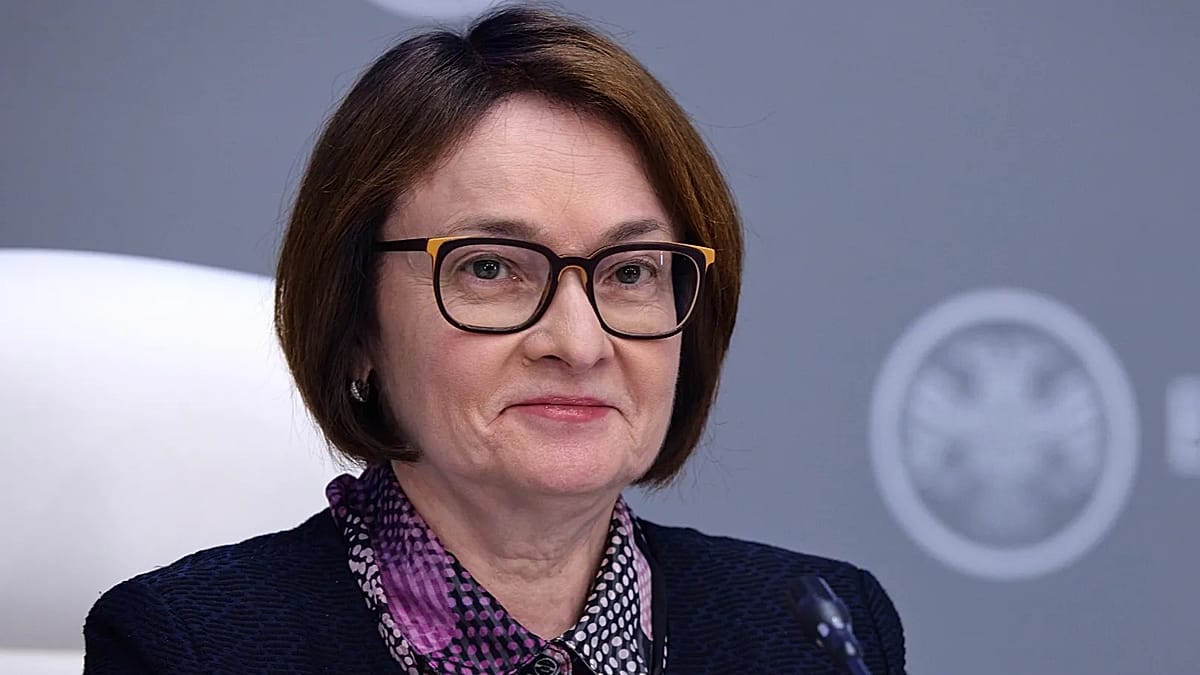
Bank of Russia Warns: Fuel Crisis and War Costs Could Spark Inflation Surge!

The Bank of Russia has raised alarm bells about the potential rapid inflation that could stem from the ongoing fuel crisis and rising costs associat

The Bank of Russia has raised alarm bells about the potential rapid inflation that could stem from the ongoing fuel crisis and rising costs associated with war efforts. Recent developments have brought to light the precarious situation surrounding fuel prices, which have seen a significant spike, stirring concerns among policymakers and economists alike. This crisis isn’t just about numbers; it’s about the everyday lives of citizens who depend on stable fuel prices for their daily activities.

So, what’s the deal? The central bank highlighted that the costs of war, particularly in the context of ongoing geopolitical tensions, are likely to exacerbate inflationary pressures. You know how it is when prices start rising—everyone feels it in their pockets. From the gas station to the grocery store, the ripple effects are undeniable. The bank’s report noted that these challenges could lead to a faster-than-expected rise in inflation, which could push prices up even further.

Let’s break it down. With war costs mounting, the economic landscape is shifting dramatically. Just last week, fuel prices soared by nearly 10% in some regions, leaving ordinary folks scrambling to fill their tanks. Can you imagine? People are already feeling the pinch, and now this? It’s like a double whammy. The report mentioned that if these trends continue, we might be looking at a significant impact on consumer spending as folks tighten their belts.

The central bank warned that the situation requires close monitoring. They’re not just sitting on their hands; they’re actively looking for solutions. But let’s be real—solutions take time, and meanwhile, everyday people are left holding the bag. The fear is that this inflation could spiral out of control, leading to a situation where the cost of living skyrockets, and wages don’t keep up. Yahu, that would be a disaster, right?

Moreover, the geopolitical landscape isn’t helping either. The ongoing conflicts and negotiations are essentially playing a game of tug-of-war with the economy. The Bank of Russia is urging for proactive measures to mitigate these risks, but it’s easier said than done. As the world watches, the question remains: how will the government respond to stabilize the situation? Will they implement policies that can effectively cool down the inflationary flames, or will we be left in a constant cycle of rising prices?

This is a developing story, and the implications are broad. As we keep an eye on fuel prices and war costs, one has to wonder: what will be the lasting impact on the economy and the everyday consumer? Let’s stay tuned to see how this unfolds…

Kaynak: Orijinal Haber

British Couple’s Surreal Encounter with Russian Warship in the Channel

A British retired couple, Jane and Alan Kelvey, had a truly surreal experience while sailing their yacht, the Bright Future, in the English Channel.

A British retired couple, Jane and Alan Kelvey, had a truly surreal experience while sailing their yacht, the Bright Future, in the English Channel. This unusual incident unfolded about 23 miles off the coast of the Isle of Wight on a Tuesday morning when they found themselves in close proximity to a Russian frigate, the Admiral Grigorovich.

As they sailed, the frigate issued a series of warning signals, blasting its horn five times, a signal that typically means “have you seen us?” Jane recalled how they promptly turned their vessel two degrees to port, signaling to the warship that they had indeed seen it. However, things escalated when, just a minute later, the frigate fired another five blasts followed by four to five warning shots. Thankfully, the couple believed the gunfire wasn’t aimed at them, describing it as warning shots fired into the air.

The Russian Defence Ministry claimed the yacht was on a “dangerous approach” toward the warship. But the Kelveys firmly disagreed, stating they were “definitely not on a collision course.” According to Jane, it wasn’t until the gunfire erupted that they felt any sense of danger. She deemed the gunfire “completely unnecessary” and reported the incident as a navigational hazard, emphasizing the importance of safety at sea.

British authorities, upon receiving reports of the incident, noted that the yacht was about 500 yards away from the warship when the warning shots were fired. This distance is relatively close in nautical terms. The couple’s yacht, noted to be a small, motor-less vessel, had drifted into the path of the frigate amid foggy conditions, which may have contributed to the misunderstanding about their proximity.

A British patrol vessel, HMS Tyne, was dispatched to check on the couple’s safety and gather details about the situation. Victoria Derbyshire from BBC Newsnight, who interviewed the couple, pointed out their bemusement and mild irritation at the Russian Defence Ministry’s characterization of their maritime encounter as a “dangerous collision course.” When asked if the gunfire made them afraid, the Kelvey’s response was surprisingly calm. Jane chuckled, stating she simply crouched down and put her canvas hood over her head for protection while Alan continued to steer the yacht.

Interestingly, this incident happened just days after British forces intercepted a Russian tanker carrying sanctioned oil in the Channel. The Ministry of Defence characterized the warning shots fired by the Admiral Grigorovich as an “isolated incident,” and not connected to the recent seizure of the tanker. Russian warships frequently navigate these waters, and they are routinely monitored by Royal Navy vessels.

The Admiral Grigorovich had been under surveillance by HMS Mersey for several days, as it had been spotted off the coast of Brest, France. It was reported that the frigate had been ordered by Moscow to escort shadow fleet vessels through the Channel, which adds another layer of complexity to the situation.

Former Royal Navy rear admiral James Parkin commented on the use of armed force, suggesting that it is a last resort, typically reserved for self-defense. Parkin speculated that the incident might have been a miscalculation rather than a deliberate act against a British yacht close to British waters.

In a time of mounting tensions between the UK and Russia, this relatively minor incident has taken on greater significance, especially since it coincided with heightened alarm about Russia’s assertive behavior from UK defense ministers. The couple’s experience, while seemingly straightforward, opens up questions about maritime safety and international naval conduct in these increasingly tricky waters.

Kaynak: Orijinal Haber

Russia’s Covert Campaign: Arson Attacks on UK Prime Minister Exposed!

Roman Lavrynovych, a 22-year-old Ukrainian builder, was found guilty on Monday of conspiring to commit arson after he set fire to the home of UK Pri

Roman Lavrynovych, a 22-year-old Ukrainian builder, was found guilty on Monday of conspiring to commit arson after he set fire to the home of UK Prime Minister Sir Keir Starmer. This dramatic incident, which raised serious questions about domestic security, was part of a larger, calculated campaign of sabotage orchestrated by Russian operatives. Lavrynovych’s handler, identified only by the initials EL, hinted at a sinister motive in a message stating, “Look, you attacked the home of a very high-ranking person in Britain. I’ll send you money, you need to leave the city.” But it was too late; Lavrynovych was apprehended just hours later.

Through an in-depth investigation, the BBC has uncovered that this arson was not an isolated act but rather a segment of a broader strategy of provocation and misinformation linked directly to the Russian state. Evidence suggests that EL is actually Evgeny Lyukshin, a 23-year-old Russian diplomat who has been trained in information warfare. He is reportedly close to the upper echelons of power in Moscow. It’s alarming to think that the very machinery of a state could be behind such a brazen attack on a foreign leader.

The arson is suspected to be part of a remote operation where Russian operatives utilized social media and the messaging app Telegram to create fake far-right and Muslim groups. These groups were instrumental in organizing acts of vandalism across the UK, aimed at inciting division and fear among the populace. Interestingly, accounts operating out of Russia propagated false narratives regarding the motives behind the attacks, further complicating the already murky waters of misinformation. Prominent figures in the far-right movement, like Tommy Robinson, then spread these lies, amplifying the chaos. The Russian embassy has denied any involvement, claiming, “We reject any attempt to associate Russia or its foreign ministry with unlawful activities.” They maintain that Russia poses no threat to the UK or its people.

During the trial, Lavrynovych and another accomplice, Stanislav Carpiuc, 27, were found guilty of conspiring to target property linked to Starmer. A third man, Petro Pochynok, 35, was acquitted. The first fire ignited last year when a Toyota, once owned by the Prime Minister, was torched in north London. Following that, two additional arson attacks were carried out: one at the entrance of a block of flats where Starmer once resided and another at his current residence. The odd part of the trial was the absence of any focus on the true mastermind behind the operation. The identity and intentions of EL, who had offered Lavrynovych financial incentives for the attacks, were purposely shrouded in secrecy.

In the courtroom, EL was cryptically referred to as “EL Money,” a name saved in Lavrynovych’s phone. Yet, on Telegram, he merely used the initials “EL.” This was the platform where he recruited Lavrynovych, initially connecting through a group aimed at helping Ukrainians find work in London. From this seemingly innocent connection, Lavrynovych was pulled into a world of escalating criminality, tasked with graffiti and arson, though he knew he was crossing a line.

Messages from EL revealed his glorification of Putin and Russia while disparaging the Ukrainian people. For example, he boldly claimed, “It is obvious that Putin is the leader of the white race.” He also sought “painters to do graffiti” in London, but in other chats, he employed deeply offensive language towards Ukrainians. His messages incited violence, calling for attacks on conscription centers in Ukraine and urging those supportive of the “white Slavic race” to embrace the idea of a “real Third Rome.”

Moreover, the trial neglected to mention what Lavrynovych’s posters, which he put up on EL’s orders, were actually advertising—a far-right group named Direct Action UK. This group was deceptively designed to appear as an organic British entity but was found to be an online creation by Russian operatives, aiming to create discord among ordinary citizens in the UK. Interestingly, the timestamps on group messages pointed back to Moscow, with a peculiar use of Cyrillic letters.

Direct Action exploited real-life events, such as the Southport murders, to spread its propaganda. Videos circulated branding Sir Keir Starmer a traitor, inciting hatred against Muslims and offering monetary rewards for violence and arson. The consequences were dire, with several mosques and an Islamic school vandalized in London after the group offered compensation for Islamophobic graffiti.

This situation has drawn attention from anti-racist organizations like Hope Not Hate, which flagged the group to counter-terror police back in February, warning that Russians might be grooming UK residents for potential terror attacks. Yet, their concerns went largely unacknowledged.

It’s important to note that before EL took the reins of fake far-right groups, he was also involved in setting up a fraudulent Islamic organization called the Takbir Foundation, which aimed to provoke far-right sentiments through vandalism. This organization sought to recruit Muslims for tasks that were far from innocent, blurring the lines between community and division.

With the recent arson attack on the Prime Minister’s property now serving as a propaganda tool online, misinformation has spread like wildfire, with false claims circulating that the suspects were involved in a scandal. This narrative was propelled by Robinson, who alleged that Starmer had inappropriate connections with Ukrainian male sex workers, a rumor that gained traction due to its sensational nature.

This incident is just one of many in a broader pattern of Russian-backed sabotage aimed at destabilizing Europe and its allies. The reliance on proxies for carrying out these acts of violence and espionage raises the stakes, complicating the accountability and denial of state involvement. In Ukraine, there are reports that a third of individuals involved in Russian sabotage networks across Europe are Ukrainian nationals.

What’s next in this troubling saga? The connections between misinformation, state-sponsored sabotage, and domestic security continue to unravel, leaving many questions in their wake.

Kaynak: Orijinal Haber

UK Armed Forces Deal Another Blow to Russian Shadow Fleet in Channel

British armed forces have intercepted a Russian shadow fleet oil tanker in the English Channel during the early hours of Sunday morning, as confirmed

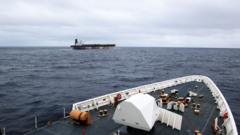
British armed forces have intercepted a Russian shadow fleet oil tanker in the English Channel during the early hours of Sunday morning, as confirmed by Sir Keir Starmer. This operation, which lasted a grueling six hours, saw Royal Marine Commandos and specially trained law enforcement officers from the National Crime Agency board the vessel, aided by the RAF. The ship, named Smyrtos, is now being held and monitored off the southern coast of England while investigations are underway, according to a statement from the Ministry of Defence (MoD).

Sir Keir Starmer emphasized the significance of the operation, stating, “This successful operation delivers yet another blow to Russia and reminds those fueling Putin’s war in Ukraine that we will not let them hide.” Defence Secretary Dan Jarvis added that Russia “relies on its shadow fleet to fund their conflict in Ukraine,” and this interdiction significantly undermines Putin’s efforts in his illegal war.

This operation was not carried out in isolation; it was backed by aircraft from the Maritime Air Group, including an RAF P-8 aircraft, and naval vessels HMS Sutherland and HMS Ledbury. The MoD highlighted that Russia has been operating a “shadow fleet” of tankers with dubious ownership structures to dodge international sanctions on its oil exports. This shadow fleet, comprising over 700 vessels, is responsible for transporting a staggering 75% of Russia’s sanctioned oil, providing vital support to the Kremlin. The UK has already imposed sanctions on more than 500 vessels, effectively barring them from UK ports and prohibiting British firms and individuals from providing financial, insurance, or brokerage services to ships involved in supplying or delivering Russian oil. The government has made it clear they are targeting Russia’s oil revenues to “choke off funding for Russia’s war machine” in Ukraine.

The operation was carried out in close coordination with French authorities, reflecting the recent support the UK has extended to its allies. French President Emmanuel Macron noted that on June 1, his military had similarly intercepted a sanctioned oil tanker believed to be part of Russia’s shadow fleet, with UK assistance. A British helicopter had also lent support during that operation, as reported by the UK Ministry of Defence.

This breaking news story is still developing, and more details are expected to emerge shortly. For those wanting to stay updated, you can receive Breaking News alerts on your smartphone or tablet via the BBC News App or follow @BBCBreaking on X for the latest updates. Meanwhile, a campaigner is urging the government to resume investigations into alleged encounters, while allies of the former defence secretary claim that the Treasury attempted to shut down such discussions.

In other news, Swindon is reportedly “rapidly establishing itself as Britain’s military drone manufacturing hub,” while some relatives of Private Thomas Whitaker had never met before his burial ceremony in Belgium.

Kaynak: Orijinal Haber

UK to End Russian Diesel Imports by 2027: Sanctions Tighten

The UK government has made a bold commitment: by January 1, 2027, it will ban imports of diesel and jet fuel derived from Russian oil. This decision

The UK government has made a bold commitment: by January 1, 2027, it will ban imports of diesel and jet fuel derived from Russian oil. This decision is part of a larger set of sanctions aimed at putting pressure on Moscow in the wake of the ongoing war with Ukraine. Back in May, the government announced it would begin phasing out diesel and jet fuel that has been refined in third countries using Russian crude, citing the need for flexibility due to global oil supply challenges.

But hold on, this move has not gone without criticism. The European Union has raised eyebrows, stating that it’s “not the time to roll back sanctions” against Russia. Trade Minister Chris Bryant emphasized the significance of this end date, calling it a “clear signal” that the UK is ramping up its pressure on Russia. Bryant also mentioned that the temporary license for importing these products will undergo a review every two weeks. This means, folks, that the license could be revoked even before the January deadline. “I made a commitment to the House of Commons that we would review the temporary general licence for diesel and jet fuel on a fortnightly basis and lift it as soon as practicable,” he said.

The tension in global oil markets is palpable as the ongoing conflict involving the US and Israel with Iran has caused oil prices to spike. Before the conflict erupted, Brent crude was sitting at around $70 a barrel, but now it’s hovering around $87. This is a significant jump, and you can bet it’s making people sit up and take notice.

On the other hand, Stephen Doughty, the Minister for the Foreign, Commonwealth and Development Office, stated, “These new measures that strengthen our sanctions will stop refined oil made from Russian crude from entering the UK through third countries.” The urgency of the situation is clear; they’re trying to maximize pressure on Russia while juggling stability back home. But not everyone is on board with this plan. Sir Bill Browder, a well-known critic of Russian President Vladimir Putin, declared the decision as “absurd.” He pointed out the irony of providing billions to Ukraine while simultaneously giving Russia the funds to fuel its war efforts. “For anyone to not see the connection and absurdity, they must be willingly blind,” Browder remarked.

Meanwhile, the markets in Asia are feeling the pinch, especially with a tech sell-off underway. The volatility in oil prices is a hot topic as Iran and Israel continue their hostilities. Plus, there’s a landowner eyeing the Biscathorpe site for “agricultural use,” which adds another layer of complexity to the situation. The motoring group RAC has even warned that pump prices could continue to rise if the Iran war doesn’t see a resolution soon.

To top it all off, there’s chatter about a potential extended ceasefire, pending Donald Trump’s approval, which has led to a dip in global oil prices. So, what’s next in this evolving saga? Keep your eyes peeled, because the developments are coming in fast…

Kaynak: Orijinal Haber

UK to End Russian Diesel and Jet Fuel Imports by 2027

The UK government has made a strong commitment to ban imports of diesel and jet fuel derived from Russian oil by January 1, 2027. This significant mo

The UK government has made a strong commitment to ban imports of diesel and jet fuel derived from Russian oil by January 1, 2027. This significant move is part of a broader package of sanctions aimed at Moscow, following the ongoing war with Ukraine. Back in May, the government announced plans to gradually phase out diesel and jet fuel that had been refined in third countries from Russian crude oil. Why, you ask? Because they felt that extra flexibility was necessary due to the turbulent global oil supply situation.

Critics weren’t silent on this one, as the European Union cautioned that it “is not the time to roll back sanctions” against Russia. Trade Minister Chris Bryant emphasized that the end date serves as a clear signal of the UK’s resolve to maintain maximum pressure on Russia. The government has stated that the temporary license for importing these products will be reviewed every two weeks, which means it could potentially be revoked even before the January deadline. “I made a commitment to the House of Commons that we would review the temporary general licence for diesel and jet fuel on a fortnightly basis and lift it as soon as practicable,” Bryant noted.

But wait, there’s more! Global oil prices are currently being pushed up due to the ongoing conflict between the US and Israel with Iran. The effective halt of trade through the Strait of Hormuz has led to a reduction in global oil supplies. Just to give you a sense of the market, before the conflict, Brent crude was trading around $70 a barrel; now it’s skyrocketed to about $87 as discussions of a ceasefire appear to be inching closer.

Stephen Doughty, Minister for Foreign, Commonwealth and Development Affairs, stated, “These new measures that strengthen our sanctions will stop refined oil made from Russian crude from entering the UK through third countries.” He further added that they are maximizing pressure on Russia while ensuring stability at home. The aim is to use every possible lever to undermine Putin’s war machine and support Ukraine.

However, not everyone is on board. A campaigner criticized the decision as “absurd,” arguing that it would funnel billions of pounds into Russia’s war efforts. Sir Bill Browder, a well-known opponent of Russian President Vladimir Putin, echoed this sentiment during an interview with the BBC, saying, “It’s absurd. On one hand, we are giving Ukraine billions to fight off Russia. On the other, we’re giving Russia billions for their diesel and jet fuel to buy weapons to attack Ukraine.” Can you believe it?

Meanwhile, markets in Asia are experiencing a tech sell-off, and oil prices are becoming quite volatile as Iran and Israel trade blows. On another note, the landowner at the Biscathorpe site is looking to exploit it for “agricultural use.” And don’t forget Delcy Rodríguez’s recent trip to India, which highlights Venezuela’s growing role in oil diversification for Delhi.

Oh, and just a heads up from the motoring group RAC: pump prices could continue to rise if the Iran war doesn’t find a resolution soon. In a surprising twist, reports of a potential extended ceasefire, pending Donald Trump’s approval, have led to a drop in global oil prices this Thursday. Will this have any lasting impact? Only time will tell…

Kaynak: Orijinal Haber