Iran Coach Labels Team as World Cup’s ‘Most Oppressed’ Following Hasty US Departure

Iran’s football coach has made a striking claim, declaring his team as the “most oppressed” at the World Cup after a rushed exit from the United Sta

Iran’s football coach has made a striking claim, declaring his team as the “most oppressed” at the World Cup after a rushed exit from the United States. The Iranian squad faced significant challenges while preparing for their matches, with their journey marred by political tensions and logistical hurdles. Just imagine, the pressure they were under… It’s not easy being a player when your country is in the news for all the wrong reasons!

The team’s departure from the US was anything but smooth, with reports suggesting they felt sidelined and unsupported. Coach Carlos Queiroz expressed his frustration, emphasizing that the players deserve better treatment, especially on such a grand stage. “We are not just here to play football; we are representatives of our people,” he stated, highlighting the emotional weight they carry on their shoulders. Can you believe it? The players are not just athletes; they’re ambassadors of their nation, facing scrutiny and hardship at every turn.

This situation underscores the broader context of the World Cup, where sporting events often intersect with political strife. The Iranian team, already under the spotlight for various reasons, now finds itself navigating not just the field but also the complexities of international relations. The coach’s comments reflect a deeper sentiment among the players, who feel their struggles are often overlooked in the global discourse. It’s a tough spot, isn’t it?

As they head into the tournament, the Iranian players are determined to rise above these challenges. The coach’s remarks have sparked conversations about the intersection of sports and politics, reminding us all that behind every match, there are real people with real struggles. So, what’s next for the Iranian team? Will they be able to channel this adversity into success on the field? The world will be watching closely…

Kaynak: Orijinal Haber

Trump Announces Signed Deal to End Iran War, Details Coming Soon!

US President Donald Trump has just dropped a bombshell, folks! He announced that a preliminary deal to end the ongoing war with Iran is already sign

US President Donald Trump has just dropped a bombshell, folks! He announced that a preliminary deal to end the ongoing war with Iran is already signed and sealed. This revelation came during his discussions with French President Emmanuel Macron at the G7 summit on a bustling Monday. “I am very happy to say it’s signed, the deal is all signed,” Trump stated, and you can almost feel the weight of that statement. It’s a big deal! Senior officials from the US started revealing bits and pieces about this agreement, hinting that the crucial Strait of Hormuz will re-open this Friday. Yep, you heard that right – the same day the deal will officially be inked in Geneva.

Now, let’s dig into the nitty-gritty. Technical talks surrounding Iran’s nuclear program are expected to kick off this week. But hold on, any relief from sanctions or release of frozen assets will hinge on Iran sticking to its commitments under this deal. Vice-President JD Vance, while chatting with CNN’s Jake Tapper, mentioned that the memorandum of understanding (MOU) with Iran is “about a page and a half” long, and kind of general. He elaborated that many details will be hammered out during future negotiations. “On a number of issues, we are going to have to figure this stuff out during the technical negotiation phase,” he added.

So what’s in the first paragraph of this MOU? Well, it highlights that Iran will vow to uphold “regional peace and stability.” This means they are expected to stop funding terrorist organizations. And let’s not forget the most crucial part – they’ll have to commit to not developing nuclear weapons. Vance articulated that clearly, stating that this is a verified commitment.

Trump, Vance, and Iranian Parliament Speaker Mohammad Bagher Ghalibaf have all electronically signed the agreement. More juicy details are expected to drop by Wednesday, but Trump teased that the full text would be available “pretty soon” after Friday’s signing ceremony. “It’s a very powerful document, and I want it to be released. So probably pretty soon,” he said, leaving everyone on the edge of their seats.

Now, about that ceasefire – it’s set to last another 60 days, giving both sides time to negotiate the final agreement. Pakistan’s Prime Minister Shehbaz Sharif, who played the role of mediator, announced that this deal includes an “immediate and permanent termination of military operations on all fronts, including in Lebanon.” However, US officials clarified that while Lebanon is part of the ceasefire framework, Israel’s withdrawal from Lebanese territory isn’t a deal condition. They emphasized that Israel retains its right to self-defense.

And speaking of Israel, Prime Minister Benjamin Netanyahu made a statement on Monday evening, asserting that Israeli forces will remain in security zones in Lebanon, Syria, and Gaza “as long as necessary.” He maintained that Iran will not be permitted to develop nuclear weapons, deal or no deal. Meanwhile, Lebanese media reported a deadly Israeli strike on a vehicle in the south, marking the first such incident since the peace deal was announced. In retaliation, Hezbollah fired missiles and drones at Israeli forces.

Trump also said he’s given the go-ahead to lift a US naval blockade of Iranian ports. He tweeted on Monday that “ships are starting to move, many loaded up with Oil, out of the Strait of Hormuz.” Iran’s deputy foreign minister Kazem Gharibabadi confirmed the end of military operations during a phone call on Iranian state TV, framing the framework deal as a major win for Iran. He disclosed that Qatari mediators engaged in lengthy discussions, nearly 14 to 15 hours, to achieve this initial agreement.

The Iranian military command declared victory, suggesting they have shown the US and Israel that they have no choice but to accept defeat. However, Iran’s foreign ministry expressed ongoing “deep mistrust” of the US, viewing the agreement as merely a step towards reducing tensions. Lebanese President Joseph Aoun welcomed the announcement, expressing hope for practical steps to definitively end the cycle of violence.

Key points of contention in the past have revolved around Iran’s nuclear enrichment and the insistence from Western nations that Iran should not possess nuclear weapons. Iran, on the other hand, has been pushing for comprehensive sanctions relief and access to the billions of dollars in frozen oil revenues. Leaders from the UK, France, Germany, and Italy released a joint statement, reiterating that Iran “must never acquire a nuclear weapon” and that they are “prepared to lift relevant sanctions in response to clear, verifiable steps by Iran on its nuclear program.” UK Prime Minister Sir Keir Starmer called this announcement “a hugely important step forward in ending the war, ensuring regional stability and re-opening the Strait of Hormuz.”

But what does this mean for the future of the region? The aftermath of this war is still fresh, with thousands of lives lost. Experts are warning that the consequences will echo through the global economy for months to come. So, will this deal bring lasting peace, or are we just seeing the calm before another storm? Only time will tell…

Kaynak: Orijinal Haber

US-Iran Deal: What’s Next for Oil Prices and Food Costs?

More than three months after the US and Israel first began their war with Iran, the White House and the Iranian regime have agreed on a framework dea

More than three months after the US and Israel first began their war with Iran, the White House and the Iranian regime have agreed on a framework deal aimed at establishing a longer-term resolution to the conflict. This Middle East crisis has sent global oil prices skyrocketing, effectively closing one of the world’s crucial water transport routes for oil, liquefied natural gas, and other essential commodities, which in turn has curtailed global supplies. But hold on a second—experts are warning that it might take some time before shipping through the Strait of Hormuz returns to normal, and the fallout from the war is expected to impact the global economy for potentially months to come.

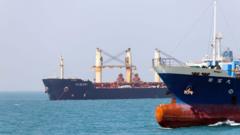
“Let the oil flow!” exclaims US President Donald Trump in a social media post celebrating the agreement, which he claims will include reopening the strait for commercial shipping. “Ships are starting to move,” Trump declared later on Monday, “loaded up with oil, out of the Strait of Hormuz,” which he described as “totally safe, secure, and pristine.” However, BBC Verify has been checking ship-tracking data, and it appears that traffic levels remain low in the Strait of Hormuz, despite the announcement. In fact, according to the ship tracking website MarineTraffic, only two vessels with active location trackers have exited the waterway since Sunday—a bulk carrier and a tanker.

Now, the Strait has been practically shut off to most shipping traffic since February 28, with only a handful of vessels friendly to Iran able to pass through. Hundreds of ships have been stranded in the Gulf, facing risks like sea mines or drone strikes, which have raised the stakes for crews and made safe passage a challenge. Neil Shearing, group chief economist for Capital Economics, said it remains to be seen whether this latest deal represents a fragile truce or a more durable settlement. He added that it would likely take some time for oil flows through the Strait to return to pre-war levels.

Even if ships now have safe passage, tankers are in the wrong place, oil production and refining facilities need to ramp up to full capacity, and there are still concerns about the cost and availability of insurance for ships traversing the Strait. Before the agreement was even reached, during the ongoing ceasefire, shipping companies were generally hesitant to move their vessels out of the strait. Getting those ships out will be their first priority. Take Denmark’s Maersk, the world’s second-largest shipping line, for instance—it has five ships stuck in the Gulf due to the conflict. They mentioned it’s too early to assess how the agreement will impact logistics, and for now, there’s nothing changing in their operations in the region.

On the other side of the aisle, German shipping giant Hapag-Lloyd has four ships trapped in the strait and is hoping to get them out over the weekend once the deal is signed and any remaining mines are cleared. Normally, about a fifth of the world’s oil and LNG supplies flow through the strait, and the effective standstill in traffic has pushed oil prices higher. This has had a cascading effect on petrol, diesel, and jet fuel costs. During the conflict, the price of Brent crude, the global oil benchmark, shot up to around $120 a barrel, while before the hostilities erupted, it hovered just below $70. After the news of the framework deal broke, Brent dropped to $83.55 a barrel.

Now, President Trump stated that the Strait of Hormuz would reopen once the “deal” is signed on Friday. Senior energy strategist at Rabobank, Florence Schmit, noted that there’s a “strong possibility that we’ll see a lot of volatility” leading up to the deal’s signing. “Some things are not confirmed on both sides—important things: we don’t know if the deal will be signed,” she told the BBC, adding, “What we’ve seen so far is a deal for 60 days for the opening of the Strait—but what happens after that? What if the Iranians want to re-insert a toll system?” A full-scale peace agreement could still be a long way off.

Despite this uncertainty, Schmit mentioned that normalcy in the system, including prices, “could return by the end of the year” if a full ceasefire is agreed upon. Normalcy would mean the return of pre-war levels of 26 daily crude oil tankers going through the strait. Given the current positive media headlines and what she described as a “sentiment-driven” sell-off, there’s a chance prices might dip below $80 a barrel, but they could average in the mid-$80s by year-end once “the geopolitics is stripped out” and the market assesses the reality of the situation.

As for global food prices, there could also be relief if fertilizer supplies get closer to normal levels again. Fertilizer—a by-product of oil—has skyrocketed in price, putting immense pressure on farmers. Yara, one of the world’s largest fertilizer and crop firms, said the situation remains uncertain, and farmers may “require targeted support to manage ongoing volatility” in the short term. Maurizio Carulli, a global energy analyst at Quilter Cheviot, suggested that the ceasefire “should help ease the immediate pressure on fertilizer markets,” but warned it won’t be instantaneous.

He pointed out that roughly one-third of traded fertilizer and significant volumes of natural gas used for nitrogen-based fertilizers flow through the Strait of Hormuz, and “lingering damage to energy infrastructure” will take time to mend. Plus, the crop season has already begun in several regions worldwide, so the resumption of nitrogen and phosphate fertilizer deliveries may come too late for agricultural crops, negatively impacting global produce.

Meanwhile, jet fuel—another oil by-product—traded in Northwest Europe (NWE) has already seen a slight decline in price. NWE jet fuel is now down to $1,033 per tonne, compared to $831 per tonne before the conflict and around $1,840 at its peak. The Iran war has affected economies worldwide, as the spike in energy costs has driven fuel prices up, leading to increased inflation. This has pressured central banks to raise interest rates to keep inflation in check.

In the UK, prior to the war’s onset, the Bank of England was widely expected to cut interest rates this year. But those predictions quickly shifted as energy costs surged, with the bank now anticipated to hold rates steady, if not increase them later in the year. Russ Mould, investment director at AJ Bell, mentioned that just last week, markets were pricing in two rate hikes by early 2027. The probabilities have since shifted to a single rate hike by December and potentially no changes for at least the first half of 2027. This could mean companies will have greater confidence to hire more people, consumers might be more inclined to spend, and the property market could start to warm up after going cold for sellers in recent months.

So, what’s the bottom line here? President Trump says the US and Iran have struck a deal to end the war, but it remains unclear what’s been decided regarding Iran’s nuclear program. When the conflict kicked off on February 28, fuel costs surged as the war disrupted energy production and transportation across the Middle East. As we keep our eyes on the developments, let’s see what unfolds next…

Kaynak: Orijinal Haber

Trump’s Iran Deal: Hopeful Signs Amid Rising Tensions

The announcement of a deal to end hostilities between the US and Iran has come just in time for Donald Trump’s birthday, but it’s wrapped in a thic

The announcement of a deal to end hostilities between the US and Iran has come just in time for Donald Trump’s birthday, but it’s wrapped in a thick layer of uncertainty. In a social media post praising the agreement, Trump declared that the Strait of Hormuz will be open for commercial shipping, and the US will lift its naval blockade. “Let the oil flow!” he exclaimed on Sunday. This bold declaration comes with the promise of a “great deal” that, according to Trump, will usher in “peace and security to the whole region.” However, let’s not forget that such exuberance isn’t new for Trump. Remember last year’s claims about a deal ending the Gaza War? He called it “a peace for all eternity,” yet the reality has often been quite different.

Now, here’s the kicker: in these high-stakes diplomatic agreements, it’s always about the details, and right now, those details are pretty thin on the ground. In a Fox News interview on Sunday evening, Vice-President JD Vance mentioned that the agreement includes Iran never possessing a nuclear weapon, and he assured that the US would have means to verify compliance. But still, there are major questions hanging in the air. What exactly will the restrictions on uranium enrichment be? And what becomes of the stockpile of highly enriched uranium that Iran currently possesses?

Some of these pressing issues might be addressed in the follow-up negotiations and the “technical” talks that are set to happen during a 60-day extension of the current ceasefire. But honestly, after decades of trying to persuade Iran to give up its nuclear ambitions, one thing is crystal clear: there are no guarantees. No matter how solid the US thinks this “memorandum of understanding” is, the reality can look quite different. Just to highlight this uncertainty, Iran’s Supreme National Security Council issued a statement saying that “final negotiations will be postponed until after the other party’s commitments under the memorandum are implemented.” What those commitments entail and how Iran interprets them will be crucial in determining whether this deal holds.

Energy market experts are already warning that oil traffic through the Strait of Hormuz won’t immediately bounce back to pre-war levels. There’s a massive backlog of tankers to clear, mines to remove, and regular oil shipping and production to restore, which could take weeks. As the clock ticks down to the official signing, both Iran and the US have a narrow window to hammer out key details to make this deal work, but there’s also plenty of time for things to go sideways.

Now, let’s not forget this has always been a three-party affair. Trump expressed his frustration to the Wall Street Journal on Sunday over Israeli Prime Minister Benjamin Netanyahu’s decision to order strikes on Lebanon, which he believes could jeopardize the nearly finalized Iran deal. The deal managed to hold long enough to be announced, but if Israel ramps up military actions in Lebanon, Iran might just decide to close the Strait of Hormuz again, putting the global economy in a precarious position.

Vance also touched on the pain this war has inflicted on many Americans, particularly with rising energy prices and their cascading economic effects. “My primary message to the American people is thank you,” he said, while promising that energy prices would start to decline. How quickly that happens, and if it translates into lower costs for everyday Americans facing financial difficulties, will significantly shape whether the mounting political pressure on Republicans eases before the midterm elections in November. Recent polling indicates that Trump and his party are up against a restless public, with a YouGov survey revealing that 63% of Americans disapprove of Trump’s economic management, and a staggering 57% believe the economy is getting worse.

At the very least, Sunday’s deal is expected to help alleviate, if not completely eliminate, some of the economic strain caused by the ongoing conflict. If petrol prices begin to drop meaningfully, it could serve as a tangible indicator for Americans that things are on the upswing. It’s a crucial step towards restoring some semblance of normalcy, even if Trump’s broader ambitions remain unrealized for the time being, and he continues to face political challenges at home.

In summary, under this agreement, Trump stated that the key Strait of Hormuz waterway will be reopened. Meanwhile, thousands were anticipated to turn out for a mixed martial arts fight coinciding with Trump’s 80th birthday. Israel has claimed responsibility for targeting the Iran-backed armed group Hezbollah, while Tehran has warned that such actions could derail the US-Iran deal aimed at ending the conflict. In a social media post, Trump mentioned that Niño Guerrero was killed in a “swift and lethal kinetic strike.” As Trump celebrates his milestone birthday, we are left wondering what it truly takes to keep pushing forward in such turbulent times.

Kaynak: Orijinal Haber

Trump Announces US-Iran Peace Deal Signing Amid Doubts from Tehran

President Donald Trump has announced that a deal aimed at halting conflicts between the US and Iran is set to be signed on Sunday, though Tehran has

President Donald Trump has announced that a deal aimed at halting conflicts between the US and Iran is set to be signed on Sunday, though Tehran has cast uncertainty over this timeline. In a post on social media, Trump assured that the Strait of Hormuz—a crucial shipping route—would be “open to all” once the agreement is finalized. Meanwhile, Pakistan, acting as a key mediator, indicated that the deal is expected to be completed within the next 24 hours, and preparations for electronic signing are underway.

However, before Trump’s announcement, Iranian foreign ministry spokesman Esmaeil Baghaei tempered expectations, emphasizing the need to “wait and see” regarding the exact signing date, adding, “it will not be tomorrow.” On his Truth Social account, Trump stated, “The Deal is scheduled to get signed tomorrow, and immediately after it is signed, the Hormuz Strait is OPEN TO ALL.” He also alluded to Iran’s enriched uranium stockpiles, mentioning that “at the appropriate time, when all is calm, we will go in and get the Nuclear Dust,” which he promised would be destroyed later.

For decades, Western nations have accused Iran of attempting to develop nuclear weapons, a claim Iran has consistently denied, asserting its program is purely for peaceful purposes like generating electricity and conducting research. Trump cautioned that if negotiations do not “work out quickly, easily and smoothly,” the US has “the ultimate alternative, hopefully never to be used again!”

Earlier today, Pakistani Prime Minister Shehbaz Sharif expressed optimism, stating that “we are closer to a peace deal than ever before.” He mentioned that with finalization likely within the next 24 hours, Pakistan is preparing for the electronic signing of the peace agreement, followed by technical discussions next week. On Friday, Iran’s Foreign Minister Seyed Abbas Araghchi had remarked that a deal with the US was imminent, which he described as encompassing an end to the conflict between Israel and Hezbollah in Lebanon.

Araghchi further informed Iranian state TV that the deal includes reopening the Strait of Hormuz and lifting a US blockade on Iranian ports. Nevertheless, he clarified that discussions about Iran’s nuclear program would commence later. US officials have corroborated some details of the agreement, suggesting that economic incentives for Iran will hinge on Tehran fulfilling its commitments.

In recent weeks, various versions of an agreement have been anticipated multiple times but have not reached completion. The war that ignited on February 28, following US and Israeli strikes across Iran, led to Iran retaliating against Israel and US-aligned nations in the Gulf, effectively closing the Strait of Hormuz—a vital corridor for global oil and liquefied natural gas shipments. Despite a ceasefire established in April, the US and Iran have engaged in sporadic exchanges of fire, including two rounds of retaliatory strikes just this week.

As the world turns its eyes to sporting events like the World Cup, various issues such as heat, costs, environmental impact, and travel restrictions linger in the air. Amid these turbulent times, Trump also confirmed the death of Niño Guerrero in a “swift and lethal kinetic strike,” signifying further developments in the ongoing conflict.

Bakalım bundan sonra ne olacak? Gelişmeleri takip ediyoruz…

Kaynak: Orijinal Haber

Iran and Israel Clash: A New Wave of Violence in the Middle East

The Middle East “is in turmoil” following attacks between Iran and Israel, as reported by BBC’s international editor, Jeremy Bowen. This marks a sign

The Middle East “is in turmoil” following attacks between Iran and Israel, as reported by BBC’s international editor, Jeremy Bowen. This marks a significant escalation, with both countries launching strikes into each other’s territories for the first time since the ceasefire in April. Just imagine the tension in the air as US President Donald Trump calls for an immediate halt to the “shooting.” Can you believe it?

Israel has retaliated with airstrikes targeting western and central Iran, all this after Iran fired missiles into northern Israel. It’s a dangerous game, and both sides seem to be escalating their military postures. Meanwhile, the streets of Bethlehem saw thousands of participants in the Palestine Marathon, returning after a two-year hiatus due to the Gaza War. The resilience of the people shines through, doesn’t it?

In another twist, President Trump has suspended operations aimed at guiding ships through the Strait of Hormuz, which is crucial for oil transport. BBC Verify has been tracking the timeline of these developments closely. Speaking of oil, the United Arab Emirates (UAE) is making waves by quitting the oil cartel OPEC after nearly 60 years. What’s going on in the oil market?

As the ceasefire between Israel and Hezbollah in southern Lebanon enters its second day, BBC Arabic’s correspondent Carine Torbey reports from the border town of Khiam, where the local population is on edge. Eyewitnesses have shared terrifying moments, like when a burning fuel tanker raced through Hasakah, Syria, leaving a fiery trail behind it. Can you imagine the chaos that must have caused?

Lyse Doucet has noted that many Iranians are yearning for a resolution to the long-standing animosity with the US, yet their leaders seem unwilling to negotiate on Washington’s terms. This highlights the complexity of the situation; it’s not just military strikes, it’s about the political chess game being played behind the scenes.

Notably, while military targets are being struck in Iran, civilian areas are also caught in the crossfire, painting a stark picture of the brutal reality of war. Upon arriving in Tehran, Lyse described the atmosphere as “life on pause.” It’s a haunting image of a city gripped by fear and uncertainty.

In the Israeli town of Metula, surrounded by Lebanon on three sides, BBC foreign correspondent Nick Beake observed a community living in constant shadow. And in Nabatieh, once a vibrant city, paramedics are on high alert, responding to the aftermath of recent attacks. Hugo Bachega, the BBC Middle East correspondent, has spoken to many families affected by the violence, which is displacing over one million people in Lebanon.

Amid these developments, pro-government protesters flooded the streets of Tehran after the announcement of a two-week conditional ceasefire between the US and Iran. The BBC’s Nick Marsh sheds light on the potential impacts on fuel prices following this ceasefire. With tensions high, the question remains: will the situation stabilize or spiral further out of control?

And let’s not forget the human cost of this conflict. The funerals of three journalists killed in a targeted attack in southern Lebanon serve as a stark reminder of the dangers faced by those covering these events. As families in Beirut mourn for their loved ones, the community grapples with the reality of being displaced and uprooted from their homes.

Paul Adams provides insight into the dangers of navigating the Strait of Hormuz, one of the busiest oil shipping channels in the world, which has become a focal point in this ongoing crisis. The violence flared up after a teenage settler was reportedly killed by a vehicle driven by a Palestinian, leading Israeli forces to take drastic measures, including destroying crossings over the Litani River used by Hezbollah.

As we piece together these troubling events, it’s clear that the Middle East remains a volatile region. So what’s next? How will this cycle of violence impact the lives of ordinary people caught in the crossfire? We’ll keep an eye on these developments as they unfold.

Kaynak: Orijinal Haber

US and Iran Negotiations: A Deal is Close, But Not Finalized Yet

The US and Iran are inching closer to a potential agreement regarding the ongoing war, but Vice-President JD Vance emphasizes that they are “not ther

The US and Iran are inching closer to a potential agreement regarding the ongoing war, but Vice-President JD Vance emphasizes that they are “not there yet.” Speaking with the BBC, Vance was asked about President Donald Trump’s possible signing of a deal, to which he responded that it is too soon to determine “when or if” an agreement will be finalized. According to reports, the proposed deal could extend the current ceasefire for an additional 60 days while also initiating discussions about the future of Iran’s nuclear program.

Earlier on Thursday, US officials indicated to the BBC that a framework for the deal had been tentatively agreed upon. However, Iran’s semi-official Tasnim news agency claimed that the deal had not yet been confirmed or finalized. The potential agreement might allow “unrestricted” passage through the critical Strait of Hormuz, with Iran given 30 days to clear mines from this vital shipping route. Meanwhile, the US would lift its blockade and provide sanction waivers to enable Iran to resume its oil sales.

Axios, which first broke the news of this tentative agreement, reported that Trump had been briefed on the proposal but had not yet signed off on it. It could take him a few days to weigh his options. The Strait of Hormuz is a crucial chokepoint for global oil and natural gas, with about one-fifth of the world’s supply passing through it. Its closure has significant implications for global fuel trade.

Vance shared his optimism during a press conference in Washington DC, noting that negotiators are “going back and forth on a couple of language points,” including the contentious “question of enrichment.” He stated, “We’re not there yet, but we’re very close and we’re going to keep on working at it.” The US has long insisted that Iran halt its production of highly enriched uranium and dispose of its existing stockpile, which could potentially be used for nuclear weapons.

On Wednesday, Iranian state media circulated details of what they referred to as an unofficial draft of a 14-point memorandum of understanding between the two nations. This included lifting the US naval blockade of Iranian ports, withdrawing US forces from the “vicinity of Iran,” and restoring non-military traffic through the Strait of Hormuz, with Iran and Oman overseeing vessel management and routing. However, the White House dismissed this purported draft as a “complete fabrication.”

Since the initial ceasefire took effect on April 8, Trump has repeatedly indicated that both sides are close to a deal and that negotiations are progressing. However, tangible results have yet to materialize. The president faces mounting pressure to bring an end to the war from Gulf allies, opposing Democrats, and some Republicans in Congress who are concerned about the conflict’s duration.

Recent conflicting reports about a possible deal highlight the fluidity of negotiations, with both nations contradicting each other’s claims and providing scant details on the reported proposal. This raises further questions about how near the parties are to ending hostilities. Trump and other officials have warned that “option B”—a return to combat operations—remains on the table.

Extending the ceasefire would allow US and Iranian teams to delve into the more complicated and technical issues, particularly concerning Iran’s nuclear program and its stockpile of highly enriched uranium. Trump has floated the idea that the US could either take the uranium or, in cooperation with Iran, dilute it either on-site or at a third location.

Treasury Secretary Scott Bessent, during the White House briefing earlier on Thursday, refrained from confirming whether an agreement had been reached. “It’s always a mistake to get out ahead of the president, and it is all going to be the president’s decision,” he remarked. When questioned about whether any eventual peace deal would involve “reconstruction” for Iran, he responded, “We’ve got to get to the deal before we get to the other side.”

In the meantime, both Iran and the US have accused each other of breaching the fragile ceasefire in recent days. Iran’s Islamic Revolutionary Guard Corps (IRGC) claimed to have targeted a US base in the region on Thursday following new US strikes on southern Iran overnight. Iranian media reported that their forces had downed a US aircraft, possibly a drone. However, US Central Command refuted these claims, stating on social media, “No US aircraft were shot down. All US air assets are accounted for.”

This ongoing tension comes during a delicate ceasefire between the US and Iran, with negotiations dragging on to end the three-month-long conflict. President Trump believes Iran is eager to finalize a deal, but as of now, there are still no agreed-upon terms.

Kaynak: Orijinal Haber

US Military Strikes Iran: Tensions Escalate in the Region

The US military has confirmed that it has launched new strikes on southern Iran, specifically targeting Iranian missile sites and boats that were rep

The US military has confirmed that it has launched new strikes on southern Iran, specifically targeting Iranian missile sites and boats that were reportedly laying mines. This action was described by US Central Command as a move taken in “self-defense” aimed at safeguarding American troops from perceived threats posed by Iranian forces. According to Central Command spokesperson Capt. Tim Hawkins, the military is committed to defending its personnel while exercising restraint during the ongoing ceasefire.

These strikes occurred near Bandar Abbas, a critical southern port city that hosts an Iranian naval base and overlooks the vital Strait of Hormuz. This area has been a focal point of tension and strategic importance, especially given its role in global oil shipping. Local officials in Bandar Abbas have noted reports of explosions, and investigations are currently underway, as Iranian state media has also picked up on the incidents. As of now, Iran has not issued any response to these latest military actions.

It’s a bit murky what these strikes mean for the broader peace negotiations that have been ongoing between the US and Iran. Just after the attacks, US Secretary of State Marco Rubio expressed that a deal could still be on the table. He highlighted that talks were scheduled for Tuesday involving Iran’s top negotiator and foreign minister in discussions with Qatar’s prime minister. Rubio mentioned, “We’ll see if we can make progress. There is a lot of back and forth regarding specific language in the initial document, so it’ll take a few days…”

Interestingly, President Donald Trump has reportedly signaled his desire for a strong deal, stating that he was either aiming for a good agreement or none at all. Over the weekend, he suggested that the two sides were on the verge of a deal but later advised negotiators not to rush things. Rubio added that they could potentially reach an agreement by Monday, but Iranian foreign ministry spokesman Esmail Baqai set the record straight, saying, “It is correct to say that we have reached a conclusion on a large portion of the issues under discussion… But to say that this means the signing of an agreement is imminent – no one can make such a claim.”

The ongoing discussions reportedly include a proposed 60-day extension of the ceasefire, reopening the Strait of Hormuz, and plans for further negotiations regarding Iran’s nuclear program. Meanwhile, US intelligence suggests that Iran’s Supreme Leader, Mojtaba Khamenei, is currently in an undisclosed location, complicating communications with his representatives and potentially slowing down the negotiation process.

As tensions remain high, it’s noted that the conflict has significantly impacted oil prices around the world. The US and Israel’s extensive strikes on Iran, which began back in February, have further escalated the situation, leading to Iran retaliating against Israel and US-aligned nations in the Gulf. The Strait of Hormuz remains a contentious area, with Iran maintaining control over shipping routes while the US Navy attempts to blockade Iranian ports.

In a twist, Mexico’s President Claudia Sheinbaum has even agreed to allow Iran to remain in the country during the World Cup, as the United States is not willing to host them. This deal includes the proposed ceasefire and reopening of the Strait of Hormuz, suggesting some progress in diplomatic discussions, although the nuclear weapons issue remains contentious and not part of the initial framework being discussed.

As we watch these developments unfold, one has to wonder how these military actions will affect the already fragile peace talks and whether a resolution can indeed be reached. Will there be a breakthrough, or will tensions continue to flare?

Kaynak: Orijinal Haber

Oil Prices Plummet as US-Iran Peace Deal Hopes Rise!

Oil prices have plummeted dramatically, and Asian stock markets have surged on the optimism surrounding a potential peace deal that could put an end

Oil prices have plummeted dramatically, and Asian stock markets have surged on the optimism surrounding a potential peace deal that could put an end to the ongoing US-Israel war with Iran. This past Saturday, President Donald Trump announced that an agreement with Tehran had been “largely negotiated,” and promised that details would be revealed soon. However, he also advised his negotiating team not to rush the agreement, which has left many on edge about the next steps.

As the sun rose on Monday morning in Asia, the global oil benchmark, Brent crude, took a nosedive of 5.5%, settling at $97.90 (£72.64), while US-traded crude dropped 5.8% to $90.99. This sharp decline comes amid news that the deal might involve the reopening of the strategically crucial Strait of Hormuz, the narrow waterway responsible for transporting about one-fifth of the world’s oil and liquefied natural gas (LNG). Since the conflict escalated on February 28, this vital route has been effectively closed.

In Japan, the Nikkei 225 stock index climbed above 65,000 for the first time, buoyed by a 2.9% gain, as traders celebrated the prospect of the strait reopening. It’s worth noting that Japan and nearby South Korea have felt the brunt of the conflict, relying heavily on energy supplies from the Gulf. Meanwhile, the energy and financial markets in both the UK and the US were closed on Monday for public holidays, adding to the intrigue surrounding these developments.

Trump took to social media on Saturday to share details of a “very good call” he had with leaders from Saudi Arabia, the UAE, Qatar, and others, discussing a “Memorandum of Understanding pertaining to PEACE.” He emphasized that the agreement is largely negotiated and awaits finalization among the United States, Iran, and several other nations. “Final aspects and details of the deal are currently being discussed, and will be announced shortly,” he added.

The president also mentioned a productive conversation with Israeli Prime Minister Benjamin Netanyahu, although he kept specifics under wraps. He maintained that any agreement would “absolutely” prevent Iran from acquiring nuclear weapons. Yet, on Sunday, he cautioned on Truth Social that both sides need to take their time to ensure everything is done right—no room for mistakes here!

On the Iranian side, foreign ministry spokesman Esmaeil Baqaei noted that US and Iranian positions have been converging recently, although he warned that this doesn’t guarantee agreements on critical issues, calling out the Americans for their “contradictory statements.” Since early March, global energy markets have experienced wild price fluctuations, especially after Iran threatened to retaliate against ships attempting to use the Strait of Hormuz in response to US and Israeli attacks.

Even with today’s sharp drop in crude oil prices, they still remain significantly higher than prior to the conflict, which saw Brent trading around $70 a barrel. Iran has also retaliated against Israel and US-allied Gulf states like Saudi Arabia, Bahrain, and the UAE. After a ceasefire was reached in early April, discussions have continued between Washington and Tehran regarding a long-term peace deal.

Saul Kavonic, head of energy research at MST Financial, mentioned that “there is now some light at the end of the tunnel, which will bring some near-term oil price relief.” However, he cautioned that even in the best-case scenario, oil markets will likely remain tight until 2027, as it takes time to normalize oil flows through the Strait, repair damaged facilities, and rebuild global oil stocks that have seen significant depletion since the war began.

The deal currently under negotiation might involve a 60-day extension of the ceasefire, during which the Strait of Hormuz would be reopened, according to reports from US media. As the situation evolves, the Moroccan government is looking to attract more Western holidaymakers to the territory it claims, while companies like Millers Oils, operating since 1877, continue to navigate the uncertain waters of the global oil landscape.

Bakalım bundan sonra ne olacak? Gelişmeleri takip ediyoruz…

Kaynak: Orijinal Haber

Oil Prices Plunge Amid Hopes for US-Iran Peace Deal

Oil prices have taken a nosedive on the back of optimism surrounding a potential deal that might put an end to the ongoing US-Israel war with Iran. O

Oil prices have taken a nosedive on the back of optimism surrounding a potential deal that might put an end to the ongoing US-Israel war with Iran. Over the weekend, US President Donald Trump made waves by announcing that an agreement with Tehran was “largely negotiated,” hinting that details would soon be revealed. But hold on—just a day later, he urged his negotiating team not to rush into finalizing anything. Talk about mixed signals!

This Monday morning, as the sun rose in Asia, global oil benchmark Brent saw a drop of 5%, landing at $98.36 (£57.10). Over in the US market, crude oil was down by 5.3%, sitting at $91.50. Now, why does this matter? Well, Trump has previously mentioned that this deal could involve reopening the crucial Strait of Hormuz, a narrow waterway that usually sees about a fifth of the world’s oil and liquefied natural gas (LNG) flow through it. Since the conflict flared up on February 28, this vital route has been effectively shut down.

Trump took to social media on Saturday, claiming he had a “very good call” with leaders from Saudi Arabia, the UAE, Qatar, and others, discussing a “Memorandum of Understanding pertaining to PEACE.” He stated, “An agreement has been largely negotiated, subject to finalization between the United States of America, the Islamic Republic of Iran, and the various other Countries, as listed.” He also mentioned having a fruitful chat with Israeli Prime Minister Benjamin Netanyahu, but kept the specifics of the deal under wraps. However, Trump did assure that any agreement would “absolutely” stop Iran from acquiring nuclear weapons.

But here’s the kicker: on Sunday, he cautioned on Truth Social that “Both sides must take their time and get it right. There can be no mistakes!” Now, that raises eyebrows, doesn’t it? Iranian foreign ministry spokesman Esmaeil Baqaei said earlier that US and Iranian positions had been getting closer in the past week. However, he warned that this doesn’t guarantee agreements on key issues, even accusing the Americans of making “contradictory statements.”

Since early March, global energy markets have faced wild price fluctuations after Iran threatened to retaliate against ships using the Strait of Hormuz due to US and Israeli attacks. Things got heated as Tehran also targeted Israel and US-aligned states in the Gulf, like Saudi Arabia, Bahrain, and the UAE. A ceasefire was reached in early April, and since then, there have been discussions between Washington and Tehran about a long-term peace deal.

Saul Kavonic, head of energy research at MST Financial, said, “There is now some light at the end of the tunnel, which will bring some near-term oil price relief.” But don’t get too excited just yet! Even in the best-case scenario, oil markets are expected to remain tight until 2027, given the time needed to normalize oil flows through the Strait, repair damaged facilities, and rebuild global oil stocks that have seen record depletion since the conflict began.

Meanwhile, UK and US energy and financial markets are taking a breather today due to public holidays. And get this—the Moroccan government is looking to attract more Western holidaymakers to its claimed territory. The deal being discussed might involve a 60-day ceasefire extension, during which the Strait of Hormuz would be reopened, according to US media reports.

As for the broader implications, Millers Oils, a company that has been in the oil blending and lubricants game since 1877, is keeping an eye on these developments. Remember Sunil Puniya? He was on his first sea job when a missile struck the oil tanker Skylight at the start of the Iran war. That’s a story for another day, but the uncertainty surrounding access to RAF Fairford has led to event cancellations as the conflict continues.

What’s next in this unfolding saga? With so many moving parts, it’s hard to say, but we’ll keep you updated as this story develops.

Kaynak: Orijinal Haber