China’s Orbital Data Centres: A Wake-Up Call for Europe!

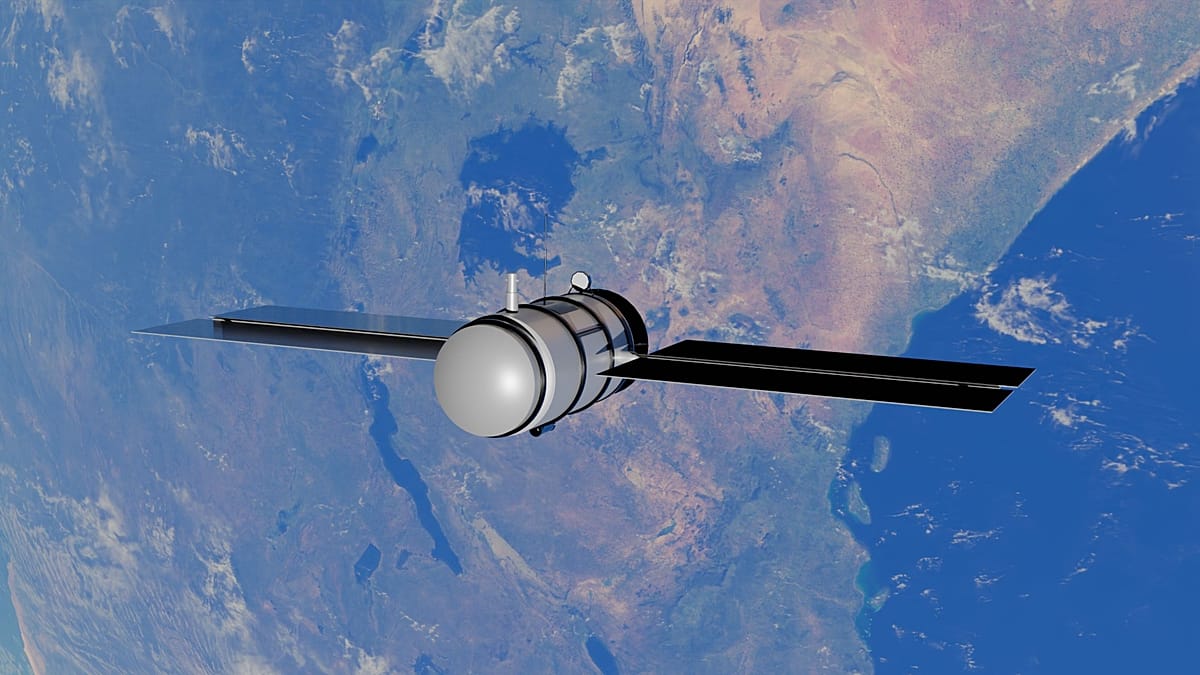
China is sounding the alarm—if the technological gap continues to widen, Europe could be left in the dust when it comes to computing its own space

China is sounding the alarm—if the technological gap continues to widen, Europe could be left in the dust when it comes to computing its own space data. We’re talking about crucial orbital information that could slip through Europe’s fingers, forcing the continent to rely on third-party services. Right now, European efforts are on the table but they’re limited in scale. The EU-funded project ASCEND, which kicked off under Horizon Europe in 2023, highlights the potential of orbital data centres to bolster European digital sovereignty. However, is that enough?

The European Space Agency (ESA) is doing its part, collaborating with UK firm Open Cosmos on the Φ-sat-2 satellite that’s equipped with AI for Earth observation. Meanwhile, French startup ALATYR has ambitious plans to manufacture robotically assembled orbital data centres. But let’s be real—the pace of development in Europe is starting to lag behind the rapid strides being made in China and the US.

China isn’t just dabbling in space-based computing; it’s treating it as a national strategic priority. This has led to a flurry of state-backed initiatives and policies aimed at making it happen. The state-owned China Aerospace Science and Technology Corporation (CASC) is at the forefront of this effort, formalizing orbital data centres as part of a new strategy alongside the Beijing Municipal Government and the Zhongguancun Science Park. They’ve created a framework that combines top-down policy creation with private and state-owned industry adaptation, and they’ve thrown in municipal and provincial government incentives as well. That’s a recipe for success if I’ve ever seen one!

High-profile prototypes are already making waves. The Three-Body Constellation launched by ADAspace in May 2025 is the first operational example of space-based computing, and it’s just the tip of the iceberg. In partnership with Shanghai Jiao Tong University, ADAspace is pushing the boundaries further. The municipal government is even getting involved, issuing calls for project proposals for orbital data centres as recently as June 2026. They’re also bringing rival companies, like GalaxySpace and Landspace, together to form a space computing innovation center. Talk about collaboration!

Despite the excitement, there’s a bit of a cloud hanging over all this. Reports from state broadcaster CGTN suggest plans for building gigawatt-level space digital infrastructure that combines cloud, edge, and terminal technologies, but the official policy documents are nowhere to be found. Euronews couldn’t verify these claims independently, which leaves us all wondering what’s really going on behind the scenes.

The brief suggests that the European Union needs to step up its game. Coordinated political guidance, investment support, and a solid regulatory framework for orbital data centre development are crucial to keeping pace. A flagship initiative is recommended to be integrated into the Horizon Europe Moonshot Projects for the 2028-2034 Multiannual Financial Framework. Plus, it seems like a good idea for European space actors to start convening with their international counterparts to discuss standards and data sovereignty.

So, what does the future hold for Europe? Will it rise to the challenge, or will it continue to watch from the sidelines as China accelerates ahead? Only time will tell…

Kaynak: Orijinal Haber

A Once-in-a-Generation Solar Eclipse Stuns Millions Across the UK and Europe

A breathtaking solar eclipse unfolded over the UK and Europe, captivating millions as the Moon gracefully obscured the Sun. As the minutes passed, t

A breathtaking solar eclipse unfolded over the UK and Europe, captivating millions as the Moon gracefully obscured the Sun. As the minutes passed, the celestial dance turned surreal, with the Moon acting like a dimmer switch, gradually hiding more of the Sun’s brilliant light. For most of the UK, viewers experienced a partial eclipse, with the Moon covering about 90% of the Sun, creating an awe-inspiring spectacle that left people cheering and sharing their excitement. You could feel the energy in the air, as folks gathered together, their eyes glued to the sky, no words could truly capture the collective wonder of the moment.

The highlight of the eclipse was the totality, where the Sun’s corona became visible—superheated jets of gas shooting thousands of miles into space, a sight that had many gasping in amazement. For those who looked closely, pink loops of gas known as prominences could be seen, swirling along the Sun’s turbulent magnetic field. This was no ordinary day; it felt like we were part of something cosmic, something truly special. The surface of the Sun during totality in Bergos, Spain, showcased the beauty of our universe, reminding us how small we are in this vast expanse of space.

Then, just as suddenly as it began, the Moon started to reveal the Sun it had hidden from our view. The total eclipse, though lasting less than two minutes, etched an unforgettable memory into the minds of those who witnessed it. It’s incredible to think that experiencing a total eclipse is such a rare cosmic coincidence. The Sun, sitting 150 million kilometers (or 93 million miles) away from Earth, is 400 times further away than the Moon. Yet, the Moon, being 400 times smaller in diameter than the Sun, allows us to have these breathtaking moments… It’s like our universe has a funny way of aligning just right.

As the spectacle began to fade, the Moon continued on its celestial journey, leaving stargazers in Europe yearning for the next big event. Mark your calendars! The next total solar eclipse visible from the UK will occur in 2090, and the next chance for many will be in 2081, when up to 99% of the Sun will be obscured. What a time to be alive, huh?

Kaynak: Orijinal Haber

UK Economy Bounces Back: How Sun and Sports Boosted Businesses This Spring!

The UK economy has shown some encouraging signs, growing by 0.4% between April and June, and it seems that the sunny weather and exciting summer spor

The UK economy has shown some encouraging signs, growing by 0.4% between April and June, and it seems that the sunny weather and exciting summer sports events played a significant role in this boost. According to official data, the combination of bright days and thrilling matches has had a positive effect on many businesses, particularly in June. You know how it goes—when the sun’s out, people are more likely to head out, spend a little cash, and enjoy what their local areas have to offer.

Chancellor of the Exchequer, John Healey MP, weighed in on the matter, highlighting that the government’s aim is to make the country “more resilient” and to “drive growth in every postcode.” It’s clear that he believes in the power of positive influences, and with the men’s football fixtures heating up, it looks like the economy is reaping the benefits. The key takeaway here is that while the numbers from economists were relatively robust, the good weather and these sporting spectacles have genuinely contributed to the overall economic health of the region.

Now, let’s talk specifics: the summer sun isn’t just a pleasant bonus; it’s a game changer. Local pubs, restaurants, and shops saw an uptick in foot traffic as residents flocked outside to soak up the rays while catching a match or two. Picture this: families enjoying meals on terraces, friends gathering for a pint, and shops bustling with happy customers. That’s the kind of scene that not only warms the heart but also fills the coffers.

But hold on, it’s not just about the sun; the sporting events brought a unique buzz to towns and cities. People were cheering, celebrating, and feeling that communal spirit, which ultimately leads to more spending. It’s like a domino effect—you get one good thing happening, and it sets off a chain reaction. And let’s not forget the heatwaves that followed, pushing more folks to get out and about rather than stay cooped up at home.

So, as we look ahead, the big question remains: will this growth continue? Or are we in for a dip once the sun sets and the sports events wind down? The next few months will be crucial to see if this momentum can be maintained or if we’ll see a cooling off in the economy. Either way, it’s an exciting time to keep an eye on how the weather and sports can intertwine with economic realities.

Kaynak: Orijinal Haber

Why Are Japanese Firms Lagging in AI Adoption?

Japanese firms are notoriously slow to embrace artificial intelligence (AI), despite facing severe labor shortages, an aging workforce, and chronic p

Japanese firms are notoriously slow to embrace artificial intelligence (AI), despite facing severe labor shortages, an aging workforce, and chronic productivity issues. It’s a puzzling situation, as one would think these challenges would make Japan a prime candidate for AI adoption. However, when we stack Japan against the US and UK, the difference is glaring. While American and British companies are racing ahead, many Japanese workplaces are still stuck in a cautious mode, reminiscent of the slow-moving, traditional Noh plays.

It’s like watching a drama unfold where the masked actors on stage agree that action is urgent, but instead, they remain frozen in place. This inertia is detrimental. Experts like Xu point out that in the US, businesses are allowing AI agents a lot more freedom to operate, which boosts their productivity. He emphasizes that Japanese companies are looking for more proof before they fully trust AI to enhance their operations.

Parrisa Haghirian, a professor at the Kyoto University of Advanced Science, echoes these concerns, stating that Japanese firms are often too risk-averse to explore AI. In stark contrast to the entrepreneurial spirit in the US, Japanese companies are highly sensitive to errors, uncertainties, and potential damage to their reputations. They worry that AI might make mistakes, which is a valid concern given that in many offices, paperwork is still piled up like it’s the Stone Age.

The Japanese government is aware of these challenges and aims to encourage businesses to invest in AI through light-touch regulations. They’ve pledged that Japan will become a leader in AI, believing it can significantly boost productivity, which currently ranks the lowest among G7 nations. However, experts like Haghirian highlight the pressing shortage of tech-savvy workers, pointing out that Japan may face a shortfall of around 800,000 IT professionals by 2030.

Moreover, many companies are grappling with outdated computer systems, with about 60% of them being over 20 years old. This is a huge red flag for any company trying to modernize. Ogasawara notes that Japanese firms are more focused on avoiding job losses than on developing AI, which could potentially lead to unemployment. Yet, there’s a flicker of change on the horizon, as some companies are now prioritizing “AI literacy” in their recruitment processes.

One employee mentioned, “I use AI quite often at work.” But, she pointed out that unlike in the US, AI systems capable of managing complex tasks independently are still a rarity in Japan. However, her company, known for its forward-thinking approach, has already integrated such systems. Ogasawara remarks that “change in Japan is limited” and suggests that without disruption, the productivity gains the country desperately needs might remain out of reach.

This begs the question: will Japanese firms finally shake off their hesitation and embrace the AI revolution, or will they continue to lag behind their global counterparts?

Kaynak: Orijinal Haber

Leading Doctor Calls Out NHS on Transplant Failures

Professor Derek Manas has expressed his deep frustration with NHS chiefs regarding the ongoing issues in the transplant system, highlighting a critic

Professor Derek Manas has expressed his deep frustration with NHS chiefs regarding the ongoing issues in the transplant system, highlighting a critical disconnect between hospitals that has led to last-minute cancellations of operations. This situation not only affects the patients waiting for life-saving organ transplants but has also left many feeling hopeless. The professor, a prominent figure in kidney transplantation, pointed out that poor performance and last-minute cancellations are becoming a norm rather than an exception, making it difficult for both patients and healthcare professionals.

“The system is fragmented,” he stated, emphasizing that accountability is sorely lacking. There’s a significant mismatch among hospitals in how they handle organ donations, which leads to unpredictable utilization of these precious resources. He criticized the management of waiting lists, calling them “never actively managed,” which is a major concern for those waiting for organs. Moreover, the workforce planning has been described as “seldom adequate,” a troubling revelation that underlines systemic issues that have been brewing for years.

The heart and lung transplantation service issues were initially brought to light in a 2024 report by international experts commissioned by the Conservative government. Despite NHS England being tasked with implementing these recommendations, the results have not met expectations. They claimed to have worked diligently to improve patient outcomes, but many remain skeptical.

During a recent interview with the BBC, Professor Manas, who is also a Member of Parliament for Glasgow and a kidney transplant surgeon, pointed out that while some aspects of the transplant system are indeed “world-leading,” the planned closure of NHS England was alarming. This closure could potentially complicate the process of facilitating organ transplants for patients desperately in need of timely interventions. “I’ve been waiting years for a kidney transplant,” a patient lamented, reflecting the grim reality faced by many.

NHS England, in their statement, insisted that transplant services are being improved, yet doubts linger. The recent criticisms shed light on a pressing need for reform in the transplant process. How long will patients have to wait for the care they desperately need? The urgency of the situation cannot be overstated, and the call for action is louder than ever.

Kaynak: Orijinal Haber

Chelsea Sets Friday Deadline for £120m Enzo Fernandez Offers!

Chelsea has set a Friday deadline for clubs interested in signing midfielder Enzo Fernandez, with a hefty price tag of £120 million. This news come

Chelsea has set a Friday deadline for clubs interested in signing midfielder Enzo Fernandez, with a hefty price tag of £120 million. This news comes as the transfer market heats up, and clubs scramble to bolster their squads ahead of the new season. The pressure is on, and time is ticking!

Fernandez, who made waves with his performances, has attracted significant interest from various top clubs. Now, Chelsea is making it clear that they won’t entertain any offers after Friday. If clubs are serious about securing the talented midfielder, they better act fast. The clock is ticking, and the £120 million price tag isn’t just a number—it’s a statement of intent from Chelsea. They want to make sure that only the most committed suitors come forward.

The urgency of this situation is palpable, with scouts and decision-makers from several clubs reportedly gearing up to make their moves before the deadline. It’s a high-stakes game, and as the hours pass, the tension is rising. Will a club step up and meet the asking price? Or will they hesitate, leaving Fernandez in Chelsea’s ranks for now? One thing’s for sure, the negotiations are heating up, and everyone is watching closely…

As the Friday deadline approaches, fans and pundits alike are speculating on whether any club will take the plunge. There’s buzz in the air, and it’s not just about the money—it’s about the future of a player who could change the game for whichever team he joins. The question remains: will someone meet Chelsea’s demands, or will this saga continue? Stay tuned, because this is just the beginning…

Kaynak: Orijinal Haber

Trump Faces Legal Battle Over Truth Social’s $100,000 Early Access Fees!

Donald Trump is being sued by two US media groups over a new service on his social media platform, Truth Social, which charges users up to $100,000

Donald Trump is being sued by two US media groups over a new service on his social media platform, Truth Social, which charges users up to $100,000 a month for early access to his posts. This lawsuit was filed on Wednesday in New York federal court by The Intercept and the Freedom of the Press Foundation. The plaintiffs argue that this practice is not just extraordinary but also corrupt and unconstitutional, as it grants priority access to Trump’s posts just seconds before they are made available to the general public.

Now, you might wonder why this matters so much. Well, folks, it’s because Trump often uses Truth Social to announce significant developments, like during the Iran war, that can shake up official markets. The plaintiffs say that this setup creates an unfair advantage for those who can pay, allowing vital market-sensitive information to reach affluent clients first. Can you believe it? More than ten firms are already forking out big bucks—up to $100,000 a month—for rapid access to Truth Social posts.

Trump Media and Technology Group, the company behind Truth Social, claims that this product is designed for businesses looking for faster data feeds and has brushed aside worries about how this information might be used. They rolled out the service, known as Truth API, back in mid-July, promising to deliver posts from Trump and other high-profile accounts in milliseconds. And let’s not forget, Trump is the most followed person on the platform with about 13 million followers, far ahead of his son, Donald Trump Jr., who sits at around 7.5 million.

Seth Stern, the chief of advocacy at the Freedom of the Press Foundation, emphasized that this practice is so blatantly corrupt and unconstitutional that it would have been hard to even fathom just a few years ago. According to him, nothing could be more against the principles of a free and independent press than the president charging for early access to his public announcements. The lawsuit describes the Truth API as a scheme where the sole beneficiary is, you guessed it, Trump himself.

Responding to the lawsuit, a spokesperson for TMTG stated that Truth Social was founded as an uncancellable haven for free speech after the president was unjustly de-platformed. They even accused the Freedom of the Press Foundation of violating Truth Social’s terms of service. Yahu, what a mess!

So, what does this mean for the future of political communication? Will we see more and more politicians adopting similar practices, or is this just a unique case tied to Trump? Only time will tell. Let’s keep our eyes peeled for any updates!

Kaynak: Orijinal Haber

Solar Eclipse Draws Crowds to Gormaz Fortress in Soria!

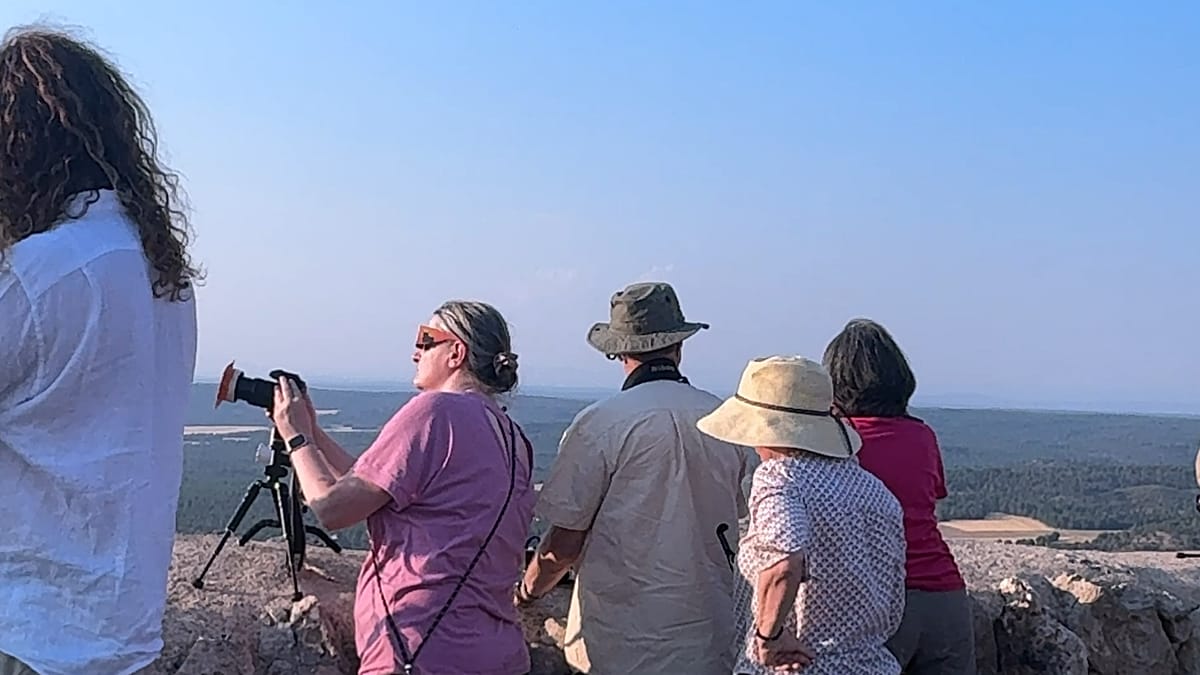
On August 12, a mesmerizing solar eclipse captivated thousands of tourists, drawing them to the historic Gormaz Fortress in Soria, Spain. This celest

On August 12, a mesmerizing solar eclipse captivated thousands of tourists, drawing them to the historic Gormaz Fortress in Soria, Spain. This celestial event, which turned day into twilight for a brief period, offered a rare spectacle that many had traveled far and wide to witness. The fortress, known for its stunning views and rich history, became a prime location for eclipse watchers eager to experience the magic of the moment.

As the eclipse peaked around 2:30 PM, visitors were greeted with a surreal sight. The sky darkened, and the temperature dropped noticeably, creating an atmosphere filled with awe and excitement. Families, couples, and astronomy enthusiasts gathered, many armed with special glasses to safely view the spectacle. “You could feel the energy in the air,” one local resident remarked, “People were cheering and gasping as the moon covered the sun!”

The event not only attracted locals but also saw visitors from various parts of the country and even international tourists. Many shared their experiences on social media, posting stunning photographs of the eclipse framed by the fortress’s ancient walls. “It’s not every day you get to see something like this, especially in such a beautiful place,” said a tourist from Madrid. The once-quiet fortress buzzed with activity, laughter, and the sound of cameras clicking away to capture the moment.

Interestingly, the Gormaz Fortress, with its impressive history dating back to the 10th century, provided the perfect backdrop for the eclipse. Its strategic location and towering walls stood as a reminder of centuries past while the skies played host to a modern astronomical marvel. Visitors were encouraged to explore the fortress’s grounds, making the most of their trip as they awaited the next phase of the eclipse.

As the eclipse began to wane, the excitement remained palpable. People exchanged stories, discussed their favorite moments, and made plans to return for future events. “I can’t believe I was here to witness it,” a young girl exclaimed, her eyes still reflecting the wonder of the experience. The sense of community was strong, as strangers bonded over the shared thrill of the day.

So, what’s next for those enchanted by the celestial dance? With the next total solar eclipse not occurring until 2026, many are already planning their trips to ensure they don’t miss out on the next big astronomical event. The Gormaz Fortress, now etched in many memories, is likely to become a favorite spot for future gatherings during such phenomena.

Kaynak: Orijinal Haber

Rent Prices in Spain Reach €1,100 for 80 m²: Discover the Most Expensive and Affordable Cities

The rental market in Spain is heating up, with average prices soaring to €1,100 for an 80 square meter apartment. This news comes as many Spaniard

The rental market in Spain is heating up, with average prices soaring to €1,100 for an 80 square meter apartment. This news comes as many Spaniards are grappling with rising living costs, leading to a growing concern about affordability in major cities. But what does this mean for those looking to rent? Let’s break it down.

In cities like Barcelona and Madrid, prices are particularly steep. For instance, in Barcelona, rents can exceed €1,400 for similar-sized apartments. Meanwhile, in Madrid, the average cost is not far behind, hovering around €1,300. It’s hard to believe that just a few years ago, these rates were significantly lower. Citizens are now feeling the pressure… Many are forced to consider moving to suburban areas or even smaller towns where the cost of living is more manageable.

On the flip side, there are still some cities where renting remains relatively affordable. Places like Murcia and Almería offer rental prices closer to €800 for the same 80 m² space. This has led to a surge in interest in these areas as people seek refuge from the skyrocketing prices of urban centers. The allure of a quieter lifestyle combined with lower costs is proving tempting for many.

What’s even more interesting is how the rental market has shifted in response to the pandemic. With remote work becoming more common, people are less tethered to their offices and are seeking out homes that provide a better quality of life. This has left many landlords scrambling to adjust their pricing strategies. Notably, some landlords in less popular areas are lowering their prices in hopes of attracting tenants who are now looking for value rather than location.

So, what does the future hold? With demand still high in the prime locations, it’s uncertain whether prices will stabilize or continue to climb. Is this a bubble waiting to burst, or are we witnessing a new normal in the Spanish rental market? The dynamics are changing, and only time will tell.

Kaynak: Orijinal Haber

Ukraine Launches Massive Drone Attack on Russian Grain Export Terminals

A significant escalation in the ongoing conflict between Ukraine and Russia unfolded as Ukraine launched a large-scale drone and missile strike targ

A significant escalation in the ongoing conflict between Ukraine and Russia unfolded as Ukraine launched a large-scale drone and missile strike targeting key Russian grain export terminals located in the Black Sea port of Novorossiysk. The attack, which took place overnight, was confirmed by Ukraine’s President Volodymyr Zelensky, who noted that this “unique military operation” involved rockets, jet drones, and naval drones. Reports indicate that at least four Russian warships, including two frigates, were struck during the bombardment, although the Russian government has yet to officially comment on the incident.

In a statement shared via social media, Zelensky highlighted the severity of the strikes, which have raised alarms over the impact on global food supplies. The Russian agriculture ministry responded to the attack by announcing its efforts to redirect cargo flows to alternative ports, specifically targeting facilities in the Baltic and Caspian Seas, as well as land routes. They did not explicitly mention the drone strikes but acknowledged the need to adapt in light of the situation.

As the night wore on, Novorossiysk was filled with the sounds of repeated explosions as Russian air defenses worked to intercept incoming aerial threats. The aftermath of the drone strikes declared an emergency situation in the city, with reports of damaged pipelines leading to a suspension of water supply for its residents. Tragically, a man lost his life due to falling debris from one of the drones, as confirmed by the regional Governor Veniamin Kondratyev. The surrounding Krasnodar region also faced its share of chaos, with reports indicating several hundred drones striking multiple locations.

This recent assault underscores the ongoing volatility of the last remaining sea route out of Ukraine, which has already been severely impacted by Russian airstrikes on cargo ships and the port of Odesa. These actions follow a concerning trend of decreased agricultural exports, with the Ukrainian Agribusiness Club reporting a staggering 23% drop in exports in July. Meanwhile, Ukraine has increasingly displayed its capability for long-range strikes, targeting Russian assets and disrupting grain shipments effectively.

The situation continues to evolve, and the implications for global food supplies remain critical. As the conflict lingers, both nations appear unwilling to back down, raising questions about what the future holds for the region and the world. Bakalım, bu gidişat nereye varacak?

Kaynak: Orijinal Haber